
Women socialists (draft)
This is a draft document. Please do not share its URL on social media.
The Socialist Party and World Socialist Movement have a long and proud history of welcoming women into our organisations. However, we also acknowledge that women appear to have played a less notable part than men in politics or in political actions that have been regarded as important or legitimate. As socialists we question why this is and aim to seek out and highlight the actions and beliefs of all revolutionaries regardless of gender, while acknowledging sex and gender oppression. As far back as our formation in 1904, women have played an inclusive and important role in the way our party functions, with equality and democracy at the heart of all decision making.
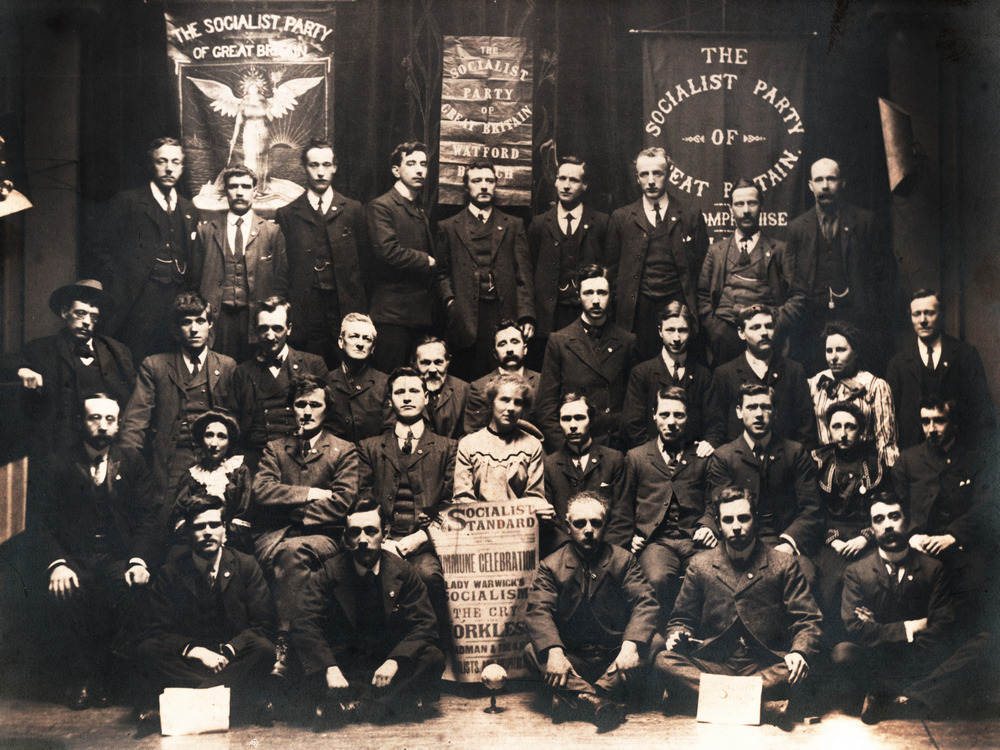
As in so many political movements across the spectrum, although fewer in numbers, women have none the less embraced and impacted the class struggle. We recognise the positive impact that many women have (and are still having) on the socialist movement and the working-class struggle, since the early days of the Industrial Revolution. A few examples are given here.
Janet Carter is a current long-standing member of the Socialist Party – she joined around 1969. In 2019 Carla Dee interviewed her for the Summer School about her life as a socialist. See Interview with a socialist for the full interview.
Heather Ball (1933 – 200) was brought up in London where her father had moved to from Scotland. Before reaching pension age she worked in the various kinds of factory, office and cleaning jobs that was often the only choice for working class women of her generation. Her father was a member of the Communist Party and she was brought up to join first the YCL and then the party itself. However, she was one of the many who left after 1956 following Khrushchev’s secret speech about Stalin and the Hungarian uprising. She joined the Trotskyist Socialist Labour League from which she was expelled in 1960. This put her off vanguardist politics for good and she became active in the peace movement in East Anglia where she and her family had moved to. In 1994, tiring of single-issue politics too, she joined the Socialist Party. She was active in our Norwich Group and of course as a writer of a regular column in the Socialist Standard which many readers liked as a contrast to the other, more overtly political articles. These articles were gathered together in the pamphlet A Socialist Life (out of print but made available on the Socialist Standard Past & Present blog).
Some well-known figures have shared many of the SPGB’s political views, at least for a significant part of their lives.
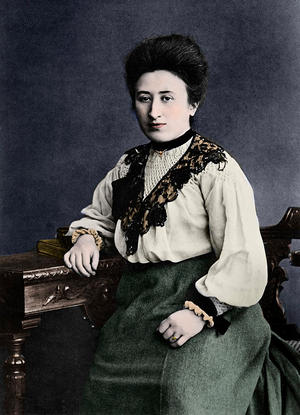
Rosa Luxemburg (1871 – 1919) was born in n Zamosch, Poland. In 1889, aged 18 – because of her revolutionary agitation and subsequent persecution – she had to leave for Berlin where she joined the German Social Democratic Labour Party. Luxemburg was very keen on supporting the idea of debate and in 1900 she produced “Reform or Revolution”. Believing that governments only ever gave what they wanted to. Luxemburg wanted a complete revolution of governmental systems.
Some of her final words from the night before she was murdered were “… a new society can and must be created by the masses, from the masses. The masses are the crucial factor. They are the rock on which the ultimate victory of the revolution will be built”.
For more about Rosa Luxembourg’s life and politics see the pamphlet Rosa Luxembourg on Socialism (2019) and the article Rosa Luxemburg, political democracy and mass action. An audio recording of a 2014 talk about Rosa Luxembourg can be found here.
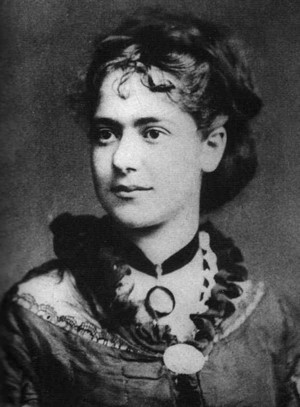
Eleanor Marx (1855 – 1898), youngest daughter of Karl Marx and Jenny von Westphalen, was another well know woman revolutionary. Although commonly remembered as ‘the daughter of Karl Marx’, such a title takes much away from all that she achieved as a feminist, a socialist and a translator, journalist and editor. After the death of her father in March 1883, Eleanor produced the earliest appreciation of his life and was invaluable in the organisation of his papers, and continued to have an important and productive relationship with Friedrich Engels.
Examples of the breadth of her work include the fact that in 1886 Eleanor completed the first English translation of Madame Bovary by Flaubert. She was also instrumental in the spread of the work of Ibsen in Britain at a time of intense discussion of the “Woman Question”. She also produced a work on the poet Percy Shelley, and had the ability to research and write pamphlets and articles on a whole range of subjects. For example, she both translated and provided an introduction to the 1871 work The History of the Paris Commune, by Lissagaray.
For more about Eleanor Marx, read the Socialist Standard article Eleanor Marx, Belfort Bax and “the Woman Question” or listen to this talk from 2021. Two biographies are ‘Eleanor Marx’ by Rachel Holmes (2014, reviewed in A life cut short) and the earlier two volume ‘Eleanor Marx’ by Yvonne Kapp (volume II reviewed in Tussy in her time).
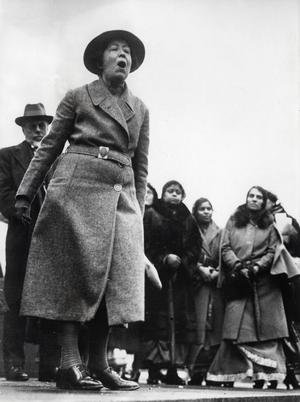
Sylvia Pankhurst (1882 – 1960) was the younger daughter of Emmeline Pankhurst, the famous suffragette. Although initially involved in talks to set up the Communist Party of Great Britain, she later opposed them and during the early 1920s she wrote that Russia was building capitalism not socialism. Eventually, however, she believed that capitalism could somehow be made to work in the interest of the workers through gradual reforms and minor improvements to their working terms and conditions. Whereas in reality the rich simply get richer, while the poor remain poor.
Read more about Sylvia Pankhurst in the pamphlet Sylvia Pankhurst on Socialism (2018).
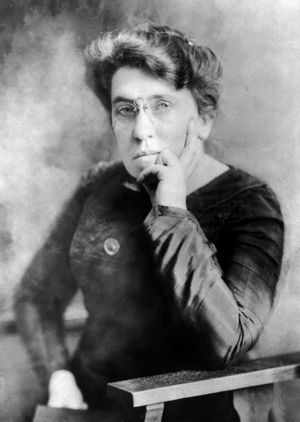
Emma Goldman (1869 – 1940) was born in Kovno, Lithuania. Harsh restrictions on Jewish style=”margin-top:10px”mobility and economic activity made it almost impossible for many Jews, including the Goldmans, to escape poverty. Emma had a difficult childhood. Her father was violent and abusive and her mother struggled with depression.
Emma moved with her family to St. Petersburg, Russia, when she was 12 years old. It was there that she first encountered the growing revolutionary movement and got her first taste of political radicalism. Soon after, however, she moved to Germany to live with her grandmother and attend school. In 1885, her father sought to arrange a marriage for her. However, she fled the match and her abusive father by immigrating with her sister to the United States.
The sisters settled in Rochester, New York, and found work in a garment factory. Emma’s interest in political radicalism only grew with her experience as a labourer in the United States. The long hours, unequal pay, and suppression of workers’ rights added fuel to a growing fire within the young activist.
Emma was particularly drawn to the ideas of anarchism. She believed that human nature was inherently good and that people would naturally organize communities around common interests. She saw government systems as creating unnecessary competition among well-meaning individuals. Anarchists also believed that with the destruction of the capitalist-driven government, everyone would be equal regardless of gender or race. Emma, however, departed from this part of the ideology. She argued that women needed to advocate for their emancipation from men. It was this belief that made her a specific champion of women’s rights.
Links to transcripts of some of her speeches can be found in the Archives of Women’s Political Communication.
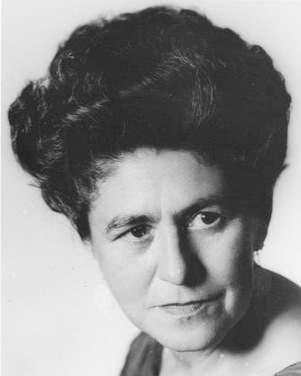
Raya Dunayevskaya (1910 – 1987) is one of the twentieth century’s greatest but underappreciated Marxist and Feminist thinkers. She was born in Western Ukraine but migrated to the US in 1921.
She was Trotsky’s secretary during his Mexican exile but broke with him in 1939 over his insistence that the Soviet Union remained a ‘workers’ state’ (she regarded it as state capitalist, as we do). She then created a new school of thought that she called “Marxist Humanism’.
Her unique philosophy and practice of Marxist-Humanism, as well as her grasp of Hegelian dialectics and the deep humanism that informed Marx’s thoughts, has much to teach us today. From her account of state capitalism (part of her socio-economic critique of Stalinism, fascism, and the welfare state), to her writings on Rosa Luxemburg, Black and women’s liberation, and labour, she offered indispensable ideas for navigating the perils of sexism, racism, capitalism, and authoritarianism.
Raya Dunayevskaya’s Marxist Humanism and the Alternative to Capitalism (Jacobin) is a detailed overview of this inspirational woman’s life and politics.
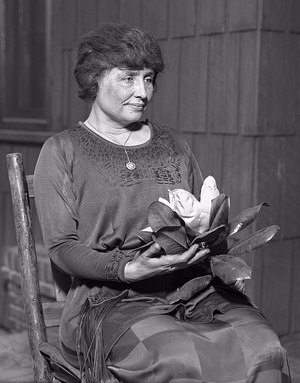
Helen Keller (1880 – 1968) was born in West Tuscumbia, Alabama. She became deaf and blind following serious illness when she was 19 months old. She communicated primarily using basic sign language until the age of seven, when she met Anne Sullivan, who became her teacher and companion. After an education at both specialist and mainstream schools, Keller attended Radcliffe College of Harvard University and became the first deafblind person to earn a Bachelor of Arts degree.
She joined the Socialist Party of America in 1909 and campaigned and wrote to support that party, particularly focussing on women’s right to vote and the effects of war, supporting causes that opposed military intervention. In 1912, Keller joined the Industrial Workers of the World (IWW), saying that parliamentary socialism was “sinking in the political bog”. She wrote many articles for the IWW between 1916 and 1918.
Motivated by her relentless desire for a better world, she was never one to allow her disabilities to get in the way of her political activities, and while she may not have been a devotee of the precise kind of politics that we in the World Socialist Movement advocate, she was none-the-less a woman of great substance and devotion in all that she did throughout her life.
Her writings are available at the Helen Keller Reference Archive.