
Book Reviews – Mills, Warfield, Rewcastle Brown, Cox
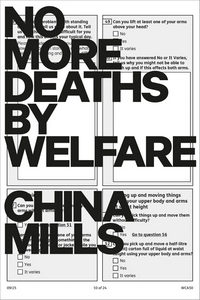
No More Deaths by Welfare. By China Mills. Pluto Press, 2026
We’ve long argued two things that liberal society finds unbearable: capitalism will not be reformed into decency, and the Labour Party is and always has been a party of capitalism. China Mills does not set out to confirm our case, but confirm it she does, with forensic force.
The book’s subject is the lethal machinery of Britain’s social security system, which Mills shows is ‘violent by design’, a department whose founding logic is the policing of who is and is not deemed deserving. For decades, reformists of every stripe have assumed the welfare state was a fortress to be defended, and that its cruelties were aberrations to be lobbied away. Mills demolishes this. The system’s violence is not a malfunction but its function: to discipline the working class and enforce the labour market. A machine built to do that will not be petitioned into kindness, and whatever the author’s own politics, the book lands at a conclusion that socialists have long drawn: that begging for reforms is a dead-end, and a drain on working-class energies.
This is most visible in the people Mills documents. The book draws on more than a decade of activism led by disabled people and bereaved families: the Deaths by Welfare Project, DPAC, the Black Triangle Campaign, benefits defence workshops and campaigns like Joy Dove’s fight for an inquiry into her daughter Jodey’s death. What unites them is a hard learned realism. These are people who know that the state is not a neutral arbiter to be reasoned with. Sanctioned, assessed, driven to despair, many of them have neither the health nor the illusion necessary for reformist lobbying. Survival itself, mutual aid practised from bed, keeping each other alive, naming the dead, is their politics. In class terms, this is the working class relying on itself rather than on its alleged representatives. Yet self-organisation that stays within capitalism can at best hold the line, it cannot end the conditions that make welfare a weapon.
The book’s condemnation of the Labour Party is unsparing and correct. The sharpest edges of this regime have repeatedly been delivered not by Tory ‘villains’ but by Labour governments and Labour ministers, administering the demands of capital while wrapping them in the language of compassion. Mills situates this in its global context: the book documents how South American countries, as conditions of international loans, were forced to liberalise and open up their social security systems to private profit, using the same structural adjustment playbook that has handed British welfare functions to private contractors.
So read No More Deaths by Welfare as what it is: documentary evidence of a class war that never ends, being fought on the battlefield of assessment centres and computer terminals, by agents of the state, the DWP, private contractors, and the governments of both parties who enabled them. Mills ends by calling for the collective imagination of ‘welfare justice’. The disabled activists in these pages, who learned through bitter experience that they cannot rely on the state or its parliamentary managers, are closer to that understanding than any reform movement. Our task is to finish the argument.
A.T.
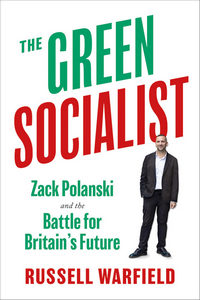
The Green Socialist. Zack Polanski and the Battle for Britain’s Future. By Russell Warfield. Pluto Press, October 2006.
It is an odd title since Polanski does not claim to be a socialist, at least not openly. Warfield’s justification for calling him one is that the policies Polanski supports are the same as those advocated by others who do claim to be socialists, such as taxing the rich to pay for measures to benefit the mass of the population, public control of utilities, and rent controls. Polanski himself claims only to be a left-winger who wants the Green Party to be a left-wing party rather than the centrist party prioritising reforms to protect the environment that it has historically been.
Warfield is unstinting in his praise for Polanski and the ‘ecopopulist’ platform on which he stood to win the contest last September to become the Leader of the Green Party which, he says:
‘involved communications which foregrounded policies that spoke to people’s immediate, material needs; acknowledging and feeling the public’s justified anger but directing it towards hope; shaping strong narratives with clear enemies; and building a mass party which was powered by a broader social base of vibrant movements’.
What, you might ask, has blaming the super-rich and taxing them to pay for meeting people’s ‘immediate, material needs’ better got to do with the environment?
Warfield argues that this always was the vocation of the Green Party, describing how it always did have a policy on social and economic matters as well as on the environment. It is true that on paper it did, but its main plank was always the environment; that was why it was set up, why people voted for it and why people joined it. Its other policies, which Warfield tries hard to interpret as prefiguring ‘a principled left-wing offer which transcended narrow environmental interests’, have varied over the years from advocating self-sufficient regional communities to local currencies to protect local businesses. It went into the 2015 general election promising bank reform based on the currency crank idea that banks create money from thin air (it wanted to prevent them from supposedly doing this). In the 2024 general election it promised a Green New Deal which, Warfield says, ‘called for Keynesian investment to stimulate the economy through the creation of green jobs across renewables, home insulation and so on’, as if Keynesianism hadn’t been tried and failed.
Warfield himself does claim to be a socialist, an ‘ecosocialist’, but is pretty vague as to what this means. He seems to envisage ‘democratic control of the economy’ that would give priority to producing and selling what people needed rather than being oriented towards ‘perpetual economic growth’. In any event, the book does show the illusions held by those within the Green Party who call themselves socialist.
ALB
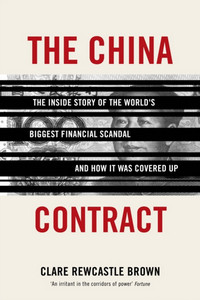
The China Contract: the Inside Story of the World’s Biggest Financial Scandal … and How It Was Covered Up. By Clare Rewcastle Brown. Westbourne Press £20.
In February 2019 we reviewed Rewcastle Brown’s The Sarawak Report. This revealed a scam in which large amounts of money were siphoned from Malaysian state finances, specifically the One Malaysia Development Fund (1MDB), into the pockets of the former Prime Minister, Najib Razak, and his accomplices, including Jho Low, who was in practice in charge of the Fund (though this was officially denied). Here she returns to the same events and updates the story but also adds a lot of information about China’s involvement in some of what went on.
The sums involved are staggering, with perhaps $5bn in all siphoned from the fund. One mechanism for achieving this was round-tripping, where assets are sold to another company and then bought back. This makes it look as if something productive has taken place, when in fact no such thing has occurred. It can be used to evade taxes or launder money. Subsidiary companies with only notional values can be created, with banks playing a large part in all this and collecting massive fees. Goldman Sachs in particular had a sizeable role here, for instance being paid a million dollars for ‘advising’ on one deal. One of their top managers was sentenced to two years in prison after co-operating with investigators. On one occasion, Jho made around $130m from selling and reselling bonds.
As for the role of China and the contract in the book’s title, this relates initially to an agreement between the Malaysian government and a Chinese company to build a railway line in Malaysia, as part of China’s Belt and Road Initiative. This was at an inflated price, apparently so that the Chinese company could shoulder the massive debt of 1MDB. Najib seemed to be going along with China’s expansionist plans; this is significant, as Malaysia controls the Malacca Strait, an important sea route which China needs access to. The Chinese government was behind the rail line contract, in the hope of further similar projects, with Malaysia accepting the Belt and Road idea. The country’s economic dependence on China would be enormous. Jho Low became involved with the Chinese ‘Communist’ Party and may have started running agents for them in other countries.
But, of course, it was all too good to last. The Belt and Road Initiative has run into problems but is still part of the Chinese government’s plan for economic expansion and the reduction of US power. More specifically, Najib was arrested in 2018 and subsequently found guilty of a number of offences, including abuse of power and money laundering, and was sentenced to twelve years in prison; there have been various appeals since then. Jho Low became a fugitive in 2019 and is currently believed to be living in China.
This is a comprehensive and well-argued examination of an enormous example of theft and corruption, but in many ways it is just a special case of the way capitalism operates, with a few fabulously wealthy and powerful people running things the way they want, even if in this instance they were too blatant and did not get away with it.
PB
BOOKS RECEIVED
What Comes Next? By Robin Cox, described in the blurb on Amazon as ‘a three-volume series presenting a detailed critique of contemporary capitalism. It explores the possibility of a practical alternative – a ‘system upgrade’ – drawing on humans’ innate disposition towards mutual aid. This will be a post-money society based on voluntary work and the free distribution of goods’. Will be reviewed in a later issue.