
Revving a car with a dead engine

‘Vote for hope’, proclaimed an election leaflet distributed in Lambeth for the council elections in May, ‘and elect Green councillors who will stand up for our communities, challenge decisions that don’t work for residents, and push for a fairer, greener future across Lambeth.’ In the event, enough did to allow the Green Party to assume control of the council. Martin Abrams, who had been elected a Labour councillor in the 2022 elections but defected to the Greens over Gaza, became the Council Leader.
The Greens have a chance here, then, to put into practice Zack Polanski’s eco-populism, with its promises to increase wages for everyone, reverse the ‘march downwards in the balance of power and wealth from those who produce the wealth and do the work to those who profit from it’, and ‘address the massive imbalance in our workplaces and give control back to workers’. If not all that, at least some move in that direction locally.
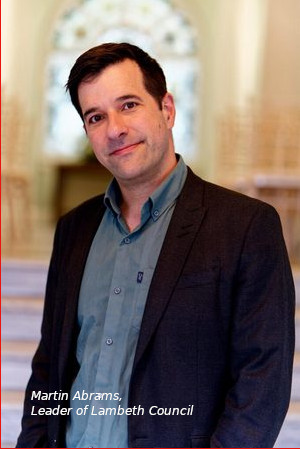 On being elected leader of the group of Green councillors, Abrams declared:
‘We will put power in the hands of residents, workers and the community’, adding ‘things can, and will, get better’.
This echoed an election promise made on Instagram that: ‘We’ll fight to reverse austerity, empowering workers and the community we serve.’
What power?
These are extravagant promises. The trouble is that local authorities don’t have much power to give to ‘residents and workers’. They are branches of the central government with severely limited powers, and with councillors being essentially elected civil servants.
Local councils are charged by the central government with collecting waste, providing library services and being responsible for public health and some areas of transport, housing and education, and with caring for children and adults who can’t cope on their own (which in fact makes up more than two-thirds of their current spending). The money to pay for all this comes from central government grants, council tax and business rates.
Councils are obliged to balance their budget and can’t borrow money to finance current services. They have no control over what the central government gives them and can’t fix or change business rates. They can’t increase council tax by more than 5 percent unless authorised to do so by a referendum. They can raise some money from fees and fines, from parking, yellow box junctions and dropping litter, which is what they have been increasingly doing to try to compensate a little for the lack of income from other sources.
Basically, then, if the central government is forced to pursue a policy of austerity — as giving priority to profit-making compels them to, especially in periods of low capital accumulation — local councils have to accept this and apply it at local level. In this sense, running a local council is a poisoned chalice for any party promising to improve the material conditions of its residents. Rather than ending austerity, they have to apply it. Lambeth residents and workers can’t be expected to regard as a benefit being empowered to share in making decisions to impose austerity on themselves, as that’s what the ‘participatory budgeting’ mentioned in passing by the Greens would amount to.
The Greens haven’t had much experience of running councils but in Lambeth they are about to find out what this involves, as in other London boroughs such as Hackney and Lewisham where there are Green elected mayors.
Empty promise
The promise to ‘reverse austerity’ is an empty one as no local council has the power to do this, either legally or economically. The Greens’ defence could be, if they were quibbling lawyers, that they didn’t actually promise to reverse austerity but merely to ‘fight to reverse’ it. Which is not the same. All this ‘fight’ would amount to is set out in the council Leader’s responsibilities on the council website:
‘Councillor Abrams will stand against austerity, campaigning for increased funding for local authorities to arrest the ongoing decline in services and provide better outcomes for Lambeth residents’.
The remit of one of the council’s cabinet, councillor Michael Chessum, the member for ‘Economy, Cost of Living and Empowered Communities’, is set out as:
‘Spearheading the council’s campaign to restore funding from central government and reverse austerity’.
Anybody can say they ‘stand against’ austerity and that they will lobby for more money from the central government (all councils and the parties running them are doing this), but such a campaign is up against the fact the central government has to limit its spending so as not to cut into profits or worsen the conditions for profit-making. In short, such a campaign has no chance of success. To give the impression that it might succeed is to encourage illusions about what is possible under capitalism. The Green councillors may well be sincere in their belief but that just means that they are deluding themselves.
Losing battle
At least one of them, Councillor Chessum, seems to realise that the council on its own cannot do much to get the central government to pay more to local councils. He only joined the Green Party in June last year. Previously he had been active in the Labour Party as a supporter of Jeremy Corbyn, having been for a while the treasurer of Momentum, the leftwing ginger group within the party. In his announcement last June ‘Why I’m joining the Green Party’ he wrote:
‘The biggest challenge, however, is not in the electoral sphere – or rather, it is about how the electoral sphere connects to the real world. Strikes, protests and community campaigns are the raw material for political change. Attempting a radical breakthrough without them is like revving a car with a dead engine. (…) Social and industrial struggle must be viewed as a primary method for doing politics. Without a mobilised local community, left wing councillors will be fighting a losing battle. Without a mass movement engaged in something other than electioneering, electoral projects lack a legacy’.
Whether or not he expected that, within a year of writing this, he would find himself a local council cabinet member charged with ‘spearheading’ a campaign ‘to restore funding from central government and reverse austerity’, he is now in that position. If he still agrees with what he wrote then, he is committed to the view that merely lobbying the government for more money won’t get anywhere. In his words, it would just be ‘revving a car with a dead engine’, a good description of reformist activity generally.
Logically, too, he ought to use his official position to mobilise workers and residents to back up with strikes the council’s campaign to get the central government to pay the council more so that it can ‘reverse austerity’. Both — the council encouraging strikes and workers prepared to go on strike for this — are highly unlikely, not to say pie in the sky. Workers realise, even if left-wing activists don’t, that they do not have the power to force the government to grant councils more funding. If the rate of abstention from voting in local council elections — on average some two-thirds of those entitled to vote — is anything to go by, many also realise that local councils don’t have the power to do this either. That leaves Councillor Chessum ‘fighting a losing battle’.
The way out
But even if there was a mass movement behind the council’s lobbying for more funding, that wouldn’t increase the prospect of success. The central government wouldn’t make more money available as that would mean having to cut into profits and risking an economic downturn that could lead to them being voted out of office. The fact is that, if the functioning of the capitalist profit economy at a particular time requires austerity in terms of limiting government spending, nothing can reverse this, not even the overthrow of the government by a general strike or mass uprising, as those further to the left than the Greens advocate. The new left-wing regime would still have to maintain austerity.
Leftists, which the Greens under Polanski are aspiring to be, mislead workers when they say that the government or local council can make them better off. They can’t reverse austerity and they can’t empower communities. As the saying has it, changing governments changes nothing.
There is a way out but not within capitalism (and certainly not state capitalism). It’s to end the minority ownership of productive resources and production for profit. A framework of common ownership and democratic control is the only way to directly satisfy people’s needs. Socialism is the only hope of the workers, indeed of humanity.
ADAM BUICK