
Material World – Chairman Gonzalo: Leader and Butcher
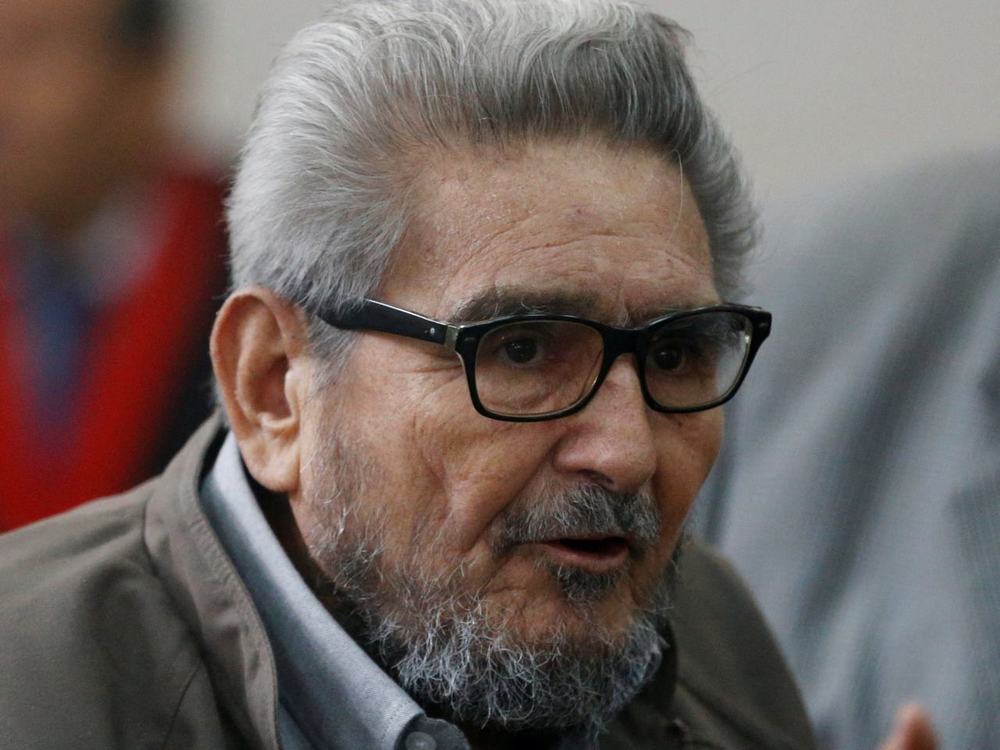
This month a forum for ‘socialists’ asked you to light a candle. ‘5 Years Ago Today, Chairman Gonzalo of the Communist Party of Peru Died In State Custody’. Died in state custody. The way it’s framed you’d imagine a prisoner of conscience, a man punished for loving the workers too much.
Five years after Abimael Guzmán died in a prison cell, his followers want you to remember him as a martyr.
The Workers?
Start with Lucanamarca. April 3, 1983. A Quechua-speaking village of about 2,600 people in the Andes, mostly farmers. Shining Path fighters descended on Lucanamarca and surrounding settlements with machetes, axes, knives and guns, and killed 69 people. More than twenty of them were children. The youngest was six months old.
One witness, Orfelinda Quincho, lost nine relatives that day, including her mother and son. Another woman, Heraclides Misaico, lost her husband and four children aged nine, seven, five and four. Families were so terrified of reprisals they would only formally report the massacre to Peru’s Truth and Reconciliation Commission (Comisión de la Verdad y Reconciliación or CVR) eighteen years later, in 2001.
When his party’s leadership were confronted with the massacre, Guzmán didn’t denounce it. He called it bad politics, said it could have ‘grave political consequences’, and disgustingly ‘Excesses can be accepted’. Dead children are an excess.
Lucanamarca was not an aberration. It was the method. The CVR found that fighters were ordered to hack victims to death with machetes to save ammunition. It found the movement deliberately provoked state reprisals against the very population it claimed to be fighting for, without caring what that suffering cost. It found proclamations calling for a ‘blood toll’, talking about ‘inducing genocide’, and announcing in 1988 that ‘the triumph of the revolution will cost a million deaths’.
The toll, in the end, came to an estimated 69,280 dead and disappeared. Seventy-five per cent of them spoke Quechua or another indigenous language. The Shining Path killed more of them than anyone else: the CVR attributed 54 per cent of the deaths reported to it to Shining Path, the largest share of the killing, ahead even of the state’s own counter-terror. Around 600,000 people were driven from their homes.
The poorest people in Peru, indigenous peasants, the constituency a people’s movement claims to speak for, were murdered in greater numbers by the self-proclaimed vanguard than by the army. The CVR stated: Shining Path ‘sees classes, not individuals’ and this led to ‘its absolute lack of respect for the human person and for the right to life, including that of its militants’.
This vanguard ate its own children. In the CVR’s words, it had ‘contempt for life, punished differences, and demanded full submission’. Young people who joined out of genuine revulsion at Peru’s injustice were locked into a vertical, totalitarian structure. Many of them died ‘uselessly and cruelly’.
A plague on both their houses
In 1986, the government of Alan García sent troops into Lima’s prisons and massacred hundreds of Shining Path prisoners. Torture and disappearances were routine. The army would answer village massacres with village massacres of its own: 123 indigenous peasants were killed at Putis in 1984. Both forces competed to terrorise the same countryside.
Guzmán did die in state custody. But the Leninist tradition he claimed, the tradition that says the workers’ movement must seize the state, has no retort, because the state is also the problem. Guzmán spent his life building a state of his own. The whole tragic logic of vanguardism, the party, the chairman, the militarised elite claiming to act on behalf of a working class deemed too backward to act for itself, reproduces the division between rulers and ruled inside the revolutionary movement itself. And movements built on that division end as rulers, every time.
Peru’s government cremated his body in secret and scattered the ashes, fearing a pilgrimage to the shrine of a monster.
Let’s remember. Remember Lucanamarca. Remember the six-month-old baby and the woman whose five-year-old was killed alongside her father. Remember the 69,280 dead. And when someone tells you a chairman is coming to set you free, remember what the chairmanship actually costs and who pays.
A.T.