
Life and Times – Hoarding – a disorder of our time
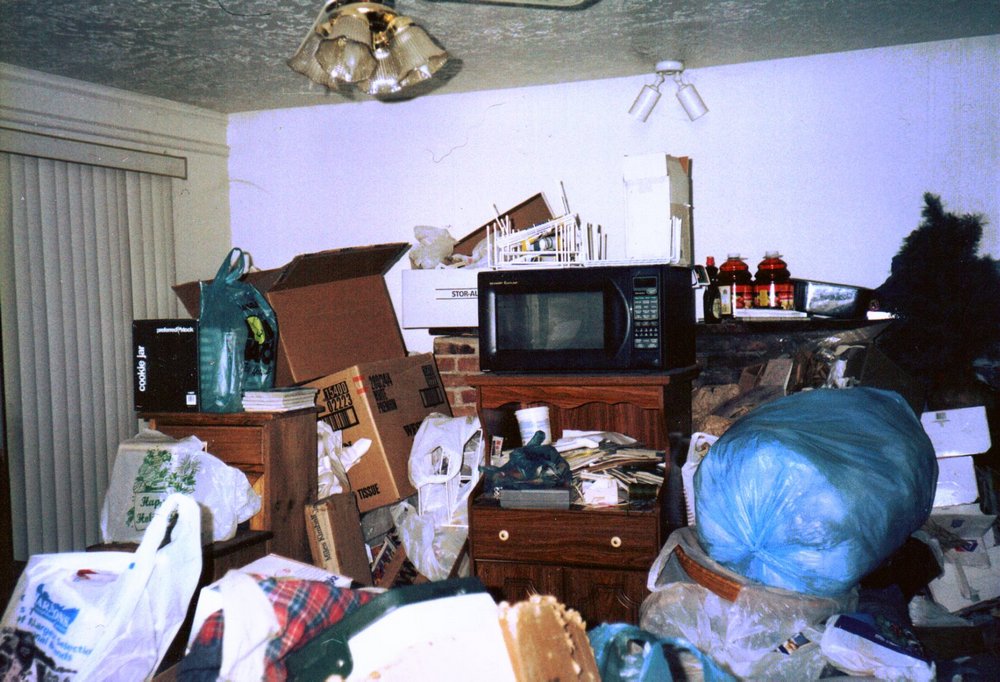
Many years ago, when I was a youngster, we were often visited at home by Harry, a relative who had had a difficult upbringing, lived on his own and showed signs of self-neglect. He started to give increasing cause for concern and my parents wondered what could be done. So my father and older brother went to his house to check on how he was managing. On their return I remember my brother saying ‘It’s a rubbish dump with a roof on’. Not long after this Harry was admitted to a psychiatric hospital.
How hoarders feel
All this came back to me on reading a recent Big Issue article on hoarding and what causes anyone to adopt a practice so manifestly detrimental to their own wellbeing. It talked about how, though hoarding is generally associated with physical mess, the mess is also in the mind and is likely to have psychological drivers such as trauma, fear of scarcity, or loneliness. It went on to say that, in turn, the consequences of being known to live a hoarder’s life can be shame, fear or reinforced feelings of isolation, but that the intense anxiety felt by hoarders about discarding possessions, regardless of their value, is linked to how ‘objects often carry deep emotional meaning or represent security against loss’.
Hoarding and homelessness
Given its appearance in the Big Issue, the article’s main focus was, perhaps understandably, on how hoarding can lead to eviction or homelessness for those affected and how they suffer a much higher rate of it than for the general population. And it explained that this was the case even though hoarding disorder had been officially recognised as a distinct psychiatric condition and only recently – in May of this year – there was, though little noticed, a National Hoarding Awareness Week. But while drawing attention to the not negligible suffering of people who hoard and to the potential of this condition to lead to even worse consequences, what the Big Issue did not attempt to do was to delve into the reasons why people become hoarders in the first place.
Tendencies triggered
The first obvious thing to consider is that, just as no one is born a thief or a tyrant or a miser, no one is born a hoarder either. It’s generally accepted that human beings are eminently flexible creatures whose behaviour is highly dependent on the society they live in and the conditions in which they grow up. Individuals do of course have differing potential tendencies, capacities and talents, which may or may not be realised depending on the events and circumstances of their lives. For example, therefore, would my relative, Harry, have become a hoarder if the early difficult life circumstances he had experienced had not triggered in him the potential for it? Hard to be sure, and it might be said that many of us have a tendency to accumulate objects of a certain kind, often somewhat irrationally. That’s certainly the case with me personally when it comes to books which I sometimes feel the need to stock my shelves with even if I know at bottom that I won’t read them all. And the same is the case with other people I know when it comes to clothes.
But we can maybe call these minor quirks which may or may not have their origin in some kind of innate tendency in particular individuals but, in any case, are unlikely to have a profound impact on their lives. The same cannot be said of the kind of extreme examples of hoarding that we see depicted in those semi-exploitative TV series on the subject. These are largely the consequence of highly negative situations into which the hoarders have fallen and it seems fair to think that, had circumstances been different for them, their potential for that behaviour may well have remained dormant.
Insecurity
What kind of circumstances are we talking about? Well the Big Issue article talks about ‘trauma, fear and loneliness’ with possessions functioning as ‘emotional anchors’ and representing ‘memories, identity or a sense of security in an unpredictable world’. Of course the majority of us, whose lives are based on the need to work for a wage or salary in order to survive, manage, flexible beings that humans are, to negotiate that ‘unpredictable world’ without falling into some kind of addiction or psychosis. In other words, most of us stay sane despite the uncertainty and insecurity visited upon us by capitalism, where the ups and downs of the market and the needs of the profit system can quickly change the complexion of our lives.
But some of us are more fragile and need something to cling to, something that seems to offer a sense of safety – illusory as that may be – in an uncertain, divisive world. This may be drink, drugs, worship of sports or entertainment heroes, or even, in the case of the hoarding habit, something as seemingly banal as filling your life and space with possessions that serve no apparent purpose.
A cure?
So, is there a ‘cure’ for hoarding? Well, in the alienating, crisis-prone system we live under, probably not, other than a switch to some alternative obsession or addiction. Could there be a cure in a different kind of system, one without the pressure of wages and salaries, one where we have free access to all goods and services and the space to develop our talents and capacities both for our own satisfaction and for the common good? We would have to say yes, definitely. But for this to happen, we first need majority consciousness by wage and salary earners of their plight and then democratic political action to sweep away the profit system and establish the society of togetherness and community that we call socialism – a society based on the principle of from each according to ability to each according to need.
HOWARD MOSS