
Action Replay – Breaks, shirts and cards
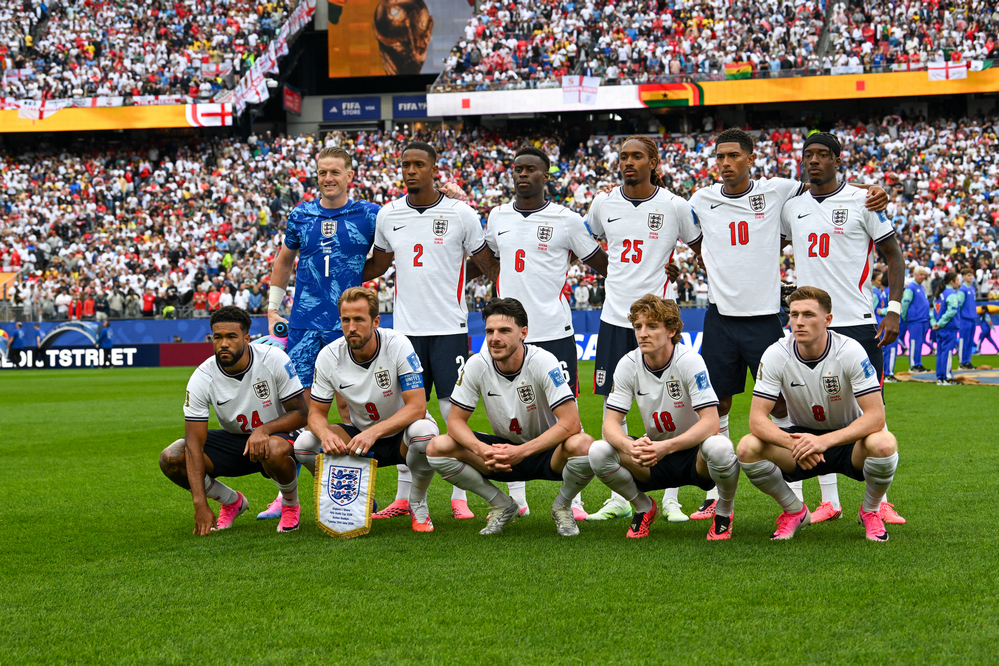
‘Football unites the world’ is a FIFA slogan, but the recent World Cup tournament did a great deal to point up the divisions which currently exist.
With three host countries and long travelling distances, it was always going to be a complicated enterprise. A total of 48 teams, 104 matches and 52 referees, all far more than previously: just 64 games in recent years and, when England hosted in 1966, 16 teams and 32 matches. There were plenty of complaints about the prices for tickets, food and drink, accommodation and travel. But then the whole thing is largely about money, with an estimate of $80bn being the economic ‘output’ of the whole competition, both qualifying matches and the finals. A number of games did have quite a lot of empty seats, though.
There was plenty of politics involved too. The Uruguay team had to undergo searches of their luggage when they arrived in the US, and a Somalian referee and some Iranian supporters were denied entry there. Haiti were forced to change their shirts for the finals, on the grounds that their first choice was political, in that it showed a flag which referred to the Haitian ‘revolution’ and the country’s ‘independence’ in 1804. Not that the anthems and ubiquitous flags are in any way political.
Then there was Trump’s intervention. A US player was sent off against Bosnia—Herzegovina, which, according to the regulations, meant he should miss the next match, a last-sixteen tie against Belgium. But Trump has a record of pardoning people, even for serious offences, and he appealed to the head of FIFA, Gianni Infantino, to have the suspension overturned. Infantino is a bit of a lapdog for Trump, having awarded him the fantasy FIFA Peace Prize, and indeed the player in question was allowed to take part against Belgium. Not that it did much good, as Belgium won 4–1, and the shenanigans may even have inspired the Belgian players a bit.
The hydration breaks in each half might be a good idea, given the temperatures at some games. But they have happened on cooler days too, and they are officially Powerade hydration breaks, sponsored by a sports drink. On US TV the breaks are occupied by commercials. There have been claims, too, that the breaks can alter the momentum of a match, giving one or other side an advantage. So a game of two halves may be becoming a game of four quarters.
One thing the competition has shown, though, is the extent of migration and the impact it has on ‘national’ teams. Many squads consist in large part of sons of migrants or of ex-pats, people who moved to another country but whose family still have links of some kind to their original ‘home’. Football may not unite the world, but it demonstrates how the world and its population are changing.
PB