
1776: Whose republic?
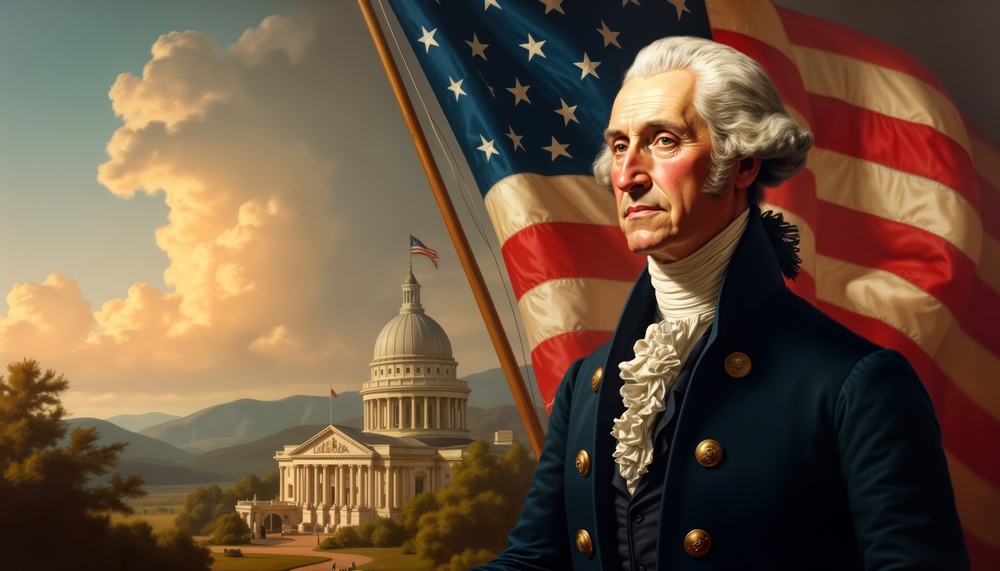
‘The Republic of Washington will grow and grow, until it makes the whole world tremble’ – Marquis de Sade.
In American schools children are taught to call it the American Revolution. Was it? In Britain we were brought up to refer to it as the American War of Independence. But whose independence?
The man mostly urging the colonial owning classes to declare independence from the British crown was an Englishman: the political reformer Thomas Paine. Largely alone in his zeal for the independence of the American commercial class, he would be resisted by the much more timid George Washington and the latter’s clique of slave-owning mouthpieces for ‘liberty’, who were reluctant to go so far, until forced to by circumstances and the sheer ferocity of the British army.
The colonial gentry had launched the cry against imperial taxation and oppression in 1775 and Paine, for whom dissent, anywhere, was an irresistible magnet, became its most zealous spokesman. In his pamphlet aptly named Common Sense he showed the absurdity of the American colonies being ruled by a tiny island kingdom a gigantic ocean away. When the people of his own roots, the pacifist Quakers, warned the rebels of inviting carnage, Paine told them to mind their own business and not interfere in a ‘just’ war (where have we heard that before?).
Oppression is oppression, regardless of who the oppressor is, and Paine was soon to learn this, with the ingratitude and disdain of his supposed colonial ‘comrades’ after they had at last yielded to his urgings that they replace the British rag on a pole with a republican one.
American farmers and ordinary people bore the brunt of British ferocity as the Quakers’ warning came true.
British ferocity, directly caused by the Washington revolt, did indeed provoke a hatred that benefited those riding it and carried them to victory and the overthrow of British rule. War continued, however, beyond 1782 (its official end), with the British navy attacking towns and shipping and in turn put to flight by an American known (ironically) as Captain Nelson, called a pirate by the British. As late as 1812 Britain launched an invasion of the new United States of thirteen colonies, and hostilities would carry on until into the American Civil War of the 1860s.
During the war the British state used the native American Great Lakes tribes against the colonists in the same way that earlier in the century the Jacobites (the political faction supporting the Stuart monarchy of James II) had done in Scotland. Robert Burns did not like the Jacobites, but he admired the tribal Highland people. As his song Ye Jacobites By Name suggests, they stirred up rebellion, seducing the Highlanders to their cause, then, when it failed, scarpered off to France, leaving the Highland people to suffer the vengeance of the British state.
The Jacobites did this twice in the 18th century, and the last time they scarpered, in 1746, it would result in the destruction of the Highlanders who had followed them. The clearances would have been on the cards anyway at some point, because, like the native Americans and other native peoples around the world, the clans were an obstruction to the development of capitalism.
So who benefited? For all the talk of ‘liberty’, certainly not the United States’ four million African-American slaves, no matter how hoarsely and painfully Tom Paine and others implored. The poor farmers’ subsequent revolt, demanding relief from poverty, and stressing their having fought for the Congress, was ferociously crushed. The British during the war had helped secure the later fate of the native people too, using them against the colonists, teaching the natives about scalping, and ensuring the colonists’ eternal hatred for ‘Indians’.
As for Paine, his dedication to George Washington of The Rights of Man did not help him when arrested for ‘moderantism’ by the French Jacobins. Washington ignored his appeals to save him from the guillotine (for that he had to rely on others) while The Age of Reason – a rational dissection of the Bible –finally sealed his fate where the United States of America were concerned.
In short, 1776 marks yet another murderous squabble between capitalist factions. Revolution – the world revolution of those who actually do all the work in society – is yet to come, and when it does it will be truly democratic and thus will not require violence.
A.W.
One Reply to “1776: Whose republic?”
Leave a Reply
You must be logged in to post a comment.
If the section on the Jacobites is meant to underline how tribal peoples were exploited as cannon fodder by the British, in both America and Scotland, the comparison could be better indicated here. It flounders and is confusing.