
Book reviews – Bregman, Moysan, Brown
Moral stories
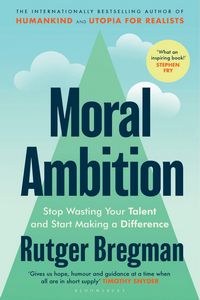 Moral Ambition. Stop Wasting Your Talent and Start Making a Difference. By Rutger Bregman. Bloomsbury. 2025. 283pp.
‘Humans are social creatures through and through’ (Rutger Bregman)
This is the third of Dutch historian Rutger Bregman’s books to have garnered attention and praise from a wide range of quarters. His theme is, as before, the need for large-scale social change, and on a planetary scale. Described on the book’s dust cover as ‘the internationally bestselling author’, Bregman proposes morally founded activities that people can become involved in to ‘start making a difference’ and help bring about such change. One of the impressive endorsements by various writers and commentators in the book’s opening pages describes it as ‘packed with powerful insights, inspiring stories, and data to back it up’. Another refers to it as ‘a true bible of realistic idealism’. And it is definitely an invigorating and thought-provoking read.
It focuses in significant part on the work of a number of individuals who, by virtue of their dedication and determination to certain causes, have ‘made a difference’, either historically or more recently, to the lives of large numbers of people. Examples of such individuals, some of them little known, include:
- Thomas Clarkson, who, from the age of 24 in 1785, dedicated his life to campaigning against slavery at a time when, as the author points out, the very notion of abolishing slavery seemed unthinkable;
- Arnold Douwes, the Dutchman, who, in the Second World War and at enormous risk to himself, devoted himself to finding shelter for Jews who otherwise would have been transported to concentration camps;
- Ralph Nader, who over very many years campaigned indefatigably in the US against the advertising and sale of manifestly dangerous products and managed to recruit a whole ‘brigade of Davids’ who ‘combined moral indignation with laborious research’ and eventually become known as ‘Naders Raiders’;
- Rosa Parks, the black woman in Alabama who wouldn’t give up her seat to a white passenger on a bus and lit the spark for the civil rights movement;
- Rob Mather, the British business executive, who, in the early 2000s, inspired voluntary and charitable activity among thousands for the purpose of raising money to combat the world’s single largest killer of children, malaria, and up to the present day is estimated to have saved over 100,000 lives;
- and Joey Savoie, a Canadian would-be psychology student who instead dedicated himself to intensive charitable work and founded a school of ‘Charity Entrepreneurship’ whose graduates then set up projects such as Fortify Health that teaches local millers in India to enrich wheat flower with iron, folic acid and vitamin B2 as a way of reducing iron deficiency anaemia among millions there and protecting against congenital defects like spina bifida.
Bregman also gives space to philanthropists such as Katherine McCormick, whose sponsorship of research into female contraception resulted in the pill and so gave millions of women a new kind of control over their lives, and to campaigning scientists like Joseph Salk and Viktor Zhdanov whose dedication and determination brought crippling and deadly diseases like polio and smallpox under control. And he tells all sorts of other quite fascinating tales of people who have dedicated themselves to ‘making a difference’, some much against the odds of their upbringing, education and the society around them. He frames these with the consideration that ‘a small group of determined individuals can have enormous influence’.
Such stories make this a truly compelling book, as also does its manifest ambition to contribute to improving the lives of humans. So is there anything not to like? In the course of the recent Reith Lectures which its author delivered for the BBC on the subject of ‘moral revolution’, he described himself, on more than one occasion, as ‘an old-fashioned social democrat’. And the trouble is that, just like so many others who call themselves ‘social democrats’, he confines himself to seeking to solve or alleviate the world’s problems within the confines of the existing system, capitalism. His abiding focus is on how to make that system better.
With this book, therefore, he has produced a kind of guide to reformism, novel and very readable, but never seeking to peer outside of the constricting framework of existing society, based as it is on monetary exchange, buying and selling and production for profit. This means that, despite the fact that certain problems may be capable of alleviation or even solution through devoted campaigning or pressure on governments, in the final analysis the anti-human needs of the market and its profit imperative will never allow continuing and widespread scourges such as poverty, insecurity, oppression and unfulfilling work to be consigned to history, and tragedies such as wars and environmental degradation will ever lurk and sometimes pounce. In other words, while admirable in so many ways, this book fails to engage with the real reason that renders necessary all the campaigning and dedication its author records and recommends to others.
That is not to say that the kind of campaigning activity recommended by Bregman – radical, persistent and confident in its ideas – is not necessary. However, it needs to be focused not on ‘morality’ but on challenging the system at source and creating a society capable of offering to everyone a share of the potential wealth and abundance that capitalism – with its interconnected production across the globe, its robots, 3-D printing and digital media – has made possible. Currently all this is being held back by the artificial scarcity and oppression associated with the market, money and production for profit and will only be achievable on the basis of common ownership, the abolition of the market and free access to wealth.
HKM
Back to the USSR
 A Marxist Analysis of the Soviet Economy. By Erwan Moysan. Routledge Frontiers of Political Economy.
At one time ‘the nature of the USSR’ was a burning issue. That was before 1991, while it still existed. The regime itself and its supporters in other countries claimed that it was ‘socialist’, a view that had to be refuted. The Trotskyists couldn’t decide whether it was a ‘degenerate workers state’ or a new class society of ‘bureaucratic collectivism’ or a form of ‘state capitalism’. Eventually they split into rival factions over the issue. Today the question is largely of academic and historical interest. However, there is one aspect that can usefully be addressed: why did it collapse?
Our view was that the USSR was capitalist because the defining features of capitalism (class property, wage-labour, production for the market, and capital accumulation) all existed there and that, given that most industry was state-owned, ‘state capitalism’ was the best description. Moysan has essentially the same position and, like us, notes that ‘Marx and Engels’ understanding of socialism as a worldwide society without classes, state, wage labour, commodity production, value and surplus-value, money, or competition of capitals is directly in contrast to the Stalinist view’. Chapter 1 is a very good description of the ‘capitalist mode of production’.
The view that the USSR was socialist or that it was a ‘degenerate workers state’ is easily disposed of. Unless you redefine socialism (as the ‘Stalinists’ did) then the existence of widespread (and spreading) wage-labour was proof that it wasn’t socialist; while the fact that the workers there were oppressed and exploited refuted the claim that it was a place where the workers ruled. Little wonder then that more independent-minded Trotskyists came up with the idea that it was either a new class society or a form of state capitalism.
The collapse of the economic system in the USSR was not something that the alternative Trotskyists expected; they — those who talked of ‘state capitalism’ as well as those who saw a new class society — thought that the system was more advanced than classical capitalism. Some of them saw that this was where the rest of the capitalist world was heading.
Moysan rejects this — which in any event was disproved by events — and argues that the USSR was less advanced and that the greater role of the state in the economy was a sign that ‘the Soviet economy was a catch-up economy’, writing that ‘countries that develop later must, in order to compete with countries with a high organic composition of capital, “catch up”, and this entails brutal state-led accumulation of capital’ (p. 111).
His explanation for the collapse of such state-led capital accumulation was that in the USSR it led to a ‘crisis of absolute overproduction of capital’ — and so to a slowing down of capital accumulation — due to a labour shortage caused by agriculture being so backward that not enough workers were being released to work in industry. The only way out was abandonment of the type of state capitalism that existed in industry there and a move towards the sort of capitalism that existed in the other capitalist countries.
We get a brief mention in a footnote referring to a debate at our conference in 1969 about the nature of the ruling class in the USSR. During the debate, Moysan notes, some members argued that ‘the private sector was more important than commonly thought, and that the Soviet Union was going towards a Western-style capitalism’, which turned out to be what happened.
ALB
Thought and Contradiction
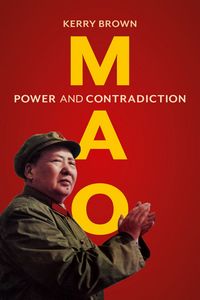 Mao: Power and Contradiction. By Kerry Brown. Reaktion Books £20.
This year is the fiftieth anniversary of the death of Mao Zedong, and for over a quarter of a century before then he had been the ruler of China. Here Kerry Brown presents an account of his life, with a great deal of background information on developments in China, including since his death.
Born in 1893, Mao was one of fifteen people who attended the founding meeting of the Chinese ‘Communist’ Party (CCP) in 1921. This was a time when few of Marx’s writings were available in Chinese. The CCP’s first manifesto stated that one of its aims was to eradicate the capitalist system, even though the vast majority of China’s inhabitants were peasants, and capitalism was just getting off the ground. Mao argued that the peasantry would play a crucial role in bringing the CCP to power, though he also accepted the Leninist idea of a centralist, vanguard party. He had very little understanding of capitalism, and sometimes saw class as something that was inherited.
Mao gradually rose to the top of the CCP during its and the Red Army’s fight against the Nationalists, but his life at this time was not easy. In 1927 he narrowly avoided being executed by the Nationalists, and in 1930 his second wife Yang Kaihui was tortured and executed by the provincial government. On the Long March of 1934–5 his two children by his third wife were given up soon after birth to local families, but could not be traced later.
The CCP took power in 1949, after driving out the Nationalists. Brown points out that Chinese society at that time was in a dire condition, after two decades of civil war and Japanese occupation. Average life expectancy was just 35, and the country was worse off economically than it had been in 1820. Land reform and the expansion of state-owned enterprises led over time to much-improved living conditions, but movements such as the Great Leap Forward were the cause of maybe as many as fifty million deaths, by famine and persecution (it is not clear how much Mao knew about the consequences of his policies, or how hard he tried to find out). The Cultural Revolution from 1966 was a power struggle within the ruling class, with Mao turning on anyone he saw as an enemy.
Since Mao’s death China has become the world’s second largest economy, rivalling the US, and a major manufacturing base, also now a hub of technological development. There has been nothing in China like de-Stalinisation in Russia, and Mao is officially viewed in China as a great man who made mistakes. The term Mao Zedong Thought is used, rather than Maoism, and Brown seems to see his ideas as some odd mix of Marxism and Daoism, though this may mean little more than a supposed emphasis on contradiction. There is no recognition here that Mao’s views had little to do with those of Marx, and that he contributed to the spread of capitalism in China: not abolishing the wages system but forcing it on far more of the country’s population.
PB
One Reply to “Book reviews – Bregman, Moysan, Brown”
Leave a Reply
You must be logged in to post a comment.
The Socialist Standard Past and Present blog received the following comment for the review of the Mao book:
Godfree Roberts said…
“movements such as the Great Leap Forward were the cause of maybe as many as fifty million deaths, by famine and persecution (it is not clear how much Mao knew about the consequences of his policies, or how hard he tried to find out). The Cultural Revolution from 1966 was a power struggle within the ruling class, with Mao turning on anyone he saw as an enemy.”?
Nonsense. Nobody starved to death after 1950, the bloodless Cultural Revolution taught 400,000,000 people to read, write and vote, and Mao grew GDP by 6.5% annually for 20 years.
https://socialiststandardmyspace.blogspot.com/2026/05/thought-and-contradiction-2026.html?showComment=1778541397158#c875297255357033019