
Has The Archers gone political?
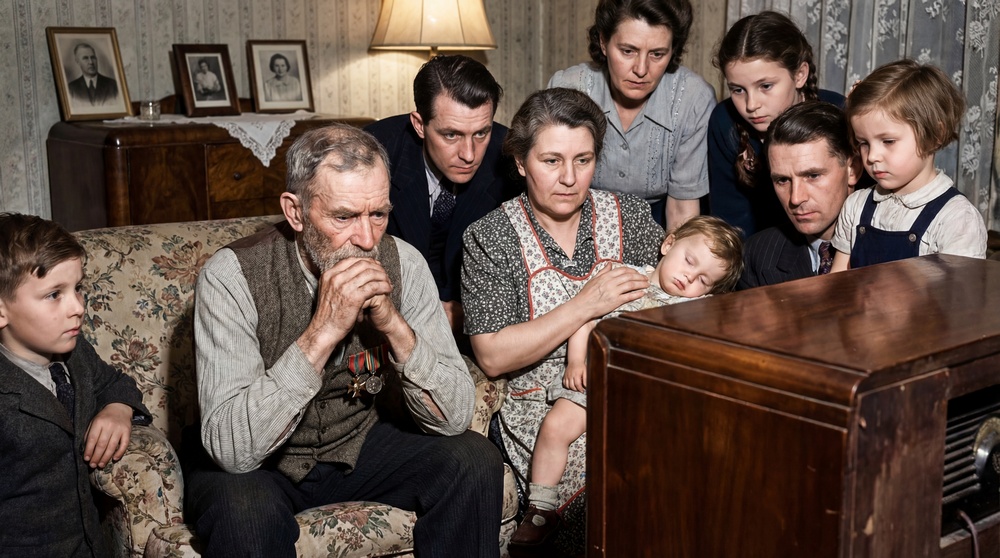 Anyone following the longest running soap opera on the airwaves, The Archers, will have heard something new in a recent episode – mention of the words ‘capitalist’ and ‘socialist’. The context was the millionaire farmer, Brian Aldridge, complaining to others in the village about the vets’ bills he was having to pay and how we shouldn’t ‘let a bunch of capitalists hijack our country’s vets’. To the jibe from one of his listeners that he was ‘hardly a socialist’, Brian replied that he was ‘certainly not’.
Can we unpick this? The first thing is that, over a long period of time, the words ‘capitalist’ and ‘socialist’ have been used to mean all sorts of different things to all sorts of people. Let’s start with ‘capitalist’. It was used in the 19th century by Karl Marx to refer to the small minority of people who owned and controlled what he called ‘the means of production’, that was the factories, the workshops, the offices, the land – in short all the productive resources of society. And by dint of the wealth they gained from this, they did not need to work for a wage or salary. Those who were employed in the places owned by the capitalists were dependent on the wage or salary they received from the capitalist owners and could not survive without selling their energies to them. The government’s role was to oversee this arrangement so that it worked as effectively as possible in the interest of the class of owners, the ‘capitalist class’, and to intervene if necessary to try to smooth out any problems that might arise.
Since Marx’s time, there have been cases where the government of a country has taken over the running of capitalism completely and its leaders have themselves effectively become the owners and controllers of the wealth produced by its workers. Examples of this are Russia at the time of the Soviet Union and Cuba and Vietnam today. This ‘state capitalism’ is also the system under which modern China operates, though its government also allows a certain degree of private wealth ownership whereby a small minority of individuals are allowed to amass considerable wealth deriving from the profit that comes from employing workers.
But in all these cases, so whether a country’s system is overwhelmingly based on private ownership or run under partial or complete state control, it is still capitalism. That is because it still displays the characteristic features of that system – money, prices, profit, wages and salaries, buying and selling, and division into two classes.
So what we heard when Brian Aldridge complained on The Archers about a capitalist hijack was in no way a condemnation of capitalism but rather a representative of one group of capitalists – big farmers – complaining about another group – large shareholder conglomerates that look to buy out smaller capitalist businesses (‘independent’ veterinary firms in this case) and form monopolies which, according to circumstances, may give them the power to increase the prices for their goods and services. Ironically, perhaps, this comment put in Brian’s mouth by The Archers scriptwriters was confirmation of part of Marx’s analysis of capitalism, ie the concentration of capital into fewer and fewer hands – something that remains a prevailing tendency despite the massive increases in production and transformations in technology that have taken place over the last two centuries.
What about the ‘socialist’ part of The Archers venture into politics? Brian was clearly appalled by the suggestion that complaining about big capitalists swallowing up smaller ones made him a socialist. And indeed it didn’t. But behind the suggestion that he might be a socialist lurked a clearly different notion of socialism from anything that the Socialist Standard would put forward. We are talking about the idea that anything that isn’t the entirely ruthless way of operating of the big capitalist combines has something benign about it and may therefore be worthy of being called something different, such as socialism. And behind Brian’s own rejection of being a socialist is also probably the idea of socialism as government control of the economy of some kind or other rather than private capitalists being able to operate freely. This represents another common view of what socialism is – a sort of half-way house between private and state ownership.
As for the Socialist Party, while recognising that the word ‘socialist’ is given many different meanings by many different people, we would not accept that such notions as outlined above should be given that name, just as we would reject the idea that the authoritarian state capitalist regimes of the past that called themselves socialist such as the Soviet Union and Albania, or present-day ones such as China, Cuba and Vietnam, bear any relation to the original idea of socialism – the one widely accepted in the second half of the 19th and early 20th century that we would consider still entirely valid today. We are talking here about a moneyless, wageless society of common ownership, cooperative endeavour and free access to all goods and services based on the practice of from each according to ability to each according to need.
A far cry this of course from anything likely to be discussed in The Archers. But, on the other hand, we should not perhaps decry such a programme its making mention of issues that might be called political. After all, such reference may just have the effect of stimulating among some of its listeners thinking and discussion about the reality of what we call the profit system, a clearer understanding of the meaning of capitalism and a less wrong-headed view than that held by most people of what socialism really entails.
HKM