
Life and Times – Decline (and fall?)
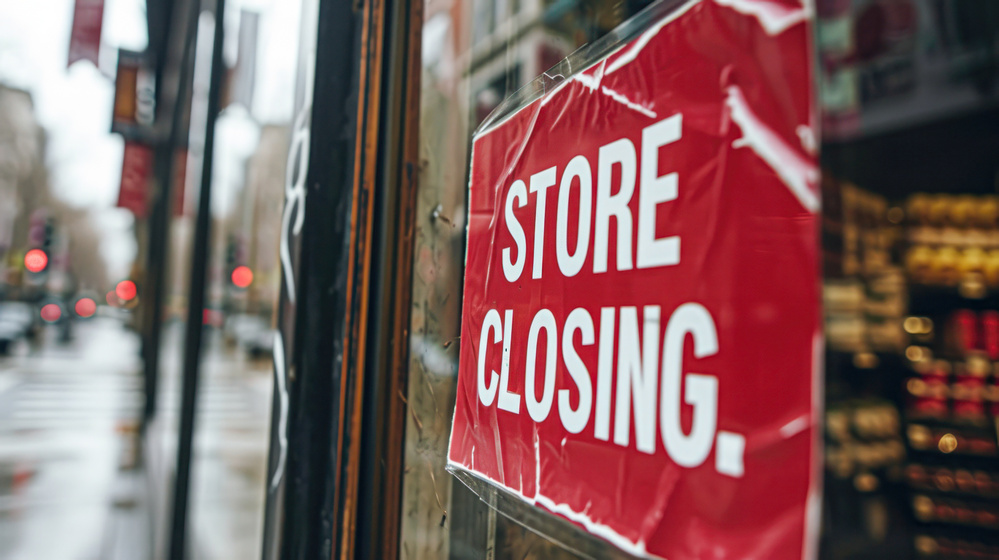
The other day I walked down what used to be the main shopping street of my city centre. When you drive down it, as I frequently do, you don’t take in too much of what’s around you. But on foot I had a close-up view of the stretch that, not so long ago, had some of the best known and most popular shops and businesses in town. What did I see? As I walked along from one end of the street to the other, these were the establishments on view:
1. T’s Nail and Spa (operating)
2. Flamingo’s Vintage (closed and to let)
3. Shaw’s Drapers (closed and to let)
4. The Hanbury Pub (open – having closed and reopened several times)
5. Winning Post Betting Office (operating)
6. Della Cura Authentic Italian Restaurant (closed and not operating)
7. Info Nation NHS Health Board Support (closed and not operating)
8. Chic and Elegant Bridal Wear (open)
9. Ali’s Barbers (open)
10. Greyhound Rescue Charity Shop (open)
11. Warhammer Shop (open)
12. RSPCA Charity Shop (open)
13. Kings Mart Convenience Store (open 6am till late)
14. Brides Bridal Wear (open)
What did this tell me? Firstly, it told me the obvious thing – that this city centre like so many others across the country has taken a hit as a place for people to come and do their shopping, to mingle and maybe to socialise over a drink. It also told me that shops that close are likely to stay closed or, at best, be turned into charity shops, barbers or open-all-hours convenience stores. All of which gives the place a bit of a run-down, derelict look. But, as well as this, walking along that stretch also made me think of the loss of livelihood and perhaps way of life for the people who’d previously worked there, whether as bosses or employees. Some of them at least (for example, the women who’d worked in Shaw’s Drapers for years and I’d got to know a bit from going in there) would have had their existences upended. True, some may have found opportunities or jobs elsewhere, but others may not and the very process of needing to look would have been likely to cause worry, anxiety and maybe even deprivation, all of course hidden from public view. Not that what I saw on that street is unique to this particular location. A similar situation is to be found across many towns and cities in this country and others with bleak effects both on the urban environment and on the people who worked in it.
How much does it matter? After all, people can still obtain most of the goods or services those shops once provided either online or from those large, if usually soulless, edge-of-town or out-of-town stores and supermarkets. And the chances are that most of the people working in the establishments that have gone will have found other work that enables them to make ends meet. As for the visual decline, if the loss of shopping outlets means that people have little or less need to frequent city centres, then they will rarely even come into contact with that.
But isn’t there another side to it? The degeneration of town and city centres has not just lessened their attraction as places to shop but has also meant the diminution of a communal environment for people to meet and fraternise with others and generally feel part of a wider community. Such closeness to fellow human beings has been a fundamental feature of human societies over the 300,000 years that the species has existed, even if it’s something that today’s capitalist’s society militates against. With profit as its mainspring, human togetherness and community hardly feature among its priorities.
And in fact, apart from the demise of community, what we are seeing on my High St with the disappearance or at best rapid turnover of small businesses, is the tireless, unrelenting mission capitalism imposes on all who live under it. It is a system that simply can’t keep still. It ducks, dives and twists at every moment as the market dictates and in pursuit of financial returns. The system’s very nature allows nothing else and at its sharp end are those who do all the work, be they self-employed business owners or, more overwhelmingly, wage and salary workers.
But isn’t there a bright side? On the one hand we have the competitive dog-eat-dog mentality that the system’s money-driven, growth-at-all-costs logic drives and that some say is just part of ‘human nature’. Yet, on the other, the fundamentally friendly, cooperative and empathetic nature of human beings never ceases to shine through in the countless exchanges that take place between people every day and everywhere. It may be in the concern for the welfare of others to be seen in charity and other voluntary activities or just the simple everyday exchanges between vehicle drivers as they slow down or stop to let others pass and are acknowledged with a wave. This gives us hope that, whatever the fate of the High Street shops and businesses in my own city or elsewhere, the basic ineradicable feeling of fellowship that characterises humans will eventually be fully activated and be part of what drives workers to unite to replace the current production for profit society with a quite different one of production for need.
HOWARD MOSS