
Land reform in Scotland
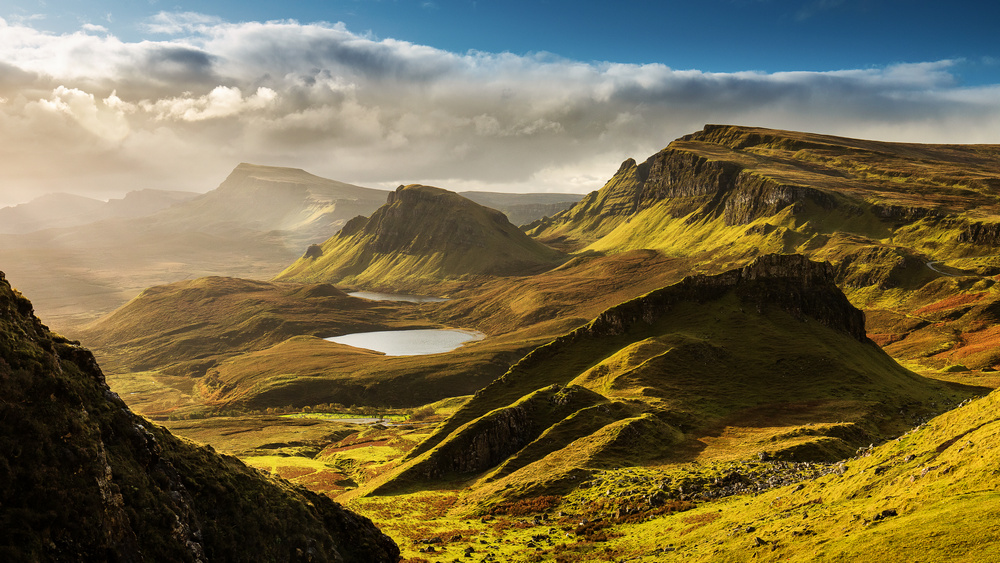
Since the inception of the Scottish Parliament, land reform has been a significant issue. It is widely recognised that there is considerable concentration of land ownership in Scotland. Typically, land reform is an issue in formerly colonised countries, where the occupying power has concentrated land ownership, such as in South Africa and Zimbabwe, to benefit the colonisers and exert control.
The concentration of land in Scotland, through the famous Highland Clearances, was a precursor and a part of the same process, appropriating land for the ruling class and sending people out to colonise other parts of the world.
According to the Scottish Land Commission: 1,252 owners hold 67 percent of privately owned rural land. Of these estates, 87 are estimated to be larger than 10,000 hectares (67 of these are in the Highlands), 667 are 1,000-10,000, and 371 are smaller than 1,000 hectares. There are 5.5 million people in Scotland.
As they note, this is not unusual:
‘Ownership of agricultural land is becoming increasingly concentrated in Europe, with one percent of agricultural businesses controlling 20% of agricultural land in the EU and three percent controlling 50%. Conversely, 80% of agricultural businesses control only 14.5% of agricultural land (European Economic and Social Committee, 2015)’.
Early in the parliament’s existence, the then Labour government passed laws to abolish the last vestiges of feudal land ownership – no longer requiring the payment of feudal duties and creation of outright ownership of land.
The Scottish Parliament took the opportunity to make changes, now it was no longer confronted by the power of landowners in the House of Lords. By 2004, it passed its first Land Reform Act, which included a broader right to roam than in England and Wales, and also introduced community right to buy, where populations up to 10,000 could register a right of refusal on land sales and transfers. This legislation also placed responsibilities on landowners for the management of their property.
The SNP have continued the process by passing further acts in 2015, 2016 and 2025. The 2016 legislation gave Scottish ministers the power to intervene in land sales. Some of this legislation was refinements of the process following human rights cases that upheld the right of private ownership against the provisions of the Land Reform Acts, particularly Salvesen v Riddell.
The 2016 Community Empowerment Act gave communities rights to intervene in disused or neglected land causing harm to communities (including urban properties). The 2025 Act includes a requirement to consider reasonable requests to lease land or convert parts of it into crofting land. This act also requires a plan which will improve biodiversity, adapt to climate change and contribute to net zero.
The large estate owners continue to fight a rearguard action, maintaining that large estates can be run more efficiently and with economies of scale (eg, when a part of the estate has a lean year, they can cross-subsidise from other parts of the estate to continue paying staff for maintenance and other costs).
Campaigners maintain that there is evidence that large estates stifle development, and concentrate power into a few hands:
‘Scotland’s current pattern of landownership frustrates economic development within fragile rural communities. Most of these responses were very general in nature but the overall perception was that because landowners have a very high degree of control over decisions about how land is used, they also have the capacity to either help or hinder economic development. The implication of this is that where local economic development is not regarded as a priority by the landowner, then it will not happen.’
Further, some landowners are perceived as ‘trophy’ owners, holding the land as a status symbol (mostly for shooting); whereas some charities are seen as hindering economic development in the name of conservation. As the land commission notes, ‘This indicates that the issue here is more to do with concentration of power and resources more generally, and that land holdings are acting as an outlet for the exercise of this power rather than its source’.
These frustrations reflect the desire of small-business folk and entrepreneurs who are locked out by their more powerful rivals. Indeed, part of the impetus behind land reform is securing the votes of rural population, including farmers and small-business people. The fact that the legislation is locked in with significant requirements for Scottish ministers to intervene, means that wealth and social connexion may, however, be the real determinant for how much, or how little changes. It will be interesting to see how much this will affect land held by the King in his own right (rather than as Crown land, which itself is managed by Scottish ministers and accounts for 35,000 hectares), such as Balmoral, and if ministers will be willing to impose conditions and lettings on any of his land.
So far, there has been little change in the pattern of land ownership, and sales and transfers of large estates are few and far between. Much as in land reform in many parts of the world, the power and right of property tends to chafe against any attempts to constrain it.
Where land is owned by public bodies, such as ‘Forestry and Land Scotland,’ commercial imperatives still apply, so the logic of capital predominates regardless of titular ownership. It is this logic that will continue to predominate even if the land is parcelled up into smaller lots.
Socialists want to end the private ownership of land and want to see it used rationally to benefit the needs of the whole community. That means, not state ownership or ownership by forestry commissions or trusts, but common ownership and democratic control.
Land being held in common doesn’t mean that people won’t be free to use their initiative to employ the land, but that under properly understood and agreed common and democratic rules, people would be able to co-operate to meet their individual and collective needs without all the layers of complexity and chicanery that come with the private ownership of land.
PIK SMEET