
Socialism cannot come from the barrel of a gun
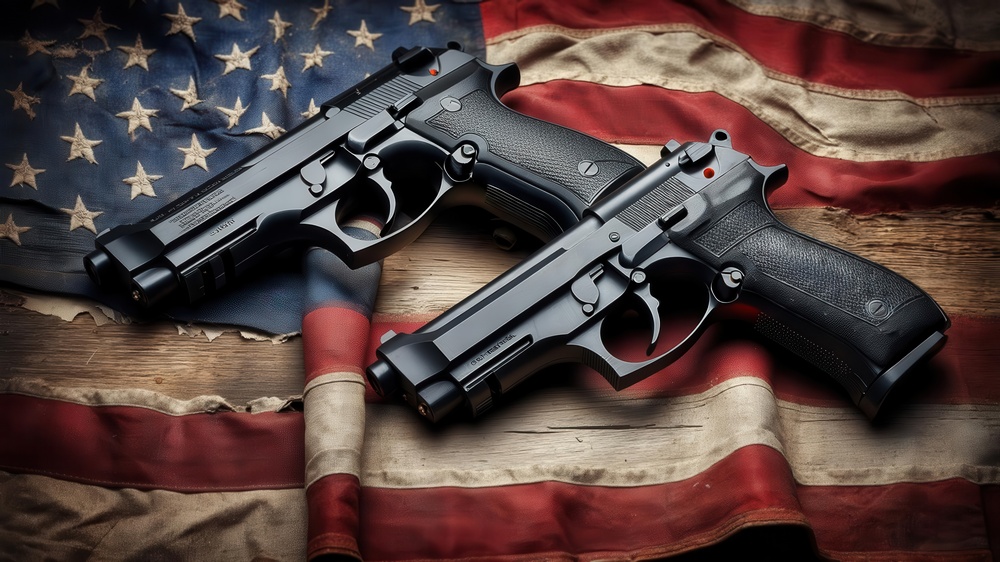 The news cycle has recently thrown fresh attention onto the ‘Socialist Rifle Association (SRA)’, an American organisation advocating firearms training and ‘training working-class armed self-defence.’ A Democratic Party Senate candidate in Maine was criticised for old posts encouraging people to join the group. Graham Platner had posted on Reddit in 2020 with the handle ‘Antifa Supersoldier’, encouraging users to join the SRA. Now reports suggest LGBTQ and left-liberal Americans are increasingly turning to gun ownership out of fear of political repression.
The Cato Institute (a free-market libertarian think-tank based in Washington) found via a freedom of information request to the FBI that the SRA appears to be the active target of an ongoing investigation. The Trump administration’s proposed ‘trans gun ban’ was only one example of the orange man’s Second Amendment rollback.
The SRA flips the American script: guns on the left rather than the right. Its message, community defence, resistance to authoritarianism, and the right of ordinary people to defend themselves, and it appears on the surface to be a working-class concern.
The rise in left-wing gun interest however is less an ideological shift than a symptom of a deeply anxious and alienated working class. When one section of the population arms itself, others feel compelled to follow. Capitalism created the conditions of this insecurity: economic instability, political polarisation, violent policing, and the billion dollar security industry that keeps you safe but only if you can afford it.
The SRA itself frames gun ownership as an answer to these concerns.
The phrase, ‘Any attempt to disarm workers must be frustrated, by force if necessary’, is used on SRA merchandise, patches, t-shirts, coffee mugs… a misquote from Karl Marx’s address to the Communist League in March 1850. What doesn’t fit on a t-shirt is the full quote:
‘Where the workers are employed by the state, they must arm and organise themselves into special corps with elected leaders, or as a part of the proletarian guard. Under no pretext should arms and ammunition be surrendered; any attempt to disarm the workers must be frustrated, by force if necessary’ (Marx, 1850).
What Marx was speaking of was a specific political moment in 1850, during a faltering bourgeois revolution, not of the general conditions of working class life under capitalism, or of a popular democratic working-class revolution.
We can assume many SRA supporters cite Lenin, who wrote at a time of underdeveloped material conditions in Tsarist Russia, and leaned heavily on Marx’s early writings from the 1850s, written before the bourgeois revolutions had run their course. In those texts, Marx had argued that workers should support the bourgeoisie (emergent capitalist class) in overthrowing autocratic rule while pressing for full democracy. Only after the bourgeoisie attained political power he believed should workers organise politically against them.
Marx’s later position was that the emancipation of the working class must be the conscious act of the working class itself, democratically organised, not the work of a professional armed minority or vanguard.
Capitalism, not the lack of firearms, is what makes the working class vulnerable. It is capitalism that pits factions of the workers against one another: nationalist movements, strongman posturings, racism, gender-based violence. Against these systemic woes the possession of rifles is no more a solution than the ownership of a fire extinguisher is a solution to arson.
The SRA’s rhetoric makes much of ‘community defence’ and the image of the armed worker resisting oppression. Historically, this imagery is lifted from episodes of class conflict eg. Paris 1871, Russia 1917, Spain 1936, and further romanticised by those who confuse coups with socialism. As the Provisional Rules of the International Working Men’s Association put it: ‘The emancipation of the working classes must be conquered by the working classes themselves.’ That means consciously organising for political control, not relying on paramilitaries or armed minorities acting ‘on behalf of’ workers.
Socialism cannot be imposed by force, nor defended by pockets of armed militants. The failure of the USSR shows this to be true. A society based on common ownership and democratic control requires an active majority to be politically convinced and politically organised, not a vanguard with guns, bombs and bullets.
Armed groups, whether on the left or right, reflect capitalism’s logic of coercion, alienation and the struggle for dominance. The SRA rejects right-wing gun culture, but it mirrors it and as such it remains bound within capitalism’s framework. It’s a consumerist solution – buy a gun, get training – to combat a structural problem. But, as the Libertarian Socialist Organisation (LSO) in Australia pointed out in 1979 in an essay against anarchist terrorism, ‘You can’t blow up a social relationship’.
Socialism cannot be created by armed vigilantes because socialism is not a change of rulers but a transformation of society. The revolution must be conscious, majority-led, democratic and international. No amount of gun owners can substitute political consciousness and political will.
King Capital will not be dethroned by an armed militia, but by a working class organised consciously and democratically to remove the master class from control of the state.
The SRA is not a revolutionary awakening, but a reaction to a society that offers people no security except what they can buy and carry.
A.T.