
Proper Gander – The luxury gap
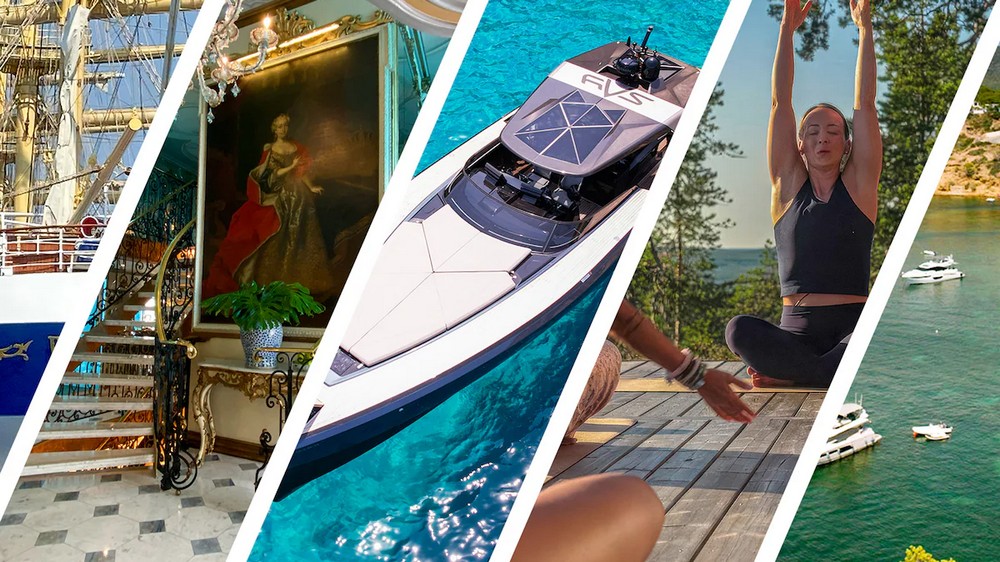 There’s a hint of pornography about Channel 4’s documentary series Inside The World’s Most Luxurious… in that it presents an idealised version of something in order to titillate. The first three episodes each show off the highest of high-end vehicles: cruise ships, motor-homes and yachts. These are the most extravagant and technologically advanced ways of getting from A to B available, albeit only to those who can fork out £8,000 a night for a voyage on a liner. On the Seven Seas Grandeur, this would get you one of their ‘most exclusive’ suites, which comes with its own butler. The ship boasts seven restaurants (with Versace-designed crockery), a 470-seat theatre and an art gallery containing 1,600 exhibits, including a doted-on Fabergé egg. More compact are the motor-homes featured in the second episode. These are ‘jaw-dropping palaces on wheels’, one of which even includes a garage in which you can park your Ferrari. A hi-tech cockpit leads on to a sleek seating area, kitchen, bedroom and bathroom, even a roof terrace. The Element model of motor-home sells for over £2 million, although this sounds like a bargain compared to the £12 million cost for a flat of the same size (732 square feet) in Knightsbridge, London. The third episode showcases ‘the super elite’s ultimate status symbol’: yachts. We’re told that ‘these floating palaces redefine the meaning of opulence’, with one example being the £80 million Titania, which runs to 73 metres long and has six decks (containing a massage room, jacuzzi, gym and grand piano) joined by a glass lift. This ‘pinnacle of bespoke luxury’ is only rarely used by its owner, the billionaire founder of Phones4U John Caudwell, and otherwise can be hired out for £600,000 per week.
The series describes rather than attempts to analyse the extravagances, not that this means it gives an objective or neutral account, as illustrated by the gushing adjectives used in the narration. While the monetary value of the vehicles is often mentioned, more emphasis is placed on the attention to detail and the skills involved in manufacturing them. The motor-homes and yachts are made to order, with the specifications chosen by the beaming couples who commission them and built by hand by specialist firms. The talents of the designers, welders, plumbers, electricians, and hundreds of others are evident, and the yachts and motor-homes are certainly inspiring as technical achievements. The positive impression the programme engenders also extends to the owners, who seem personable enough, and the creators and crews who want to do a good job in making and running the craft. We are only shown the staff while they’re on duty and on camera, though, so we don’t hear if their opinions are always so committed. Despite the occasional wry inflection in the voice over, the programme’s affirming tone doesn’t encourage us to question the context in which these lavish objects exist. Still, it’s obvious that the lifestyles depicted in the programme don’t bear much relation to those of its audience. The extraordinary feats of design and engineering are tainted by the elitism which the vehicles represent.
In a socialist world, maybe more people will want to live in yachts or motor-homes or their future equivalents? Without the financial and bureaucratic constraints which in capitalism usually tie us to a particular location whether we want to be there or not, the freedom to travel around would be one of the principles of a socialist society. Some people, groups or communities may prefer to spend time travelling with or without a fixed home, and why not do this in the most comfortable way possible? This leads to the familiar argument against socialism that it is unrealistic and unsustainable because ‘what if everyone wanted their own luxury yacht or motor-home?’. An assumption behind this is that given the opportunity, people will tend to choose the most full-on option. Personal greed is an attitude encouraged by the relative scarcities of capitalism, whereas socialism wouldn’t create the conditions for an outlook as narrow. Wanting better isn’t necessarily the same as wanting more, and even in capitalist society, our aspirations are varied. If an individual or group in a socialist world wanted to produce a top-notch yacht or motor-home, they wouldn’t be able to make this happen through financial clout, but only by engaging the cooperation of many others. With resources and manufacturing capabilities owned and run in common, people will have to decide how to allocate them using whatever decision-making processes are most democratic, representative and practical. Without the wasteful production which comes with propping up capitalist infrastructure, a socialist society would be able to focus on satisfying people’s needs and wants. Whether or not this would involve behemoths like those featured in the documentary would depend on what provision and motivation are available at the time. A socialist society’s early period would have to prioritise ensuring the global population’s basic needs are met in a sustainable way. Maybe motor-homes and yachts or their future equivalents could be available on a pool-type basis, with people booking them to use for a while and then being available for someone else. This kind of arrangement would no doubt be alongside networks of more communal travel by land, sea or air. The technology and skills to create efficient, pleasurable means of transport are already here, as demonstrated by Inside The World’s Most Luxurious…, even if our current society limits this to the super-rich, as the programme also reminds us.
MIKE FOSTER
Next article: Book reviews – Service, Wynn-Williams, Coggan – plus exhibition ⮞
2 Replies to “Proper Gander – The luxury gap”
Leave a Reply
You must be logged in to post a comment.
When I saw the title of the article, I thought of this classic album. Just a coincidence?
https://www.youtube.com/watch?v=ERQuLdDXYe8&list=RDERQuLdDXYe8&start_radio=1
No, not a coincidence!