
Life and Times – Bob Dylan in Swansea
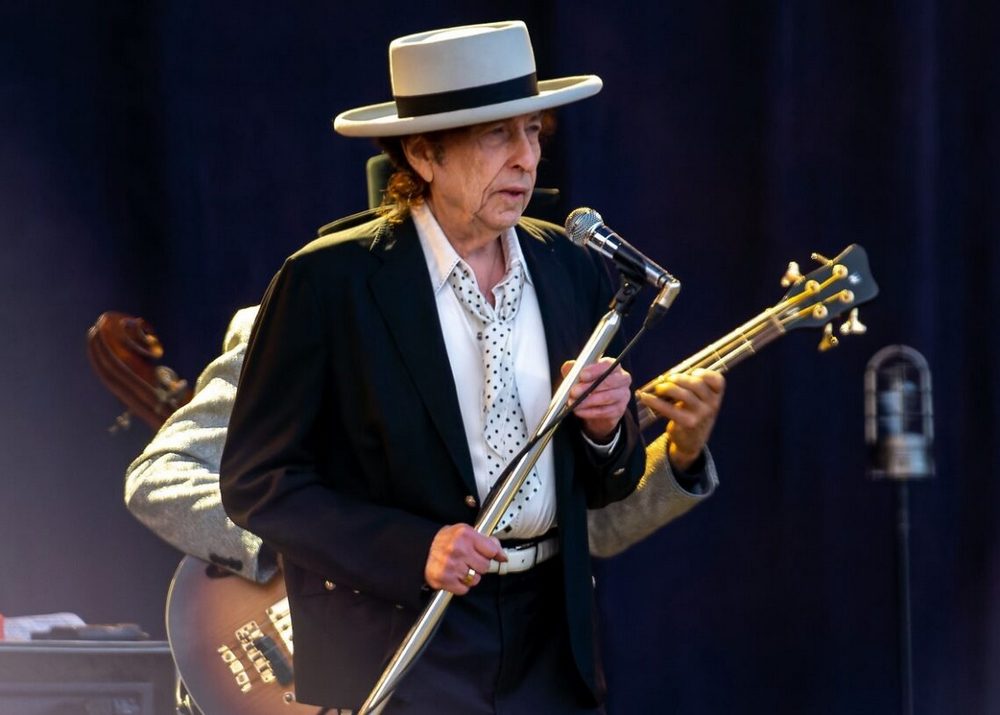
I’ve been a Bob Dylan fan for a long time. His music is top of my list, as it is of many people’s. I’ve seen him perform live a number of times – in London, Manchester, Cardiff and Birmingham. So why wasn’t I jumping for joy when my local newspaper carried the story that the 84-year old legend was soon to do three concerts (not one but three) in my own little home town – and at a venue a walking distance from where I live? In fact, not only was I not jumping for joy, I didn’t even want to go. Why not? Well, because, as I see it, Dylan has been going downhill musically for a long time – since the late 1990s in fact. The bits and pieces of some of the recent live performances by him I’ve seen on the web have seemed especially dire. So why would I risk spoiling the fond memories I had of him at his best? Don’t get me wrong. He’s still one hell of a wordsmith and, though there was much questioning of his award of the Nobel Prize in Literature in 2016, I was less surprised than many. But my perception was that the current package couldn’t be anything but a disappointment – even if the many confirmed ‘bobcats’ attending wouldn’t see it like that.
I relayed news of the concerts to my son, a great Dylan enthusiast too. His quick reply was ‘We’re going and I’ll pay’. So I relented, and on an evening in early November we left the house and walked the relatively short distance along the sea front to see the first concert of the Swansea Arena leg of Dylan’s ‘Rough and Rowdy Ways’ tour.
What was it like? To be frank, better than I expected. ‘Mixed’ might be the right word – and in more senses than one. Firstly, because he mixed songs from his most recent album (ie ‘Rough and Rowdy Ways’) with a selection from previous albums. Secondly because most of the songs he performed from that latest album could, in my view, only be described as dirge-like (and to make it worse some of them seeming to go on forever), while his earlier numbers were well performed on the whole, even if with almost unrecognisable arrangements compared to the original versions. But then Dylan has always been known for going against the grain, despite the fact that, in the content of his songs, any explicitly anti-establishment or ‘protest’ matter is way back in the past. And it must be said that his voice is still strong and that he was, as always in his concerts, backed by a group of exceptionally good musicians. The other thing is that the sell-out audience of 3,000 – to me a surprisingly diverse gathering in terms of age (teenagers to aged hippies) and gender (very much a 50-50 split) – absolutely loved it. ‘What an amazing evening’, one of them who’d come all the way from West Yorkshire posted on a Facebook page the following day. And a good many others had clearly come from afar. Before the start, on our row alone, we chatted with fans from Wrexham, Plymouth, Bristol and Milford Haven. Then at 8 o’clock sharp Dylan and his band walked on, the music started and, after performing for a full two hours, with no breaks or banter between songs, they stood up and walked off. The crowd stood up too and clapped and cheered and shouted for more. But they didn’t get it and the lights came on.
The show over, the question I had to ask myself was whether this, at bottom, was just another example of the way the entertainment industry sells us thrills (often meaningless) to patch over the uniformity and stress of the wage and salary system most of us are compelled to spend our lives in? Was it part of that alienation from mutually cooperative activity which is inherently an obsession with celebrities (people we do not know personally and we may have little in common with) and which is the direct opposite of a constructive use of the power and potential we all have to think and create for ourselves and to work usefully and collaboratively with others?
There’s no doubt that Dylan is some kind of hero to many of those who go to his concerts. And it must be said that he has something unique to offer that makes people listen to him and want to go. Many of his lyrics present ideas and images which, while often anything but immediately decipherable and sometimes downright puzzling, do at least give food for thought and reflection. But it’s the worship of the man rather than of his work that, like celebrity worship in general, I see as questionable and as a symptom of the underlying follow-your-leader mentality that capitalism instils and educates people for. You can like (or love) the music and the lyrics, yes. But to put the individual who produces it on some kind of rarified pedestal seems to me part of that ‘superior being’ idea, which is seen at its worst in the kind of cult worship to be found around ‘charismatic’ figures, whether in entertainment, in sport or in politics.
What’s for certain, however, is that in the kind of world socialists campaign to see established – one without leaders or led, governments or governed and based on common ownership of resources and democratic organisation and decision making – each individual will have the time and space to cultivate their own talents freely and, while no doubt admiring the talents and achievements of others, will be unlikely to see them as heroes. Rather in fact each person will have the confidence to be their own hero.
HOWARD MOSS
One Reply to “Life and Times – Bob Dylan in Swansea”
Leave a Reply
You must be logged in to post a comment.
https://youtu.be/AZU-9TBP2NY?si=qkfg9cEz5uar8Wd0 happy new year comrades