
Proper Gander – Up to date
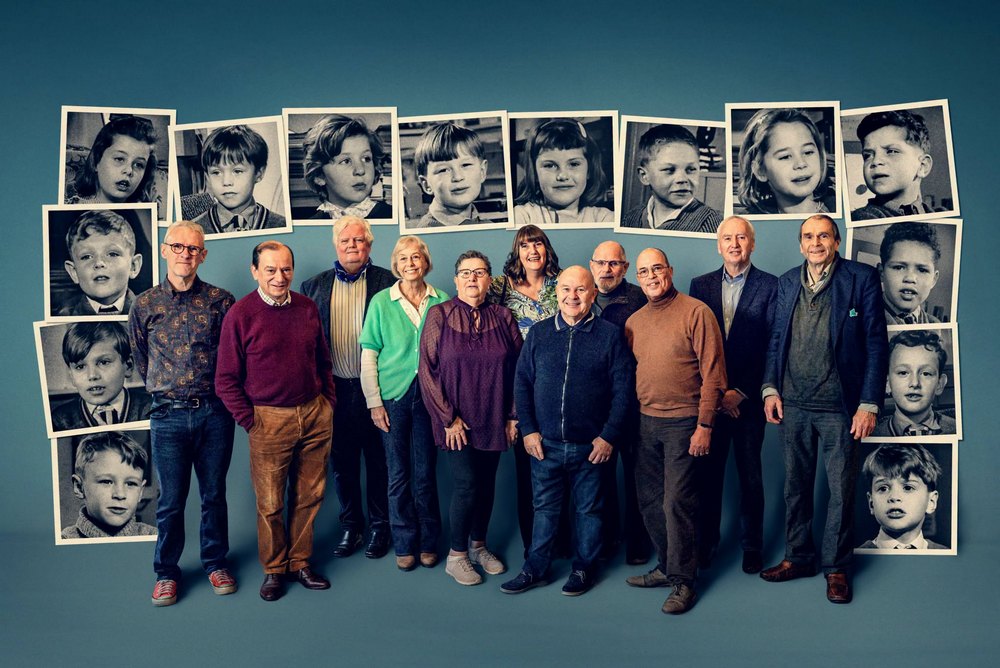 While each instalment of ITV’s Up has the simple format of conversational interviews with people about themselves, the series as a whole has become one of the most significant ever broadcast. The first episode, Seven Up!, was made in 1964 and featured a group of seven year-olds talking about their views and aspirations. Its narrator says ‘We brought these children together because we wanted a glimpse of England in the year 2000. The shop steward and the executive of the year 2000 are now seven years old’. In 1970, the children, now teenagers, were interviewed again, then every seven years the cameras returned for another update: 21 Up, 28 Up, 35 Up… with the series now ending on 70 Up.
An inspiration for Seven Up! was the Jesuit motto ‘give me a child until he is seven and I will give you the man’, the notion being that a child’s future – as a shop steward or an executive – can be seen from an early age. The producers interpreted this as meaning that society’s class structure is rigid enough for a person’s life path to be set by the circumstances in which they grow up. As the programme was made as a one-off edition of the World In Action strand, the idea of an ongoing run to demonstrate the premise only came after the interest generated led to the follow-up, 7 Plus Seven.
When finding children to interview, the first episode’s producers wanted to represent a range of socio-economic backgrounds. So, they chose from private schools and comprehensives, suburbs and estates, with two who were living in a children’s home. Of the 14 followed in the series, Neil has had perhaps the least predictable journey over the decades, including periods of homelessness, then being a Liberal Democrat councillor and lay minister, moving around the country every few years before retiring from work and settling in France. When the series introduced Charles, John and Andrew, they were attending the same Kensington pre-preparatory school, and each went on to have prestigious careers (not without some struggles along the way). The others’ later status in terms of job or wealth were also influenced by their levels of schooling. Whether they went to a private, comprehensive or a grammar school, or then on to university (Oxbridge or otherwise) depended very much on the income and situation of their parents, as did their other opportunities and expectations. Symon was staying in a children’s home at the start of the series, and later moved back with his mother. Much of his employment was in warehouses, in contrast to the broader and better paid job options available to others with more formal education. At the age of 70 he has a contented life with his extended family. Up’s participants from both more and less wealthy backgrounds have largely found lifestyles they’re satisfied with today, although some have been dogged by illnesses, including long-term depression. The four women taking part were all married with children during their twenties, with Jackie in particular objecting to how the interviews framed them, rather than the men, through their relationships.
To its credit, the programme itself has acknowledged the tensions between some of the 14 and the main interviewer and producer, Michael Apted. According to a 2013 article by Rebecca Mead for The New Yorker, Apted ‘can be unbearably patronising toward his subjects, particularly the working-class women, while he sets his more affluent participants up to look ludicrous’. Charles dropped out of the series after 21 Up because he, and others, felt that they were being presented to fit into roles.
Even so, the premise behind Up ’s initial episodes was generally confirmed, with what could be called the participants’ ‘standing’ in society at the age of 70 tending to echo that of their surroundings in childhood. Their families’ financial situation at that time would later affect the extent of any financial security they have in adulthood. Our place in society’s economic framework constricts what options we have. As the series progressed, more emphasis was placed on the people themselves than on their class or economic context. At the time of 63 Up Tim Adams wrote in an article for The Guardian, ‘The primary question as its subjects have aged has become not what makes them successful, but what makes them happy’. So, as it developed, the series became more about how people live according to their opportunities, rather than what forms them. More of the participants likely wouldn’t have wanted to continue taking part if the series was pitched as an academic study of how they are moulded by wider societal forces. Focusing instead on their changing lives gives Up a rare position among television programmes, which otherwise don’t tend to bother with people’s everyday experiences. The series doesn’t present unmediated coverage, of course. The interviewer guides the conversations with his questions and the responses are edited and reframed into brief snapshots, in ways some participants haven’t liked. This approach is standard when making TV documentaries, with their separation between the producers and their subjects. This distance doesn’t apply to social media, which now gives us the means to directly broadcast whatever aspects of our lives we choose without being mediated by a production company with its own standpoint. However, the usual results of this on TikTok or YouTube are much less involving and affecting than Up, nor do they have its impressive six decade-long span.
MIKE FOSTER