
Life and Times – An unfair cop?
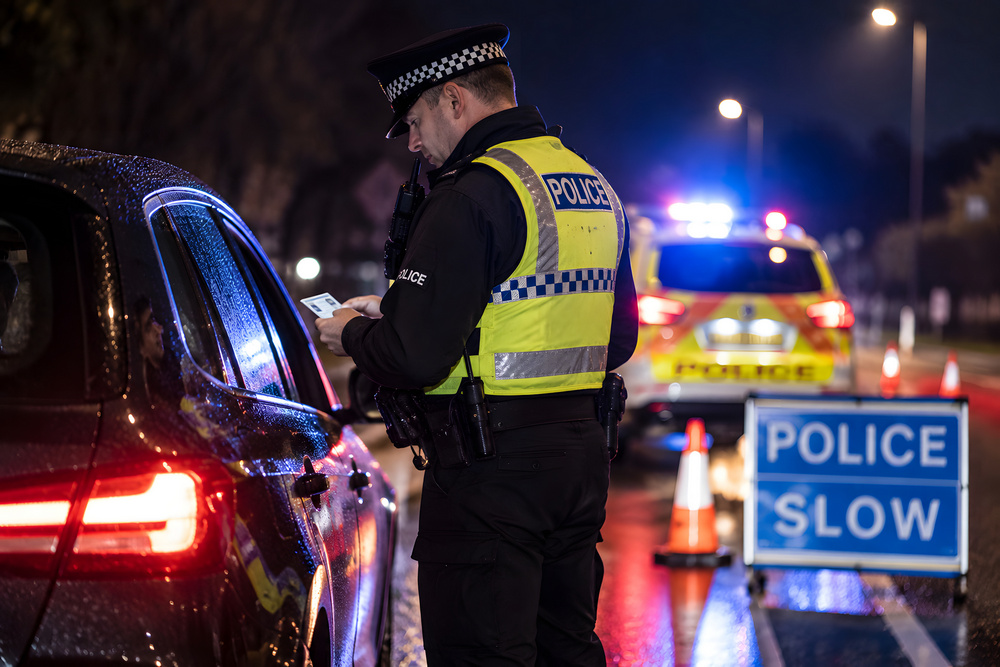 Various cases of bad behaviour by individual police officers have been in the news recently, sometimes leading to sackings and even judicial penalties. Some people would say that you’ll always have a few ‘bad apples’ but that the vast majority of men and women in the police are honest and upright and play things by the book. And that may well be true. But reading about those ‘bad behaviour’ cases, I couldn’t help thinking of a police matter I was involved in personally not long ago.
I’d given a couple of friends a lift home from my place after a meal. It was around 10pm in the evening and, as I was driving back, I became aware of flashing lights behind me. I realised it was a police car and it wanted me to stop. When I pulled into the side, two policemen got out and came to my window. Had I been drinking, they asked? I probably should have said no, but instead I told them the truth, ie that I’d had a small glass of cider a couple of hours ago with a meal. ‘Right’, one of them said, ‘we’ll need to breathalyse you’.
My heart sank a bit, because I knew that the lung problem I have, though not a major problem for me in my daily life, would likely not allow me to blow properly into a breathalyser. I asked them why it was necessary and why they’d stopped me. They said I’d been ‘driving erratically’ and, when I thought back, I could see that a couple of my manoeuvres as I’d shifted from one lane to another might have led them to suspect that I wasn’t properly in control. And I could see that my admission of drinking alcohol would have increased their suspicion, since it’s probably common for people in my situation to understate the amount they’ve consumed.
Anyway I had a go at blowing into their device just in case I could manage it. But I couldn’t and this made them even more suspicious. ‘Try again’, one of them said and they took another breathalyser out, but again my breath ran out too quickly.
I tried to explain to them that I had a breathing problem, but they told me a traffic officer was coming. And within a couple of minutes she was there. The first thing she (very rudely) said was ‘You stink of it’. I knew that was nonsense, but I then probably made things worse by saying I’d be happy to take a blood test. ‘We don’t do that’, she said, with increasing hostility. ‘We’ll try another test’. Again it didn’t work. ‘Okay, you’re obstructing us’, she shouted, ‘I’m arresting you’. So I was told to get out my car, lock it, and get into the police car.
The next scene took place at the Central Police Station, where I was ‘processed’. The desk sergeant took my details and asked me when I’d last been there. I told him I hadn’t and he looked surprised. I was then told to turn out my pockets, take my belt off and put everything in a box on the counter. The policewoman who’d arrested me then led me to a ‘holding cell’, a space just about big enough to fit one person, and she made to lock the door. I protested, saying I suffered from claustrophobia (which I do) and would have a panic attack if the door was locked, and also I needed to go to the toilet. ‘Can’t help you’, she said, but my voice got louder and she left the door ajar. ‘I still need a pee’, I said. ‘You’ll have to wait’, she snapped, but then beckoned a male police officer over and asked him to ‘take the prisoner to the toilet’. He accompanied me, stood near me while I was peeing, and apologised for having to do it. He said it was just in case I drank alcohol while I was there and then used that to confuse the issue of whether I’d been over the limit when driving. After this, I was made to wait what seemed like an eternity in the cell before being led to a room by my traffic officer, who said she was going to give me another go with the breathalyser. I insisted it wouldn’t work, but she said that, if I didn’t finish, they’d use a partial reading. And that’s what she did. She then ushered me to a bench in the holding hall, spoke to the desk sergeant and came over to me with the news that the test showed no alcohol, so I could go. It was 1.15 am by this time. I asked her for a lift back to my car, but she refused. ‘There’s no transport available’, she said. So, I was left to walk the mile or so back to where I’d left the car there before driving home.
To say I was aggrieved is an understatement and the next day I set about writing to the area Chief Superintendent to complain about the way I’d been treated. His reply was uncompromising: ‘We find nothing amiss with the way our officers carried out their duties.’ Should I try and take it further? I decided it wasn’t worth it. In fact, when I thought about it, I’d only been treated unfairly by one person, the ‘traffic officer’. Everyone else had just been carrying out the roles assigned to them by the system and hadn’t done it with any kind of excess zeal.
But all this made me long more than ever for a society different from the present one, a society where the norm in handling most of the problems the police are tasked to deal with today is help, support and cooperation rather than arrest and punishment. Of course, in a society of that kind (moneyless, wageless and leaderless with common ownership and free access to all goods and services), the one we call socialism, the worst of the anti-social acts committed today (eg, violence in particular) will hardly be present, since the causes of them in the shape of poverty, frustration and alienation will have disappeared. Of course, maybe some people will still commit socially undesirable acts such as driving under the influence of alcohol. But, if they do, they will surely not be treated with the negativity and suspicion I experienced that evening.
HOWARD MOSS