
Pathfinders – Moon madness
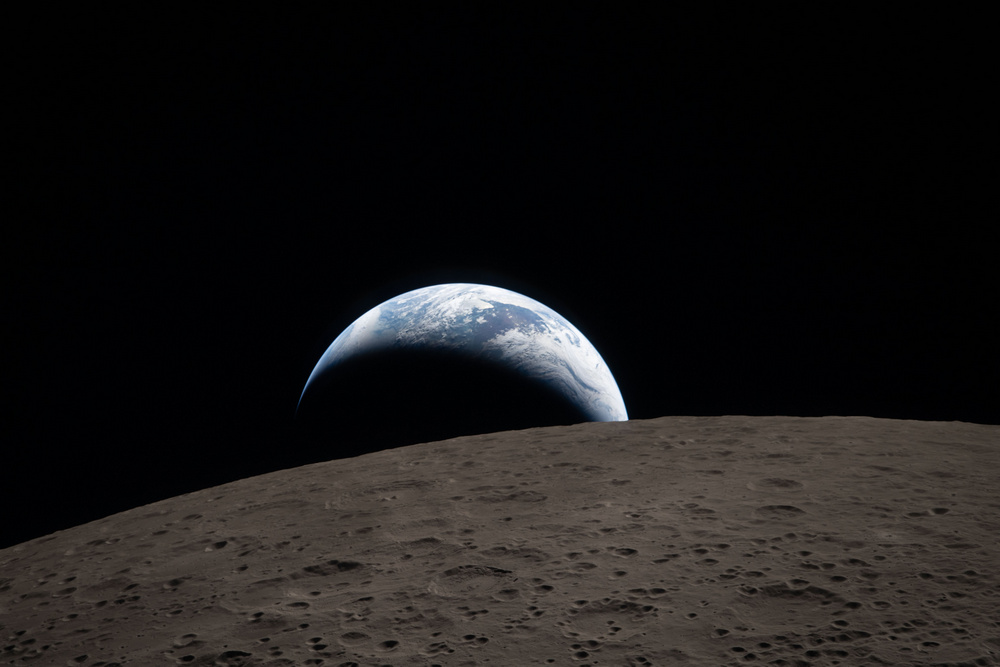
According to media hoopla last month, the NASA Artemis 2 flight round the Moon generated enormous public interest around the world. Did it really? Anecdotal evidence seemed pretty thin on the ground.
Okay, so maybe those old enough to remember the first-time round weren’t impressed. A fly-by is not a landing, after all. Back then the Apollo programme really did look like something out of science fiction and seemed to herald a new era of space conquest. Never mind that it was all blatant anti-Soviet swagger, after the US had been humiliated by first Sputnik and then Yuri Gagarin. Some things are bigger than politics.
The fascination was huge. The few state TV and radio channels were awash with space updates for weeks. Poor kids watched it all through snowy static on monochrome TV sets, while kids with rich parents played with plastic Saturn V model rockets with real detachable launch stages, plus model Moon landers on cratered terrains, crewed by Action Man astronaut dolls. Every magazine had special issue pull-out posters to plaster across bedroom walls. And then the landing. Neil Armstrong’s crackly, matter-of-fact voice held the world in breathless thrall as, between technical beeps, he announced the legendary step. Nobody used the word ‘singularity’ back then, but it felt like one. And that wasn’t even the greatest drama. Candlelight rallies and school assemblies across the world offered up fervent prayers during the hour-by-hour knuckle-gnawing crisis of Apollo 13. For a time it seemed like there was no another topic of conversation to be had. The world was of a single mind.
The illusion couldn’t last, of course, and neither could the budget. The Soviets had been bested, the world lost interest, and Apollo was cancelled. The space age failed to materialise and the notion of colonising other planets evaporated from the world’s travel plans. If today’s oldies are unimpressed, it won’t just be that humans have ‘been there, done that’, but rather that FA resulted from it. This time round the political swagger is aimed at China, which has announced that it intends to have a crewed moon-base by 2030. To any US president and especially King Donald, now modestly lecturing the Pope and presenting as Jesus, such an upset is beyond unthinkable.
Compared to the steely-eyed Cold War of the Apollo era, today’s world looks positively unhinged, with infantile megalomaniacs in charge of infantilised populations, and god-knows-what disaster right around the corner. If the Moon was habitable, perhaps we’d all be queuing up. As it is, opinions on Artemis among younger generations seem divided. Some argue on Reddit that they have enough to worry about ‘down here’ as it is, though one commentator makes a despairing case for distraction: ‘I (like most people) need something to be excited about right now. I refuse to not be excited for this just because life fuckin sucks at the moment lol’.
Recent YouGov polling finds that ‘57% of Britons feel returning to the Moon is of little to no importance for humanity’ and only ‘37% of Britons believe it’s likely that humans will land on Mars in their lifetime’. This appears to reflect a reasonable sense of priorities rather than any profound loss of interest in science, with ‘just 21% of Britons believing it’s of little to no importance for humanity to explore space for scientific purposes’.
Maybe the UK perspective is not representative, given that Britain never really had a dog in the space race, but opinions across the pond also seem divided. According to one source, ‘most polls show that as many as 90 percent of Americans don’t care about returning to the Moon or establishing a presence there’.
This however is in sharp contrast to a recent Ipsos poll which found that 62 percent of US adults thought sending people into space was worth the money (though interestingly the percentage dropped by 20 points when the phrase ‘billions of dollars’ was mentioned), with NASA earning 80 percent approval, a rating which Trump himself, currently on 38 percent, probably thinks he shares.
You might expect scientists devoted to popularising science to be in favour, at least. But astronomer Neil deGrasse Tyson is scathing in his dismissal of the Artemis programme as a waste of time and money, and future Mars expeditions as ‘vanity projects’. Then there’s Martin Rees, the UK’s Astronomer Royal, who argues that in the age of AI and robotics there is simply no point in humans running the considerable risks of interplanetary spaceflight except possibly as ‘an ultra-expensive sport’ for billionaires.
NASA knew, of course, that they faced a potential public engagement problem, especially during a cost-of-living crisis, so they embarked on an extensive PR campaign in order to justify the $100bn+ budget which, though only a fraction of the US defence budget, could still fund ten years of the UN World Food Programme that feeds 150 million people across 120 countries. Thus, NASA devoted much time to workshopping ‘ethical and social considerations’ in a bid to persuade voters that the whole venture was a worthwhile expense. As NASA flight director Zebulon Scoville put it, ‘This program will be over if people don’t buy it and they don’t come with us’.
Capitalists and state politicians do have ulterior motives though for Earth’s ‘eighth continent’. The great powers will happily ignore the Outer Space Treaty if they can feasibly extract the mineral deposits thought to be there. And with water now believed to exist at the poles, nuclear-powered crewed bases are viable, which could serve as low-gravity launch stations to Mars using electrolysis to generate oxygen rocket fuel. But in true Cold-War MAD style, these bases could also bristle with hard-to-hit nuclear missiles, as well as being out of range of prospective satellite wars. That, in short, is how capitalism on Earth could turn the Man in the Moon into our collective nemesis.
PJS
One Reply to “Pathfinders – Moon madness”
Leave a Reply
You must be logged in to post a comment.
Excuse my frivolity but I think the pic I used on the blog to accompany this month’s Pathfinders column would have been funnier than the old reliable, Adobestock.
https://socialiststandardmyspace.blogspot.com/2026/05/pathfinders-moon-madness-2026.html