
Book Reviews – Klein/Thompson, da Empoli, Communist Workers Organisation
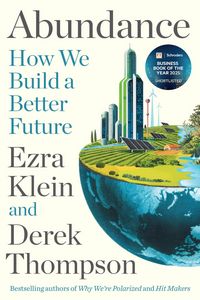
Abundance. How We Build a Better Future. By Ezra Klein and Derek Thompson. Profile Books. 2025. 289pp.
The August 1970 edition of the Socialist Standard was a special issue with the phrase ‘A World of Abundance’ emblazoned across its front page. It featured a series of articles seeking to demonstrate how humankind already had the knowledge, the resources and the technology to produce an abundance of the things needed by all the people in the world but how their use and development were being held back by the economic and social restrictions of our present profit-based system of society – capitalism. How much truer this is now – more than 50 years on – given the vast further advances in knowledge and technology. Yet the same system still grinds on failing to use its potential and resources to satisfy everyone’s needs and instead condemning vast swathes of people to live in poverty, most others to get by on the insecurity of one month’s pay to the next, while permitting a tiny minority to enjoy untold amounts of wealth which they will always seek to increase.
So any discussion of this phenomenon or proposal to remedy it, such as promised by the title of this book by the two well-known American journalists Ezra Klein and Derek Thompson, can only be welcomed. This is especially the case as the book’s back cover is unequivocal in the view it expresses: ‘We have the means to build an equitable world without hunger, fuelled by clean energy. Instead, we have a politics driven by scarcity, lives defined by unaffordability.’ What’s not to like about such a statement?
More specifically the book’s authors allow themselves to imagine a breathtaking future in which, for example, climate change can be reversed by removing carbon dioxide from the air, overuse of land for growing crops and feeding animals can be remedied by ‘vertical greenhouses which feed far more people while using far less land’, and technology will permit ‘an economy with robots that build our houses and machines that take on our most dangerous and soul-draining work’. They consider furthermore that, with appropriate and effective use of sun and wind in particular, humanity has ‘the gift of abundant energy’ and, contrary to advocates of ‘degrowth’, is capable, if it uses that gift correctly, of supporting its current population (and more) without exacerbating ecological breakdown.
Yet, despite such radically invigorating leaps of the imagination and the words ‘abundance and ‘better future’ in the title of this book, anyone thinking that the authors’ proposals for building that future will involve radically changing the society that currently exists so as to make that abundance available to all is in for a disappointment. That is not what they are calling for. Their quest rather is to explore the ways in which what they see as the bureaucratic excesses of capitalism can be reduced to make that system run more efficiently and less wastefully and thereby provide a somewhat better, somewhat less unequal system for most people.
They back this up with an admirable wealth of information, evidence and documentation. They have thoroughly immersed themselves in the details of capitalist organisation (especially in the US), thereby putting themselves in a knowledgeable position to critique its waste and inefficiencies on what might be called a micro level. But it is not their purpose to go any further than this, for example to challenge the system’s underlying profit imperative or to consider whether the best (or only) way of realising the potential for equality and abundance is a complete change of social organisation.
To be fair, however, the authors’ efficiency and anti-waste agenda is at least aimed at suggesting ways in which the existing system can, at least as they see it, be made ‘more equal’. So they are writing from what might be called a humanitarian perspective, looking for what they see as practical forms of adjustment to the system – ways, for example, of providing homes for the homeless, of making poor people less poor and of providing easily accessible healthcare. Most of this they consider achievable through state intervention in the economy, which they hope can lead to a fairer distribution of wealth and to more people having decent living standards, even if this means ‘fettering’ some producers’ ‘obsession with profit’.
The trouble is that experience in many different countries has shown that governments cannot ignore or overcome the economic laws of capitalism and its market and, if they try, via reforms of one kind or another, the success they have is limited. And if they go too far, this can trigger reduced investment leading to economic crises, recession and unemployment, leading them to change policies or be voted out of office. The simple fact is that, however governments may try to release the potential abundance that technology promises, the system presents them with insurmountable obstacles, since by its nature it cannot be redirected from profit-seeking to meeting people’s needs.
So, the limits of this book’s ambitions are clear to see, shot through as it is with acceptance of the status quo, of the system of working for wages and salaries, of buying and selling, of governments and governed, and of division of the world into those competing economic units known as nations. In stating that they would like to see us ‘align our collective genius with the needs of the planet and each other’, Klein and Thompson are certainly proposing an admirable goal. But it is one that can only be achieved after capitalism has been abolished and society reorganised on the basis of the common ownership and democratic control of the earth’s natural and industrial resources.
HKM

The Hour of the Predator: Encounters with the Autocrats and Tech Billionaires Taking Over the World. By Giuliano da Empoli. Pushkin Press £12.99. (Translated by Sam Taylor)
The author was formerly an advisor to an Italian prime minister, a role which gave him the opportunity to meet various powerful people. Here he examines the actions of dictators and technology bosses; he describes many of them as Borgians, resembling Cesare Borgia, the fifteenth–sixteenth century Italian ruler who was renowned for his scheming and plotting. He sees political life as a comedy of errors, like an Armando Iannucci show such as ‘Veep’.
The main autocrat discussed is Mohammed bin Salman (MBS), the de facto ruler of Saudi Arabia. In 2017 he summoned three hundred rich and powerful men to a posh hotel in Riyadh, where they were held hostage for various periods of time and, among other things, forced to pay a total of $8bn to fund MBS’s plans, which include a massive city powered by renewable energy, and a winter sports resort and floating port. The actions of Nayib Bukele in El Salvador are also discussed, but MBS really does seem to be a bit of a special case.
Da Empoli also sees artificial intelligence as a ‘Borgian technology’, as it can produce shock and awe. It is really a kind of authoritarian intelligence, transforming data into power. AI is not subject to regulatory control and ‘is in the hands of private companies that have elevated themselves to the ranks of nation states.’ Economic elites used to rely on political elites, but the new tech bosses wage war on the old political elites, preferring disruption and chaos. So AI is a political development, not just a technological one, for instance creating massive electoral databases of voters and their likely preferences.
And this is a world of violence, with global military spending increasing by 34 per cent in the last five years. Attack is now cheaper than defence, and an ‘era of limitless violence’ may lie ahead.
The book as a whole contains some interesting observations, but does not provide much by way of conclusions.
PB
The Economic Foundations of Capitalism’s Rise and Decline. Communist Workers Organisation. 2026.
‘For global capitalism the devastation of world-wide imperialist war is the solution to its ineluctable profitability crisis’. This — that a third world war is needed for capitalism to continue — is the position that this 100-page book seeks to defend.
The argument starts from the view that under capitalism there is a tendency for the rate of profit to fall as capital accumulation proceeds, due to an increasing proportion of capital being invested in plant, machinery and materials rather than in employing workers (whose labour is the only source of profits). This was something noted by Marx but he also noted other tendencies, arising too from capital accumulation but conversely tending to raise the rate of profit, such as plant, machinery and materials becoming cheaper and increasing surplus value per worker. So, what happens over any given period — which tendencies prevail and so whether the rate of profit does actually fall — is unpredictable. There are also other factors that reduce profitability, such as overproduction in an important industry having a knock-on effect on the rest of the economy resulting in a general slump in production.
The book hopelessly mixes up all the various tendencies, elevating a theoretical slow long-term tendency for the rate of profit to fall into ‘the drive towards the collapse of the capitalist system’. The authors also see this as, in the shorter term, the cause of slumps but to do that there would have to have been a fantastically rapid increase in mechanisation and productivity. They are correct, though, that an important way out of a slump is the restoration of the rate of profit due to devaluation of the capital invested in the plant and machinery.
According to the CWO, a new factor entered into the equation at the beginning of the 20th century: capitalism, after coming to dominate the whole world and creating the basis for a world socialist society, passed its peak and entered into a period of decline which they call ‘decadence’. In this period, the boom/slump cycle continues but:
‘Capitalist competition is no longer a purely economic battle between firms but imperialist rivalry between “great powers”; where, in short, the massive devaluation of capital required to assuage the crisis of low profitability and achieve a new round of accumulation is obtained by the destruction of capital values via war’.
‘The history of capitalism since the start of the twentieth century’ we are told, ‘has been this cycle of crisis-war-reconstruction’. That the First World War was caused by imperialist states being driven to war as the only way out of a fall in the rate of profit doesn’t hold. Conflict between the ‘great powers’ over sources of raw materials, markets and investment outlets makes more sense. Replacing the destruction caused during the Second World War will have been one explanation for the resumption of capital accumulation in the postwar period but by no means the only one and would have been completed within a decade or so. Another, more significant factor will have been the expansion of the world market as more and more parts of the world were industrialised.
Whether or not the rate of profit has fallen since the 1970s is a moot point since it is not easy to calculate. On some assumptions it has; on others it hasn’t. In any event, a hard-to-calculate and unknown average rate of profit will not have been a factor influencing decisions to invest by those in charge of capitalist enterprises; shorter-term and particular sectoral considerations will have been the deciding factors.
The question also arises as to why the long gap between the end of reconstruction and the outbreak of the Third World War. The authors provide an economic history of the period since the 1970s but don’t answer this question. They describe well enough the extent of the non-productive, financial sector that has grown on the basis of the real, productive sector of the capitalist world economy, but can’t explain away the real capital accumulation that has taken place.
When they write that, if socialism is not established, ‘capitalism could continue on its demented course for centuries’, it is not clear what they mean. Is it that capitalism could continue after a nuclear world war or that capitalism might not lead to one for centuries?
In short, the CWO have not proved their claim that present-day capitalism must, for capital accumulation to continue, lead to a Third World War (they are suggesting it’s going to be between China and the US). As long as capitalism continues, there will be wars but there is no compelling reason why there should be another world war, this time between states armed with nuclear weapons. It is not entirely impossible of course, but it wouldn’t be to restore the rate of profit.
ALB