
Book Review: Democracy By Decree
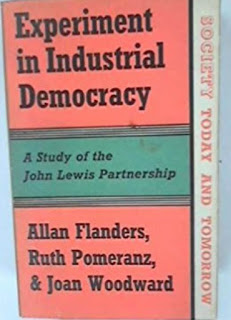 This book studies the John Lewis Partnership, a group of department stores and supermarkets employing 17.000 people, that has for fifty years run “an experiment in industrial democracy”. Its introduction did not come as a result of pressure from below. Rather it was the brain-child of Spedan Lewis, the son of a store-owner. The scheme was introduced at Peter Jones, an unsuccessful shop Lewis had taken over from his father. Spedan Lewis believed his father’s shops had prospered by giving good value. It could be improved “if more of its resources were allocated to better pay and conditions, which would attract good workers and encourage them to work well”. The scheme succeeded and was extended to the stores he inherited from his father in 1928. The group has continued to prosper so that:
Turnover has more than doubled over the past ten years, and profits have more than kept pace . . . Partnership department stores have also been more successful in increasing sales than comparable stores outside.
The profit-sharing part of the scheme comes up against the same snags in that the workers, having to look after their daily needs, tend to sell the shares issued them. So that whatever the intentions of the firm, it forms part of their wages rather than a stake in the company. Partners opt out:
The partnership now operates a licensed stock-dealing pool which handles small transactions and arranges to place the considerable quantity of stock which is ‘renounced’ each year .by partners as soon as they become entitled to it.
This part of profit-sharing mainly takes the form of shares which provide a continual flow of new capital, and which rank last in the capital structure, so that the Partnership can offer the best possible security to outside investors, while remaining independent of them for a considerable part of the fresh funds required by an expanding business.