
Material World – China and capitalist property rights
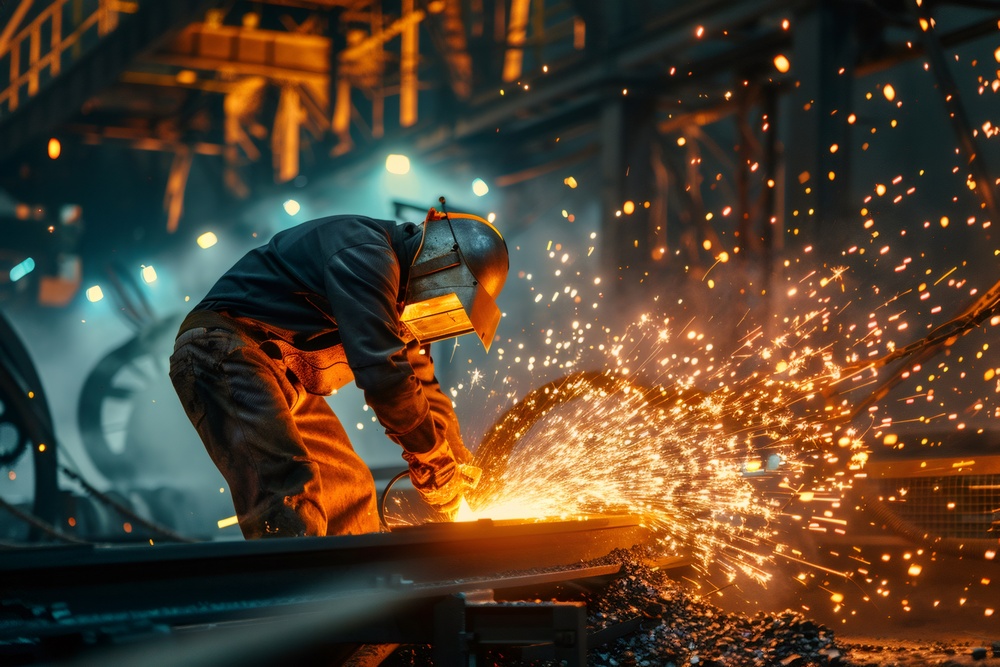 On 16 July British industrial capital’s representative body, the CBI, gave its somewhat begrudging support to what it had called, on 16 May, ‘an expensive option of last resort’, namely the nationalisation of British Steel. Despite their reservations about potential compensation costs and a (probably) valid fear of a negative impact on future investment, for the moment we can assume that industrial capital is okay with bearing the tax burden of a reported daily subsidy of £1.3m. In the ‘national interest’ of course (tinyurl.com/yc58wxjs).
Nationalisation might be welcome news for British Steel’s 2,700 workers, but it is less than welcome in China, if we are to judge by the 17 July report on the Global Times website, one of the Chinese state’s English mouthpieces.
According to the site, the Chinese Ministry of Commerce (MOFCOM) is dead against this nationalisation. MOFCOM points out that British Steel is (was) a subsidiary of China’s Jingye Group, and says the British government has undermined Jingye’s ‘legitimate rights and interests’ and is severely damaging Chinese companies’ confidence in investing in the UK’. Somewhat in agreement with the CBI then. MOFCOM is also ‘pledging to take strong measures to safeguard [these] lawful interests’, although they don’t go into details about what these measures might be.
It is clear from the article that the Chinese state supports Jingye’s demand for compensation for its ‘substantial financial investments in continuous operations [and] equipment upgrades’ since 2020. There is also a clear statement that the state will defend the interests of any Chinese company whose UK investments are threatened in future. Again, a position with which the CBI doubtless concurs, and the type of position it would expect the British government to adopt should any of its members be threatened by some uppity foreign politicians.
Let’s pause a minute though. Isn’t the country concerned always referred to as ‘Communist China’ by the capitalist media? Run by the Chinese Communist Party? Filthy Marxists, every last one of them then.
Filthy Marxists pledged to defend the ‘legitimate interests’ of private property – after all, Jingye Group is a privately owned company with 40,000 employees. As it is privately owned, there is no share price but it claims an internationally recognised ‘brand value’ of almost £14 billion, putting it in the top 4 of Chinese steel producers (tinyurl.com/nhe4sv5r).
So ‘Sinified Marxism’, a Marxism tailored to the Chinese context, is defending private property now. Understandable, given that 60 percent of Chinese GDP is created in the private sector. This is why the Private Sector Promotion Law came into effect in May 2025, ‘promoting the private sector […], strengthening legal protections and injecting fresh momentum into a key driver of the world’s second-largest economy’. It ‘aims to optimize the development environment for the sector, ensure fair market competition, and promote the growth of both the private economy and private entrepreneurs’ (Global Times).
We can assume that the CBI would be less begrudging in its support for such a law but it does somewhat contradict the Chinese constitution which tells us that: ‘The socialist transformation of private ownership of the means of production has been completed’. Perhaps steel works aren’t part of the means of production – could this be a case of ‘socialism with Chinese characteristics’?
Leaving that aside for now, what we can’t quite understand, with all that capital washing about, is how that same constitution can state that ‘the system of exploitation of man by man [has been] abolished’. Nor how, beginning slowly around the time the constitution was published (1982), billions of dollars of private capital have flowed into China in the form of foreign direct investment (FDI), peaking in 2021, when $344 billion was invested. Could it be that the foreign capitalists and their fund managers all failed to carry out due diligence, that none of them had studied the economic situation, that they had no idea that there is no exploitation in China, hence there is no possibility of their capital being able to return a profit, the sole aim of capital?
Answer? No, capital is only attracted to China to buy labour power in the expectation that it will generate surplus value – in other words, it goes only with the idea of exploiting the working class – the constitution is just so much tosh.
Let’s take another example, again from the Global Times (3 March 2026). It discusses the state’s plan to increase ‘support for financial development by optimizing preferential tax regimes for funds and single-family offices, attracting global capital convergence. Hong Kong is projected to become the world’s largest cross-border wealth management center in the coming years’. A single-family office, by the way, isn’t for the average family, it’s just for the ones that have so much money that they can afford to employ their own staff to manage their investments.
In other words, the Chinese state is trying to make it cheaper and more profitable for capitalists to gamble in HK’s stock exchange casinos.
What the ruling clique in China has learned is that they have to do exactly the same as any other government – whether of the left or of the right. That is, create conditions in which capitalists are confident that they will be able to scoop up surplus value to their heart’s content.
Quite how long private capital will put up with the Chinese Communist Party supping at its table remains to be seen.
BUDGIE