
Life and Times – Do I know you..?
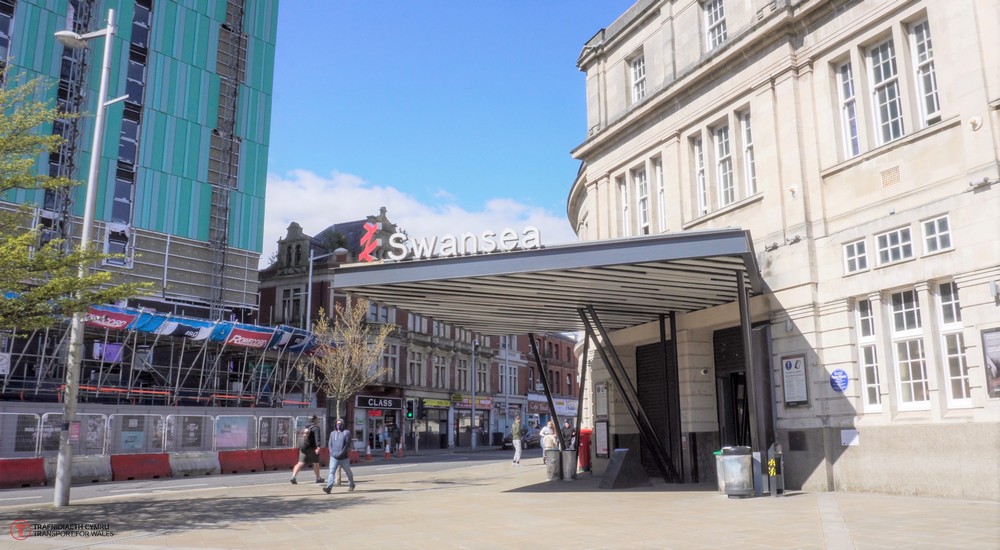 I’m standing on the concourse at Swansea station. Someone comes up to me. A fellow probably in his forties. He’s friendly. ‘Hi, how’s it going?’, he says, ‘I haven’t seen you for a bit’. I feel embarrassed, slightly panicked in fact. It happens to me a lot. I’m greeted by someone who obviously knows me, but my memory for faces (and names) has become terrible and I can’t for the life of me remember who they are. When this happens, what I can’t do of course is say something like ‘Do I know you?’ And sometimes, once we get talking, they say something that reminds me who they are and that I do know them, even if I still can’t recall their names. But this fellow, I’d swear I don’t know him from Adam – though surely I must.
Anyway I try not to look surprised. ‘I’m okay. How are you?’, I say. He nods and says, ‘What are you doing here?’ I reply that I’m waiting for my son and grandson who’ve gone into Costa Coffee to get a sandwich for their journey home. ‘Are you going somewhere?’, I ask, as a way of finding something to say. ‘No, I’m in a mess’, he replies. ‘My wife has left me and I’m out of the house. I’m on the street.’
What now? I’m supposed to know him and he’s obviously asking for help. So, I need to do something. I need to give him some money. But how much? When someone asks me for money on the street – it seems to happen a lot – I usually give them a pound coin if I’ve got one in my pocket. But can I give this fellow just a pound? After all he’s someone I apparently know- and he’s in a real mess, So one pound just doesn’t feel right. How much then? If I have notes on me, they’re usually in my wallet not my pocket, but somehow I don’t want to get my wallet out. But then I remember I do actually have a ten pound note in my pocket – change from something I bought earlier. I feel in my pocket, pull it out and hand it to him. ‘Hope this helps’, I say. He thanks me and asks me where my son is. I see that they (he and my little grandson) have just come out of Costa Coffee and are waiting for me further down the concourse. I wave in their direction. ‘They’re there’, I say. And I start to walk towards them. He walks with me for a few steps, but then veers off in a different direction. I get to my son and tell him what’s happened. ’My memory’s getting worse’, I say. As my ‘friend’ vanishes from sight, my son, with an amused look on his face, says ‘you’ve been conned’. It takes a few seconds for the scales to fall from my eyes. He then adds jokingly: ‘I saw you hand the money over. I thought you were doing a drugs deal’.
We both laugh, but how do I actually feel? Well, despite having being conned, I don’t actually feel annoyed. I feel a bit sad in fact. Why? Well, though my pretend friend has put one over on me, it won’t cause me any great hardship and I can’t help feeling sorry for him. Even though most people would probably regard him as at least a bit of a villain, my thinking is that you have to be pretty much on your uppers and probably at your wit’s end to do that kind of thing. I couldn’t know of course what his real story was and no doubt I wasn’t the only one he’d tried the same trick on that day. But how desperate does someone have to be to resort to that kind of deception all the while knowing he’s likely to suffer one rebuff after another but just hoping he’ll manage to take in the odd unsuspecting fool?
And what might have been this fellow’s story? Perhaps he’d had a particularly difficult upbringing he’d been unable to shake off and the only thing he’d known was a life of surviving by one trick or another? Or had he just fallen on hard times, things having come apart for him as happens to a fair number of people in the wage-slave society we live in – people who maybe lose their jobs and then can’t keep up with housing and other costs? Or did he have a mental health problem which prevented him from living most people’s 9 to 5 life and getting by on what they earned? Or maybe something else? A recent report from the Centre for Social Justice think-tank found that around 13.4 million people in the UK were living lives ‘marred by family fragility, stagnant wages, poor housing, chronic ill health and crime’. Whatever the case, he wasn’t one of the many millions of us who manage to keep their heads above water by having a paying job, even if at the cost of keeping the lid on, never being truly free of potential financial insecurity and often paying a high price in terms of self-fulfilment and quality of life. That’s the best in fact that the system we live in of buying and selling, monetary exchange and monopoly of wealth by a tiny minority can offer to the vast majority who have to sell their energies for a wage or salary in a society in which everything’s for sale. A wageless, moneyless society of cooperative work and free access to all goods and services – ie, socialism – is what we urgently need to cure all those maladies.
HOWARD MOSS