
General Strike
Union branches will be passing resolutions and holding events to commemorate the centenary of the General Strike that ran in the United Kingdom from 3 May to 12 May 1926.
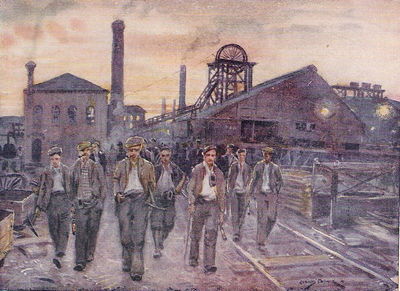 As an event, it is a Rorschach test: people see what they want to see in it. For Trotskyists, it was a failure of leadership at a revolutionary moment. For the Labour left, another example of betrayal. For the Labour right, a foolhardy adventure, which proves that sensible electoral politics is the way forward.
The background was declining productivity of British coal: around one and a half million men worked in the mines. Output per man was falling, and it was facing competition on the international markets (particularly from the return of German coal). This was compounded by Chancellor Winston Churchill’s attempts to return to the gold standard (effectively over-valuing the pound, making British exports expensive).
The mine owners reacted by wanting to cut wages to restore their profits. The response of the mine workers was ‘Not a penny off the pay, not a minute on the day’. They sought an assurance of support from the TUC that other unions would back up the mine workers in their dispute, which was agreed.
The Conservative government of Stanley Baldwin intervened: simultaneously buying time by engaging a commission to examine the coal industry and agreeing a temporary coal subsidy, whilst also preparing to meet a widespread strike organisationally. The commission was headed by Herbert Samuels, a former liberal Home Secretary (and recently returned Governor of Palestine). He had, whilst an MP, represented iron mining districts in North Yorkshire.
The report noted that ‘the dominant fact is that, in the last quarter of 1925, if subsidy be excluded, 73 percent of coal was produced at a loss’. It recommended that the state take ownership of the coal in the ground, with compensation for active mines; that mines be amalgamated; that coal mining work more closely with other industries; that research in coal technologies be intensified; that more integration of distribution be carried out; and while the mining day remain at 7.5 hours, working time should be cut from 6 days to 5.
This was a substantial pay cut. Baldwin was happy to accept these proposals, but the miners’ union, obviously, rejected it (along with rejecting compensation for the nationalised mine owners). Without agreement, the government ended the subsidy, and on 30th April the mine owners locked the men out.
The dispute was placed in the hands of the General Council of the TUC, which, according to Miners’ Union General Secretary A.J. Cook’s account, took the dispute out of the hands of miners. As a TUC account of events has it:
‘The only principal unions initially called out in support of the miners were those of the railwaymen, the transport workers, the builders, the iron and steel workers – and the printers, engineers and shipyard workers were called out after the first week.’
As they note, the unions preferred to refer to it as a national strike, rather than a general strike. The strike was enthusiastically supported (better than had been expected by any party).
The government swung into action, and began to call for volunteers to help keep the railways and other services running. They tried to take the high ground. They represented the print workers’ refusal to print the Daily Mail (because its editorials attacked the strikers) as an attack on free speech. They laboured their democratic mandate as the constitutional government. Although police and troops were called out to protect scabs and break picket lines, Baldwin refused Churchill’s call to use armed force against strikers.
The nascent BBC found itself in the firing line: Baldwin was able to broadcast to the nation, but Ramsay MacDonald and the strike leaders were not permitted a voice. Lord Reith did, however, rebuff Churchill’s call for the nominally independent company to be put entirely at the service of the government.
The time won by the subsidy for organisation was put to good use.
As Baldwin said in Parliament:
‘I do not think all the leaders when they assented to ordering a general strike fully realised that they were threatening the basis of ordered government, and going nearer to proclaiming civil war than we have been for centuries past. They laboured—that is, many of them—with the utmost zeal for peace up to the very end. Perhaps they thought that there was nothing more at stake than bringing a certain amount of spectacular pressure to bear, which might suffice to persuade the Government to capitulate without serious damage to the liberties of the nation. But they have created a machine which they cannot control.’
MacDonald’s contribution was ‘With the discussion of general strikes and Bolshevism and all that kind of thing, I have nothing to do at all. I respect the Constitution’, plus a call for ‘co-ordination’ in the industry, which was, after all, the entirety of what he aspired to and called ‘socialism’.
The leaders of the TUC had not intended to overthrow the government, but to win an industrial dispute. The unions and strikers did not represent the whole of the working class (for example, there were as many domestic servants as there were miners). Faced with a resolute government, the TUC backed down and asked for no reprisals (which the government would not commit to). Cook believed that had the TUC held out a few more days, the government would have backed down – and the miners continued their action.
Although a defeat, which led to laws banning sympathy and general strikes, the action was not a disaster. The unions had brought the government to the negotiating table; they had shown the strength of union organisation and feeling. They also survived with their organisation intact. In the end, the reality of coal mining productivity prevailed and world markets asserted themselves. The working class demonstrated resolve and solidarity, but could not overcome the organised power of the state without a clear plan and resolve to that end.
PIK SMEET