
Action Replay – War in the Way
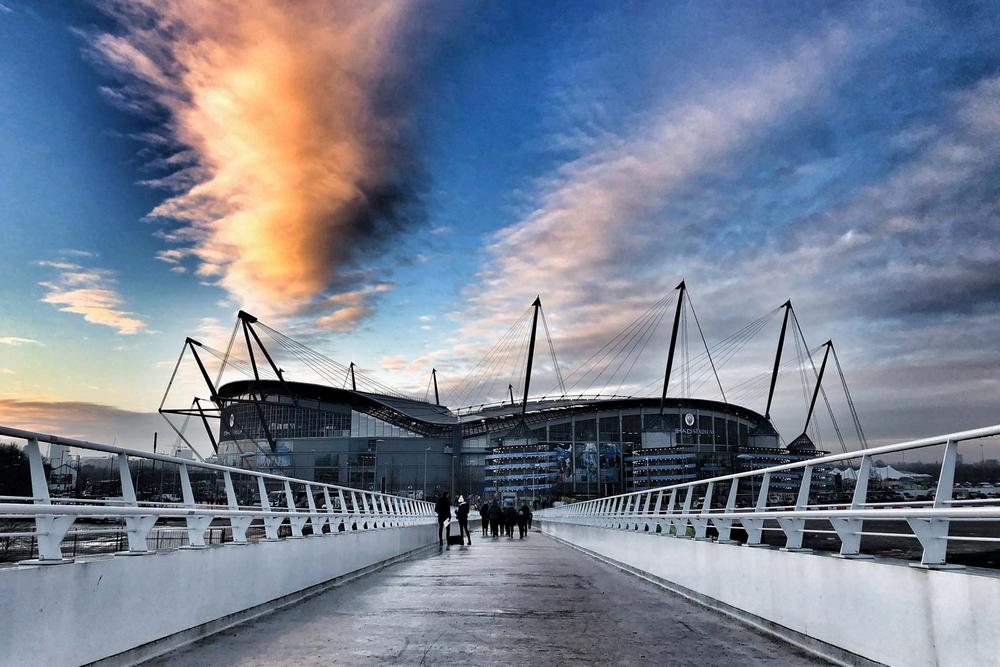 Sportcity in Manchester is a venue for a number of sports facilities, most notably the Manchester City football stadium, but also the Velodrome and National Squash Centre. This idea of hosting various amenities in one area can of course be applied on a national or international level too, and the Middle East is a prime example.
The Persian Gulf in particular has seen a lot of state and private investment in sport, part of a programme aiming to attract increased tourist and leisure visitors more generally. We have previously examined the role of sportswashing in this (see Action Replay for October 2023 and December 2024). The 2022 football World Cup in Qatar was one of the first instances. Saudi Arabia then took the lead, winning the bid to stage the 2034 World Cup, as part of a Vision 2030, supposedly aiming to ‘diversify the economy and invest locally and internationally’ (pif.gov.sa). The Middle East Sports Investment Forum (mesifglobal.com) holds regular conferences to discuss future opportunities, with a meeting in London scheduled for June; a standard delegate ticket costs just £1500.
But a very big ‘but’ has materialised, the US-Israeli attack on Iran and Lebanon, and the Iranian attacks on neighbouring countries. Bombs and drones have made travel to and from the region difficult and unpredictable, and simply being there became unacceptable for some. The motor racing grands prix due to be held in April in Bahrain and Saudi were called off, as was the MotoGP grand prix in Qatar. Perhaps a hundred events of all kinds had been cancelled or postponed since the start of the war (Guardian 21 March). Sports such as football and motor racing are likely to better protected than tennis and golf, for instance.
The same source quoted a professor of Eurasian sport industry (!) as saying that the Gulf states had placed too much emphasis on events, without diversifying sufficiently. Manufacturing equipment and clothing would have been a good idea too, but it may well be too late to get into that market.
The war shows the unpredictability of capitalism as far as business ventures are concerned. Capitalists don’t take possible wars into account when planning new businesses or expanding existing ones. It remains to be seen what effect the ‘cease-fire’ in operation at the time of writing will have. But that just reinforces the uncertainty surrounding the fighting and its consequences.
‘The war has come at the wrong time,’ the professor mentioned above said, though he presumably wasn’t saying that there is a good time for wars.
PB