
Zackonomics — how green can you be?
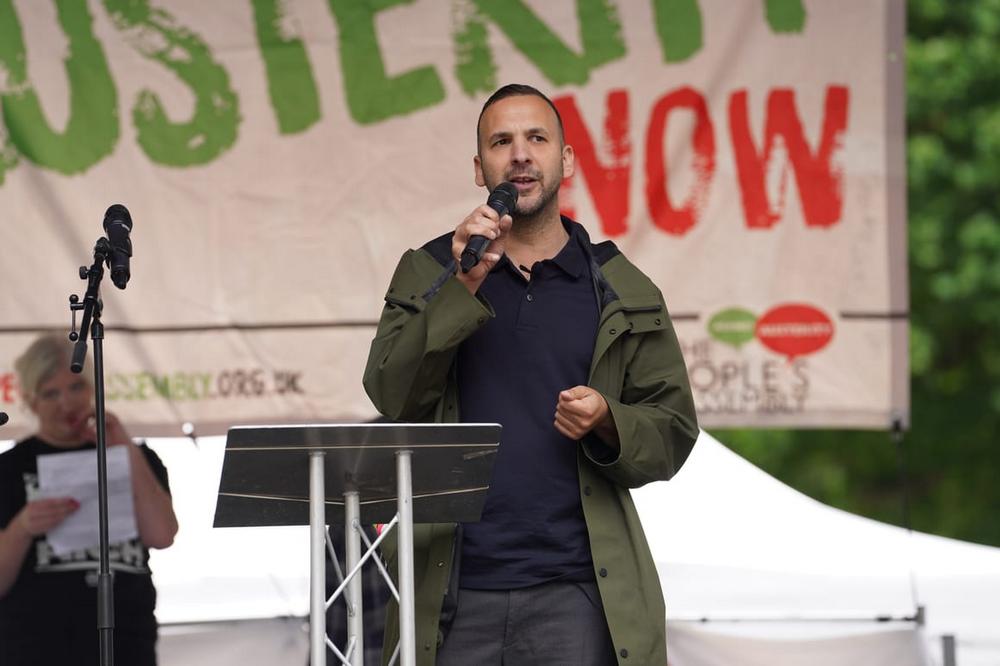 In their party political broadcast on 22 January, the Greens’ new eco-populist leader Zack Polanski ran through the various problems people face and pointed out that a lot of the wealth they create ends up in the pockets of the super-rich. But went on: ‘This isn’t just an economic failure. It’s a failure of leadership. The people we elected choose to serve the wealthy. And, yes, that is obscene. Good leaders put people before profit’.
Self-styled good leaders
So what does Polanski, as a ‘good leader’, propose that a Green Party government would do? Its manifesto for the 2024 general election promised ‘the public ownership of public services’ and talked about ‘taxing wealth fairly and borrowing to invest’, in particular ‘a Wealth Tax of 1% annually on assets above £10 million and of 2% on assets above £1bn’. This is the sort of thing the Labour Party used to advocate and will be one reason why the Greens have had some success in winning over people disillusioned with the Labour Party after Starmer (with a little help from Peter Mandelson) axed its leftwing.
In this sense, the Green Party is reviving the illusion that the Labour Party once entertained that capitalism could gradually be changed, through ‘public’ ownership, tax changes and social reforms, into a less unequal society. The only difference is that the Greens think that ‘good leaders’ should put the environment as well as people before profit (and sometimes before people). All the arguments that socialists have made against Labour Party reformism apply equally against the Greens. Capitalism is an economic system driven by firms, whether private or state (or cooperatives), seeking to make a profit and to accumulate this as more capital to be reinvested for more profit. Putting profit-making first is imposed on those making economic decisions, including governments, as an external coercive force that they ignore at their peril.
Polanski and the Greens, if ever they got to form the government and tried to put people before profit, would be ‘bad leaders’ as far as capitalism was concerned. They would put a spanner in the way capitalism works and provoke an economic downturn, forcing them into a U-turn, as has happened many times to Labour and similar governments in other parts of the world — punished for refusing to put profits before people.
What this means is that, contrary to what Polanski claims, a ‘good leader’, for capitalism, is someone who does put profits before people, someone who applies rather than challenges the economic laws of capitalism. Those individuals who workers elect to govern have no alternative. The nature of capitalism, as a profit-making system that can only work for the profit-takers, obliges them to do this on pain of provoking an economic slow-down.
Replacing them with self-styled ‘good leaders’, like he imagines himself to be, won’t change things despite good intentions. They, too, would end up having to serve the wealthy as that’s the only way that the system can work. What is needed is not a change of leaders, but a change of system. But that’s not what the Greens want.
Cranky economics
The Green Party accepts capitalism. It doesn’t challenge the ownership of the means of life by a minority nor that goods and services are produced primarily for sale on a market with a view to profit. At most, it seems to want to go back to an earlier stage of capitalism in which production was in the hands of small and medium-sized enterprises.
To tell the truth, the Green Party is all over the place when it comes to economics which, anyway, is not the primary interest of most of its members. That — and it’s a perfectly legitimate concern — is to protect and save the environment, which they imagine can be done by pursuing policies and passing laws without changing the basics of the present, capitalist economic system.
The Greens’ relative lack of interest in economics has left them open to all sorts of cranky theories. For instance, their manifesto for the 2015 general election declared that ‘the power to create money must be taken out of the hands of private banks’ and that ‘commercial banks should be no more than the custodians of publicly created money in current accounts’. This reflected a resolution on ‘monetary and financial reform’ carried at their 2013 Conference:
‘97% of the money circulating in the economy takes the form of credit that is created electronically by private banks through the accounting processes they follow when they make loans … The 1844 Bank Charter Act will be updated to prohibit banks from creating national currency in the form of electronic credit. To finance their lending, investment or proprietary trading activities, banks will have to borrow or raise the necessary national currency from savers and investors’.
This would considerably limit what banks would be able to lend, even to individuals let alone to business. But loans to profit-seeking firms are essential to the workings of capitalism as it means that capitalist entrepreneurs do not have to have accumulated all their own money before they can start a business. The role of banks is to make available money for investment that would otherwise lie idle or be scattered in small amounts.
To make up for the fall in bank lending that their scheme would bring about, the 2013 resolution proposed that ‘all national currency (both in cash and electronic form) will be created, free of any associated debt, by a National Monetary Authority (NMA) that is accountable to Parliament’ and that ‘any new money created by the NMA will be credited to the account of the Government as additional revenue, to be spent into circulation in the economy in accordance with the budget approved by Parliament’.
Imagining that banks create money out of thin air and wanting to devise a debt-free money is classic currency crankism. Banks don’t create new money when they make a loan; they lend out money that they have (from deposits and loans) or can quickly acquire (from the money market or the Bank of England) and the interest they receive comes from the future profits of loans to business and from the future wages of those to individuals. The 2013 Green Party resolution and 2015 Green Party general election manifesto were proposing an imagined solution to a false problem, a solution which if applied would lead to financial chaos and roaring inflation.
These days the Green Party does not push this policy much. It wasn’t in their 2019 or 2024 general election manifestos. However, it remains part of their official policy and is included in their Policies for a Sustainable Society. Polanski, who knows a thing or two about selling false remedies and so about what sells and what doesn’t, doesn’t mention the banking reform part and talks only about some National Monetary Authority providing the government with whatever money it needs to pay for a Green Deal and social services.
Magic Money Theory
This has led some, such as Jonathan Prynn, business editor of The Standard (formerly Evening Standard), to accuse Polanski of embracing another mistaken monetary theory — self-styled ‘Modern Monetary Theory’, or MMT (which also, appropriately enough, stands for Magic Money Tree). This teaches that the government doesn’t need to borrow money but can simply create the money it needs and spend it; this will stimulate the economy and the government will eventually recover the money as increased tax receipts.
It is not clear that Polanski has embraced MMT. He may just be using the naive (and therefore good populist) argument that if the resources are there to save the environment or eliminate poverty (as they are) and the government has the power to create as much money as it wants (as it does), why does the government not simply create the money to use the resources? If it did this, it wouldn’t need to worry about borrowing money and so wouldn’t be in thrall to international speculators. Which is essentially what Polanski and the Greens are saying.
The trouble is that this ignores the way the capitalist economic system works. Wealth is produced in the profit-seeking sector of the economy in response to the prospects of making a profit. Governments as such produce no wealth; to get the money to buy what they need to carry out their activities they have to resort either to taxation of the profit-producing sector or borrow from those who have acquired money from that sector. When the government creates money it is not creating any new wealth, only claims on existing wealth. It can create as much of these claims as it likes but, if it creates more than the economy needs for its buying and selling and other monetary transactions, then the result will be a fall in the purchasing power of the claims and so a rise in the general prices level, or inflation.
If a Green government were to simply create and spend the money to protect the environment or to eliminate poverty or to improve living conditions generally, the most likely result is that there would be a one-time spurt in economic activity but in time there would be an inflation which could get of hand. Apologists for capitalism, such as Prynn, happen to be right when they point this out.
The conclusion to be drawn is not to accept that profits have to come before people, but that it is futile, and even counter-productive, to try to prevent this under capitalism. What is needed is to get rid of the profit system altogether and to use resources to simply and directly produce what people need. But this is only possible on the basis of the common ownership of the world’s productive resources. It would then no longer be a question of what should come first — profits or people? — because profits wouldn’t enter into it at all.
ADAM BUICK
One Reply to “Zackonomics — how green can you be?”
Leave a Reply
You must be logged in to post a comment.
Nailed it!