
Proper Gander – Reporting on reporting
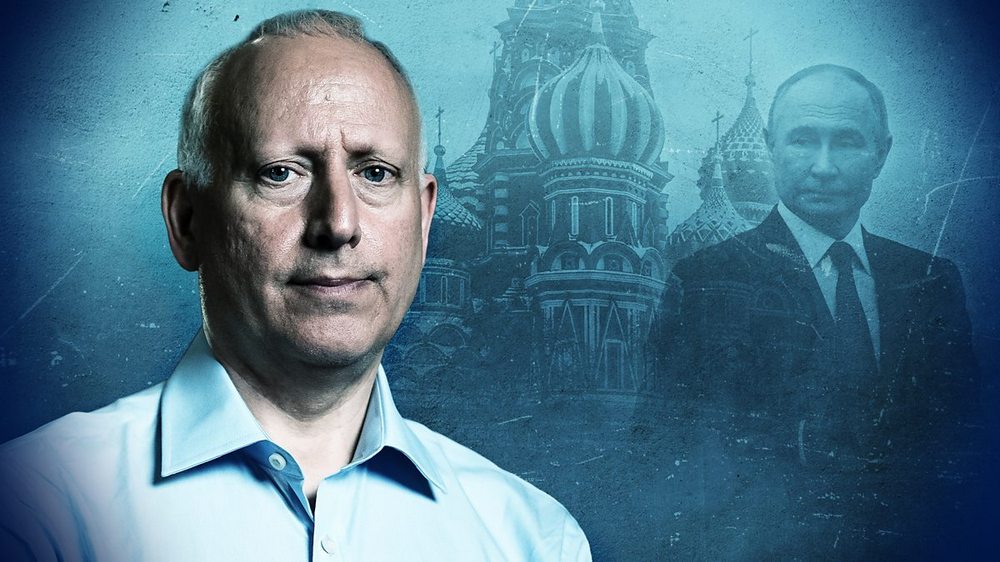 Journalist Steve Rosenberg hasn’t chosen the easiest of careers. His appearances on BBC News as their correspondent in Russia raise questions about how free he is to investigate and report on what’s happening there, especially since the war in Ukraine reignited in 2022. The Panorama episode Our Man In Moscow (BBC One) offers an answer by showing what Rosenberg, his producer and camera operator do between the times we see him on air. Their trip to the city of Tver to interview people on the street is interrupted by both the police and state media asking what they’re doing, with the producer saying this could have turned out to be ‘much worse’ than an identity check. The forums and summits which they and other journalists attend are as slickly presented as those anywhere else. Although Rosenberg says that some of the attendees are now reluctant to speak to the BBC, he has put in questions to Putin on a couple of occasions. At an annual press conference, Rosenberg lists some of Russia’s problems then asks Putin ‘do you think you have taken care of your country?’, to which he predictably replies in the affirmative. The following year, Rosenberg asks what future Putin plans for Russia, including militarily, and is told ‘there will be no operations if you treat us with respect’. Rosenberg’s analysis is that the Kremlin’s confidence is fuelled by Europe being weakened because it is distanced from Trump’s America.
Steve Rosenberg became interested in Russian culture and language during his teenage years in Chingford. His first visit to Russia was in 1987, when the Soviet Union was starting to open up more to global markets, and he was there a few years later when it broke up. Having lived and worked as a reporter in Moscow since the mid-1990s, Rosenberg is now the BBC’s Russia Editor. He’s nostalgic for the country he saw when he was younger, which he tells us had more optimism. He describes the time when Putin came to power by saying ‘it felt as if this huge black cloud had come over’. Being a journalist there now is compared to walking on a tightrope: ‘You can’t relax, really, for a second. You want to report accurately and honestly about what’s happening, but you don’t want to fall off the tightrope onto the minefield below, and hit a mine’.
According to Reporters Without Borders’ World Press Freedom Index, Russia ranks 171st out of 180 countries, making it among the most restricted places for what news is reported, how and by whom. Virtually all media produced there comes from state-owned or affiliated organisations, with controls on its content increased further due to the war. Military personnel are banned from speaking to journalists, and the dissemination of ‘unreliable information’ about the armed forces is punishable by up to 15 years in prison. Dozens of critics of the authorities and the war are currently jailed, some for spying charges, and most foreign reporters have left the country. Rosenberg explains that he’s one of the few western journalists remaining in Moscow, as he walks through an empty office which used to be bustling with colleagues.
Rosenberg and his crew have got used to being monitored by the state, learning that it’s safest to calmly present the required documents when approached by the police while out reporting. They are also followed by plain-clothes agents, one of whom denies this when Rosenberg challenges him. These agents wouldn’t be too concerned that they have been rumbled, for the reason that Rosenberg is likely to be more unsettled and restrained being aware that they’re watching him. The authorities will probably watch the Panorama documentary too, which Rosenberg, his colleagues and BBC executives would realise, and so they wouldn’t have included anything too incriminating.
Rosenberg isn’t popular with the nation’s state-owned media either, which depicts him as an anti-Russian propagandist by selectively editing quotes from his reports. We see some Russian journalists questioning him on his reporting, albeit in their role as state lackeys. Television is more prominent as a source of information in Russia than in western countries: nearly two-thirds of its citizens mainly get their news in this way, according to Reporters Without Borders. We see a clip of an angry TV show host calling Rosenberg a ‘conscious enemy of our country’ and (oddly) a ‘defecating squirrel, constantly surprised by things’. Admirably, Rosenberg perseveres with his job despite the tense position it places him in, walking his tightrope. He comes across as professional and sincere, having developed a personal understanding of Russian culture and politics.
While the context Rosenberg works in is different to that of most reporters, it illustrates how journalism isn’t as simple as a dogged pursuit of the truth. In Russia more than elsewhere, the restrictions and threats hanging over journalists will shape their approaches and the words they use. Many have been silenced completely, further limiting awareness and viewpoints. Alongside this, the Russian state’s media has become even more empowered, dominating the market. Legislating speech is an obvious admission by the state that it wants to control the narrative, skewed to promote both the ruling elite and the system which enables it.
Journalism is moulded not only by regulation, but also by what’s acceptable to the organisations which produce it. Being an employee of the BBC, Rosenberg has to work within the corporation’s frame of reference. This isn’t just its editorial guidelines, but its overall ethos as part of the establishment, creating both conscious and subconscious bias in its news output. So, the war between Russia and Ukraine is analysed only on the surface level of capitalist politics, between rival governments. Mainstream journalism, whether in Britain, Russia or anywhere else wouldn’t examine more fundamentally how the war is between factions of the capitalist class for their economic interests, not those of the working class.
MIKE FOSTER
Next article: Book reviews: Heron-Milburn-Russell, Grant, McEwan ⮞