
Venezuela: another failure of reformism
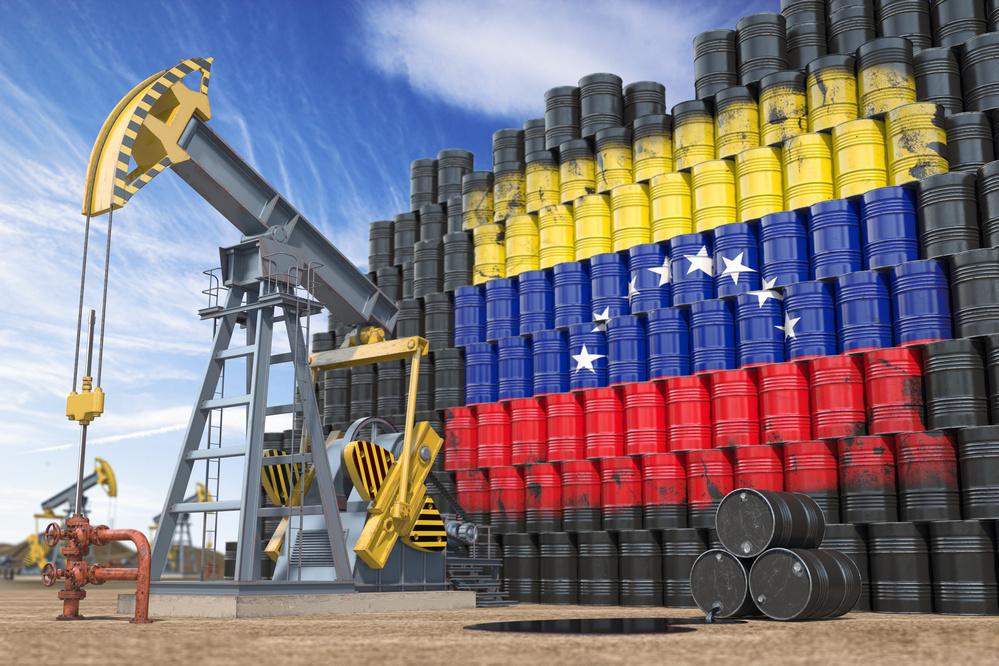
Venezuela is a petro-state, defined as a country with an economy and government that depend heavily on money from extracting and selling oil and gas. Oil was first extracted there in the 1920s and Venezuela was one of the founding members in 1960 of the oil-producers’ cartel, the Organization of the Petroleum Exporting Countries (OPEC), that held the rest of the capitalist world to ransom after the 1973 Yom Kippur War which closed the Suez Canal and led to petrol rationing. The other four founding members were all in the Middle East: Iran, Iraq, Kuwait and Saudi Arabia. Venezuela in fact has more oil reserves than Saudi Arabia.
Ground rent
The main income of a petro-state is ground-rent rather than profit. Ground-rent is an income that accrues to ground owners because they happen to own land that contains some natural resource. In agriculture this would be land that is more fertile. The price of, say, wheat will reflect the cost of growing it on the land which provides the producer with a normal profit. Wheat grown on land that is more fertile than this will sell at the same price, despite the cost of growing it being less. The difference between the price the wheat sells at and the lower cost of production is ground-rent. In other words, those who own land with a lower cost of exploiting its natural resource than at the margin, whether this be wheat or oil, get an extra income above normal profit.
Saudi Arabia, as the country where the cost of extracting oil is lowest, gets the biggest proportional ground-rent. Other oil-producing countries, except those with the highest production costs, also benefit to a greater or less extent. The amount of oil rent a petro-state receives depends on the price of oil, the higher this is the more the rent (which is the economic logic behind the OPEC oil cartel). But OPEC can’t fix the price of oil at will or forever; other factors are involved such as the demand for oil, which fluctuates up or down depending on whether world capitalism is in the boom or the slump phase of its economic cycle.
The Gulf oil-producers are all dynastic states and a large part of the ground-rent they get goes to the ruling dynasty. The rest of the population, mainly immigrant workers from Asia and other Arab states, as non-citizens have no say in how the rent is distributed. Most of them live in poverty while the kings, princes and sheiks and their families live in the lap of luxury.
Politics and the price of oil
Venezuela was different from the other founder members of OPEC in that it was more developed both economically in already having a capitalist economy and politically in that its population were citizens with the right to vote. Because the government was so dependent on oil rents, the course of the political life of the country reflected changes in the price of oil.
From 1948 to 1958 Venezuela was a dictatorship, backed and brutally enforced by the army. During this period oil prices were high but the benefits went to the US oil corporations that had been granted concessions to extract oil, though some was used on infrastructure projects and to enrich the dictator and his political allies.
In 1958 the dictatorship was overthrown and Venezuela became a formal political democracy with competitive elections between rival parties. Successive governments began to take back ownership of the oil as concessions expired. In 1976 all oil in the ground became government property via a state enterprise, Petróleos de Venezuela (PDVSA). Things were relatively normal until oil prices fell in the 1980s due to the ‘oil glut’ that came about following the post-1973 energy crisis.
The high price engineered by OPEC after the 1973 Yom Kippur War led other capitalist countries to seek and develop other energy sources (coal enjoyed a bit of a revival) and other sources of oil, leading to overproduction. The result in Venezuela was an economic crisis and in 1989 the government imposed an austerity that led to strikes and riots and attempted coups, including one in 1992 led by Hugo Chávez, a young army officer from a poor background. He was jailed but released after two years. On his release, he turned to conventional politics and won the 1998 presidential election, taking office in 1999. He was re-elected under a new constitution in 2000, then, despite a short-lived coup against him in 2002, again in 2006 and 2012.
There is no reason to doubt that Chávez sincerely wanted to improve the lot of the population of Venezuela, particularly the poorest. He was, basically, a populist Venezuelan nationalist. He didn’t claim to be a socialist when first elected president in 1998, just to be anti-elite and for using oil revenue to help the poor majority. It was only in 2005 that he declared himself an advocate of ‘21st century socialism’. In 2007 the name of his party was changed to the United Socialist Party of Venezuela (PSUV), which is still the ruling party there today.
He was lucky in that soon after he first came to power the price of oil rose, providing his government with funds to pay for improved services for the mass of the population:
‘When Chávez took office in early 1999, oil was trading at less than $15 a barrel, but its price started going up almost instantly. By the time he was elected to his third term, in 2006, it was trading at about $60 per barrel; by the time his presidency ended upon his death in 2013, a barrel of oil was worth almost $100’.
With a healthy income from oil rents, the Chávez government was able to improve the living standards of the mass of the population:
‘Chávez’s government focused its efforts on bringing people out of poverty using the surpluses generated by oil revenue, buffered by high market prices. Social spending per person in Venezuela grew, in real terms, 170 percent from 1998 to 2006 and if we included the social spending made directly by Petróleos de Venezuela (PDVSA) the figure reached more than 200 percent per person. In 2008 education spending was more than double what it had been in 1999. The number of people living in poverty dropped from 55 percent in 1998 to 34 percent ten years later. University enrolment has almost tripled since 2000. (… ). All of the redistributive measures undertaken by the government meant that in 2011 Venezuela was, by Gini coefficient, the least unequal country in Latin America …’.
Pretty impressive, which explains why Chávez was re-elected three more times. Some, particularly leftists from Europe, saw this as a successful move from capitalism towards socialism. The prominent Trotskyist Alan Woods (a leftover from the old Militant Tendency) was particularly impressed and met Chávez a number of times, becoming a propagandist for the ‘Bolivarian revolution’. But he wasn’t the only one. Even today some of those demonstrating against the US attack on Venezuela are doing so to defend the regime there because they believe it to be socialist. ‘The Bolivarian Revolution is committed to building socialism and independence’ declares one group (revolutionarycommunist.org). But it wasn’t socialism or a step towards it; it was an attempt to reform capitalism into a less unequal society which appeared to be working due to a period of high oil prices and rents.
Chávez died in 2013 shortly after being re-elected. In a sense he was lucky again, as oil prices eventually fell as a result of the drop in industrial activity that followed the Crash of 2008. He thus avoided being the head of government in Venezuela during a period of falling oil prices. That poisoned chalice was passed to his successor, Nicolás Maduro, and the Chavista military and political bureaucracy that ruled the country.
Maduro’s poisoned chalice
In 2014 oil prices fell from $100 a barrel to $40 and did not rise much again (even today it’s only about $60). The Maduro government was in an impossible position. Unable to maintain spending to benefit the population at its previous level it was forced to cut back. Popular discontent rose and in 2016 opposition parties won a majority in the National Assembly which went on to refuse to recognise that Maduro had won the 2018 presidential election. The ruling bureaucracy was not prepared to give up power and turned to political manipulation and repression to maintain it. The US and Europe, too, refused to recognise that Maduro had been legitimately elected and imposed economic sanctions on Venezuela which continue to this day.
With less income from oil rents the government had to cut the benefits it handed out, with the result that poverty and inequality grew:
‘According to a quality of life study conducted by a group of universities in the country, the Gini coefficient, which measures income inequality, reached 56.7 in 2021, surpassing that of Brazil. The research also shows an increase in the income poverty rate, with more than 90% of households living below the poverty line. The most recent data indicate an increase in inequality, with an index of 60.3, and a decrease in income poverty to 80.3% of households, a result of the modest economic recovery of 2022’. (translated from Spanish)
So, while the proportion of people in poverty fell from 55 percent in 1998 to 34 percent in 2008, by 2022 it was up to 80 percent. In 2011 Venezuela had been the least unequal country in Latin America in terms of income. Between 1999 and 2011 the Gini coefficient had fallen from almost 50 to 39. In 2022 it was back up to 60, higher than it had been when Chávez was first elected.
Some of this will have been due to the sanctions imposed in 2019 by the US and Europe but the decline had set in before that. Imposing sanctions is a cruel and cynical policy, arguably worse than military action. Its aim is to make the situation of ordinary people worse in the expectation that they will kick out the sanctioned government. It worked in the sense that it did make people even worse off as the government was forced to cut back yet more on the reforms of the Chávez period, and this did make people more inclined to vote to remove the Maduro government from office. Sanctions do not affect those in charge of the state as they can always ensure that they don’t suffer any personal privations and that adequate resources are attributed in priority to maintaining the state apparatus and its repressive powers.
Capitalist economists say that Chávez should not have distributed so much of the oil rents to improve the position of the poor, but should have instead invested more in developing capitalist industry to provide jobs and incomes to counter what would happen if oil prices and so oil rents fell or oil ran out. This is a lesson that the Gulf sheiks had learned, using their rents not just to lead a personal life of luxury but to convert themselves into capitalists in their own right by investing in industry abroad as well as in their sheikhdoms.
Given capitalism and how it works, there is something in what its economists say, but this is further confirmation that a government cannot continuously redistribute wealth to the poor; this will be unsustainable and lead to economic disaster. To function normally, the capitalist economy requires that even oil rents should be invested in capitalist production, not spent on improving people’s lot.
Living standards in Venezuela fell by 75 percent between 2013 and 2023, driving some 7 million out of a population of 30 million to leave the country to seek a better life elsewhere. Supporters of capitalism gleefully trumpet this as a failure of ‘socialism’. In fact, it was a failure of redistributive reformism that showed both the fragility of reform measures and that no government can keep on redistributing income to the non-owning majority without this eventually ending in economic disaster.
ADAM BUICK