
Pathfinders – Withdrawal symptoms
 Socialism, a sophisticated global society of cooperative common ownership, would face a number of urgent legacy problems if established today.
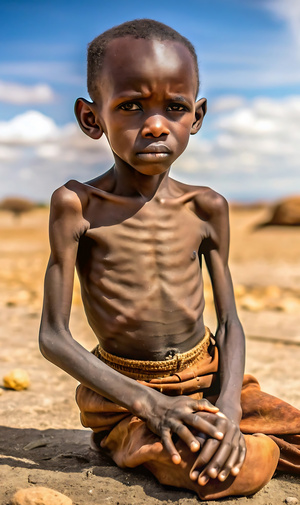
One of these is world hunger, with its related diseases, from which around 10,000 children and 15,000 adults die every day. Globally some progress has occurred, but almost one in ten people remain undernourished.
Weirdly though, more children are obese today than underweight. According to a UN report covering 190 countries, whereas in 2000 almost 13 percent were underweight compared to 3 percent obese, today the figures are respectively 9.2 and 9.4 percent.
Global obesity levels have tripled since 1970, with most commentators attributing the problem to the widespread post-war production of cheap and ultra-processed food, though it may have begun even earlier. Diets have become progressively less healthy since the Industrial Revolution, when toxic compounds like red lead and green arsenic were used as factory food colourings.
Profits flow from making us fat, even while obesity is stigmatised. Eight of the ten most obese countries are in the South Pacific, possibly implying a genetic element. But the rest of the world is not far behind. Generally speaking, the only places not obese are those starving.
Modern capitalism is a smorgasbord of high-calorie fast food which, along with sedentary online living, constitutes what are called ‘obesogenic environments’. But personal choice is also involved. Sugar isn’t addictive as such, but does induce a dopamine hit that can be. How would socialism deal with addictions? The need to solve hunger is a no-brainer, but lifestyle choices are more ethically tricky. If our collective behaviour is making us ill, then it places a load on health services. One way to think about a socialist ‘economy’ is to ask, not ‘shall I have X’, but ‘are other people prepared to put in labour so that I can have X?’ Lifestyle isn’t just personal, it’s political.
Nutrition is a difficult subject. We’re not even sure how our own metabolism works. In the 2010s, evolutionary anthropologist Herman Pontzer set out to study metabolism in hunter-gatherers, specifically the Hadza of Tanzania, to see how their active lifestyles burned up calories. His findings rocked the scientific world. It turned out that, though tribal males might walk or run around ten miles a day, or maybe six for women carrying children, they burned off no more calories than a desk-bound clerk in Manhattan or Manchester. Convinced this had to be a mistake, Pontzer repeated the study with other groups, in other countries, and got the same result. The implications for the global diet industry, worth hundreds of billions, and the global sports fitness industry, worth trillions, are devastating. If Pontzer is right, diet and exercise are not linked but independent processes, so you can’t just trade off the one against the other, that is, you can’t run three miles and then allow yourself a doughnut. His ingenious working theory, as explained in a recent Babbage interview for The Economist, is that organisms don’t just go about doing their random daily thing and then pay off the calorie bill afterwards, somewhat like capitalist consumers. Instead they’re more like capitalist investors, looking for a long-term payoff in terms of reproductive success, and ‘fronting up’ the calorie investment in advance. Thus, we have a daily ‘calorie budget’ which we can invest wisely or poorly. We’ll certainly allocate 300 calories, the equivalent of a 5k run, for our large human brains. If we don’t spend our remaining budget on physical activity, it will end up being spent on other internal processes which also use energy, like the endocrine system (hormone production, for example testosterone or cortisol) or the immune system. With excess ‘fuel’ at their disposal, these systems may go into dangerous overdrive, producing auto-immune inflammations, stress-related diseases and cancers prevalent in urban western societies but unknown among the Hadza.
All of which brings new resonance to the phrase ‘armchair socialist’. How exactly a democratic global cooperative society would deal with addiction-related health problems is not really for us to say today. What it wouldn’t do is make the problem worse. In capitalism, all industries exist to make profits, even at the expense of killing us. State governments try to impose legal limitations, but vested interests and regulatory capture make this a permanent arms race.
The food industry is hardly alone in treating your body as a rubbish dump. Other industries have bequeathed us microplastic-polluted brains, ‘forever chemicals’, and the US opioid epidemic, to name just three. To see the ultimate direction of travel for unfettered capitalist markets, just look at organised crime. Take ‘kush’, for instance (or rather, don’t). Kush is a highly addictive and dirt-cheap synthetic opioid several times stronger than fentanyl, and now rampant across West Africa.
Quite apart from causing delirium and psychosis, it suppresses the appetite, lowering the body’s ability to fight off diseases and results in flesh-eating sores, and swollen limbs. It also results in STDs that women get by selling sex to pay for the kush. It involves no expensive opium or cannabis plantations, but instead uses cheap synthetic compounds (sources: China, Netherlands, UK) which you can cook for next to nothing in a garage. It’s also a cinch to transport because it doesn’t smell and just a tiny amount is needed to knock people brainless. The drug producers are no doubt delirious with joy at making such a killing, which they are doing, literally by the thousand: ‘It’s killing so many people that the mayor of Freetown [Sierra Leone] has had to set up a dedicated burial team to pick up abandoned bodies in the streets. These mass burials and cremations have been going on since 2022’ (Economist podcast).
Socialism’s legacy problems might be tricky where personal choice is involved. Without the profit motive though, there’ll simply be no point in producing foods and drugs that kill people, even if that could involve some withdrawal symptoms.
PJS