
Letter / Response to our question
Capitalism is mental
Dear Editors,
Thank you for publishing ‘Capitalism is Mental’ (Socialist Standard, August), it’s one of the few pieces I’ve read in a socialist publication that genuinely tries to link mental health, neurodivergence, and class struggle. I agree with much of it, but I’d like to go further.
I’m an autistic, working class man in my fifties. I wasn’t diagnosed as a child we didn’t get diagnosed where I was from. You just got told you were difficult, thick, lazy, or weird. I spent most of my life thinking I was broken. Now I know the truth: I was wired differently, but the world was never built for people like me.
Autism, ADHD, PTSD, anxiety we talk about these things like they’re individual conditions. but they’re shaped by the world we live in. If you take a sensitive, pattern seeking kid and throw him into a world of noise, fear, chaos, poverty, and pressure, what do you think happens? You get trauma. You get shutdowns. You get rage. You get silence.
I don’t think people fully understand how classed this all is. Most working class people don’t have therapists. We have panic attacks on night shifts. We cry in the car outside our work. We get sectioned or sedated or sacked. Our ‘mental health support’ is a bottle of lager and a walk with the dog, if we’re lucky.
I’ve heard much of the left talk about ‘neurodiversity’ like it’s a fashion. They go on about identity and inclusivity, but they rarely ask who’s being left out. I’ll tell you who: lads like me. Men who mask it for 30 years. Women who get called dramatic. Kids who are fobbed off with ‘poor parenting’. We don’t get soft landings we get hard floors.
So yes, capitalism is mental. But it’s also murderous. It strips meaning from life, blames us for not coping, then sells us back the cure in pills, pop psychology, or mindfulness apps. All the while, it’s our nervous systems not theirs breaking under the pressure.
I’m glad your article spoke about neurodivergence as resistance. I’ve come to see it that way too. We’re not broken. We’re canaries in the mine.
PABLO WILCOX
Response to our question
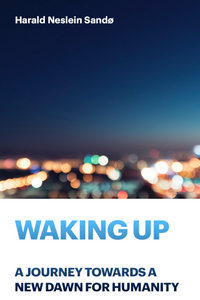 Last month’s Socialist Standard contained a review of a new book entitled Waking Up. A Journey Towards a New Dawn for Humanity. Though a work of science-fiction imagining a world with far more advanced forms of technology than currently exist, it advocates and attempts to describe the same kind of society the Socialist Party has campaigned for throughout its existence – stateless, moneyless, marketless and with common ownership, voluntary cooperation and free access to all goods and services. It depicted, to use the author’s own words, a society of ‘seamless harmony between humans and nature’ with everyone leading ‘their own versions of a good life, respecting each other and the planet’.
One reservation the review had, however, was that there was no explanation of how we got there in the first place, how it all happened. The book’s author, Harald Sandø, has now taken up that challenge by providing a short, imagined account of the ‘shift that changed everything’, of the ‘move from a system of money, ownership, debt, competition, war and scarcity to a world of cooperation, sharing, abundance and peace’. He has also said he may integrate this into a future edition of the book. It happened, his account says, via a shift in consciousness of a ‘spiritual’ kind, whereby people voluntarily ‘began questioning the foundational assumptions of the system’. Even billionaires did this and this was especially important since they were the ones who funded the new system. They became out-and-out philanthropists redirecting private property to become ‘humanity’s shared inheritance’, so that ‘paradoxically enough the new moneyless world was created with money’. All this, we are told, happened in an entirely voluntary way with ‘no war’, ‘no forced redistribution’ and ‘no bloody revolution’.
We have in common with Harald Sandø one important aspect of this vision. That is the idea that the shift from the current society of private ownership and control, gross inequality and production for profit – which we call capitalism – to a society of common ownership, economic equality and production for need – which we call socialism – requires a profound shift of consciousness by the overwhelming majority of the population. We cannot, however, regard as plausible his notion that this will somehow be triggered by the generosity of billionaires electing to share their fortunes. Rather we see the prime condition – the sole condition in fact – for such a change in a spread of consciousness among the vast majority of wage and salary workers, which will then impel them, by democratic use of the vote, to take the power necessary to abolish capitalism and set about organising a genuine socialist society – very much of the kind looked forward to by the author of Waking Up and by a good number of others with a similar vision.
So though we welcome this book as, to quote the author’s own words, ‘a canvas for exploring possibilities’ and ‘an invitation to imagine, question and reflect’, we would insist on the need for democratic political action by the majority as a prerequisite for the successful establishment and organisation of the kind of society we share his desire for.
HKM
Next article: Cooking the Books 1 – Corbyn’s crumbs of comfort ⮞