
Book reviews – Chessum, Connolly, Spinney
Another New Left
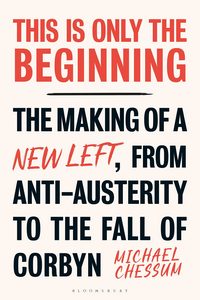 This is Only the Beginning. The Making of a New Left, From Anti-Austerity to the Fall of Corbyn. By Michael Chessum. Bloomsbury. 2022. 230pp.
After the collapse of the USSR at the beginning of the 1990s ‘socialism’ became discredited. It had supposedly been tried and had failed. Apologists for capitalism proclaimed that capitalism was the only game in town and even the end-point of history. After the financial crash of 2008 the tide began to turn and ‘capitalism’ came to be unpopular. An anti-capitalist movement of sorts arose, demanding that people should come before profits. Chessum was himself involved in this, both as a student activist and later as a Corbynite (he was a treasurer of Momentum).
The decade began with student fury at the breaking by the Liberal Democrats of their election pledge to abolish student tuition fees, when they entered into a coalition government with the Conservatives after the 2010 General Election. Universities up and down the country were occupied and the Tory party’s HQ in London ransacked. Then there was the campaign of direct action by UnCut against the premises of firms that were avoiding paying UK taxes by operating from tax havens. Then the campaign against the austerity measures imposed by the Coalition government. The movement had been given a boost by the Occupy movement of 2011 which identified a more general enemy than the government: the ‘top 1%’, the super-rich.
Chessum concedes that none of these campaigns was a success and writes of ‘the defeat of the anti-austerity movement’ (p. 104). What, for him, was positive were the new organisational form and methods of these movements: anti-hierarchical with actions being decided by groups of activists on the ground themselves and not directed by some leadership. This meant that not just the Labour Party but also the Leninist groups had no attraction for them and both stagnated.
Ironically, the second half of the decade saw the entry of many of the ‘anti-capitalists’ into the Labour Party, to elect Corbyn as Leader (twice) and then to try to change the Labour Party. That didn’t work out partly because, as Chessum himself experienced, the approach of those around Corbyn was also top-down. Corbyn resigned as Labour leader in 2020 following Labour’s poor showing in the 2019 general election and his opponents took back control of the party. So, another defeat. That’s where the book ends, but with Chessum confidently predicting that the anti-capitalist movement would find political expression in some other way. Hence the book’s title.
Obviously, it is a good thing that these days there are more people than there were in a recent past who recognise that capitalism puts profits before people and that something should be done about it. But what? Most anti-capitalists seem to think that, with enough pressure from below and with enough determined political will, people can be put before profit; that in effect capitalism can be reformed to allow this. But the experience of past attempts to do this have shown that it can’t be. Attempts to do this from below will fail just as surely as past attempts from above have done. It’s not a question of the method used but the fact that it is economically impossible to make capitalism put people before profit. Capitalism is driven by profit-making which must — and in the end always does — come first.
Chessum’s prediction that the movement would not die with Corbynism has since been borne out. When last July Sultana and Corbyn announced the launch of a new leftwing party, 800,000 expressed an interest. But the two made a mess of it and in the end most went on to join or support the Green Party. Chessum himself was among these and is now a Green Party councillor and Council Cabinet member for ‘Economy, Cost of Living and Empowered Communities’. Let’s see how he does.
Cut and thrust
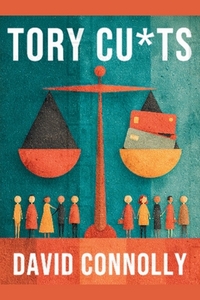 Tory Cuts. By David Connolly. Self-published. 2026.
This has been advertised in the classified section of Private Eye and is clearly aimed at the sub-section of society that is actively critical about the way UK society and its economy operate. It is at times amusing and frustrating, the latter mainly because of the large number of editing errors and the rather scattergun approach to structure – there is an underpinning narrative thread, but it really does test the patience of the reader as it often meanders off on tangents. At root, it needed a much finer editorial hand.
The over-arching theme is that the approach to economic management favoured by the Conservative Party in recent decades (and to some extent Labour) is a form of neo-liberalism that has only served to damage the UK economy, engender class division and infect the UK public sphere. Connolly’s solution seems to be Social Democratic Party-style economic interventionism allied with aspects of social conservatism. In some ways it is a ‘back to the future’ scenario as all this has been tried before and the social democratic economies of Europe (Scandinavia in particular) that he lauds have now been beset by similar issues. Indeed, pretty much all of them have seen falls in their growth rates like the UK and their halcyon days seem well and truly over, with resulting social discontent which hasn’t been seen in decades and a concomitant rise of the populist right.
It should be added that there is some very selective use of statistics in this book and some of them could be questioned too (including the over-stated claim that workers in the UK are losing 10 percent of our wages for every 10 years of neo-liberalism). But it is entertaining in parts and brings out the class divide at the heart of society well enough.
The solution to the problems Connolly identifies lies not in a return to a mythical social democratic past though – a past, after all, that was perceived as being so glorious the working class elected Thatcher and her successors in gratitude. Furthermore, much of what Connolly blames on neo-liberalism and monetarist economics – such as the decline in UK manufacturing – is really much more a product of the shift in world capitalism away from many of the traditional metropolitan centres of capital in Western Europe to China, India and the Far East instead, where labour costs are lower. For instance, while it is true that the proportion of UK jobs in manufacturing fell from around 25 percent of the workforce in 1980 to about 8 percent now, in Germany it fell from around 40 percent to about 19 percent, France from 25 percent to under 12 percent and Spain from about 20 percent to 10 percent. There has been a big fall in the neo-liberal US economy too, of course, though actually less than any of these European countries, many of whom use the same type of broadly social democratic approach he favours.
Ultimately, the underlying cause of the issues Connolly is rightly concerned about is not the actions of Tory governments and those who wish to copy them like Blair and Starmer – it is the way society is organised. Class division, economic instability and an uneven, antagonistic system of income distribution are at the very heart of all market economies, irrespective of political colours. Top-down, class-divided, based on entitlement and exclusion, with untold riches for a tiny minority and salary slavery for everybody else – that’s the capitalist way and it will need a lot more than a modification of personnel at the top to make it history.
DAP
Indo-European
 Proto. How One Ancient Language Went Global. By Laura Spinney. William Collins. 2026. 342pp.
‘Migration has been a constant, “indigenous” is relative’ – Laura Spinney.
This is a book about the ancient language commonly known as Proto Indo-European which, starting around 5,000 years ago, began to spread beyond its home territory in the west Eurasian steppe (modern Ukraine, Moldova, southern Russia) in various different directions. As it did so, it gradually evolved into many different languages according to where the people speaking it went and settled.
Modern research has shown that today approximately half the world’s population speak a variant of that ancestral language in places as far apart as, for example, India and Britain, Iran and Iceland, Russia and the United States. What kind of research are we talking about? Archaeological, linguistic and, most recently, genetic. As the book’s author puts it, ‘the new tools of archaeology and genetics [largely via DNA] have opened our eyes to our past’. And she shows a breathtaking panoply of knowledge in these fields as well as a profound and detailed understanding of historical developments across the world since the earliest times. Furthermore, while producing a work of consummate scholarship, she manages to communicate her material with a reader-friendly lightness of touch and a style which, much of the time, is downright entertaining.
So, as the original Indo-Europeans moved east, west and south from their homeland, they came into contact with other peoples speaking other languages. Sometimes they ended up adopting the languages they came into contact with, but more often they carried on speaking a form of their original language modified by the different forms of speech of those they interacted with. To such an extent in fact that, over a period of time, many of the languages deriving from Indo-European became mutually incomprehensible – as is the case today between, say, Hindi and English or Russian and French or Welsh and Kurdish, all of which are of Indo-European origin.
The story of the spread of the common ancestor of many of the roughly 7,000 languages spoken around the world today is also part of the story of the wider inbuilt ability of the human species to adapt to changing circumstances of life – referred to by some writers as ‘plasticity’. We are talking here about human behaviour more generally and the truth that the way a human group organises itself in a given physical or social environment context has never been eternal but rather is subject to change according to conditions and circumstances and has been ever-shifting over history.
In its own way, therefore, the story so eloquently told in this book serves as an object lesson to opponents of the idea that there is no alternative to the kind of society we live in and that other different social arrangements, such as the free-access society advocated by socialists, are impossible or ‘utopian’. Those who maintain that we must continue to accept and live in a society divided by class and wealth would do well to heed the fact, made abundantly clear by Laura Spinney, that, in the less than 2 percent of the whole of human history she covers in her book (ie 5,000 years out of 300,000), we have undergone and adapted to multiple changes both linguistically and in a host of other domains. And there is certainly more of this to come. Just as, in Spinney’s words, ‘throughout humanity’s long existence, languages have never ceased to absorb and change each other’, we look forward to changed social arrangements in the future which will allow humans to move from the realm of oppression and necessity to that of cooperation and abundance.
HKM
Next article: 50 Years Ago – The class issue in the American Revolution ⮞