
Life and Times – Detectorists and grave robbers
I recently tuned in to two investigative series on Radio 4. Though they told what on the surface seemed quite different tales, they were linked by an important, in fact fundamental feature of the society we live in. They both equally vividly illustrated the hold that money has on us and the lengths to which some of us will go to obtain it. The first one told the story of two metal detectorists who stumbled upon a hoard of ancient Anglo-Saxon coins and decided not to follow the legal requirement to surrender them to the Treasury but to keep them and try to sell them secretly. The series was aptly entitled ‘Fool’s Gold’, since, in the end, the ‘gold’ they found had disastrous results for them. The second one, ‘The Grave Robbers’, investigated the fraudulent methods used by a covert group to claim the estates of people who die without leaving a will.
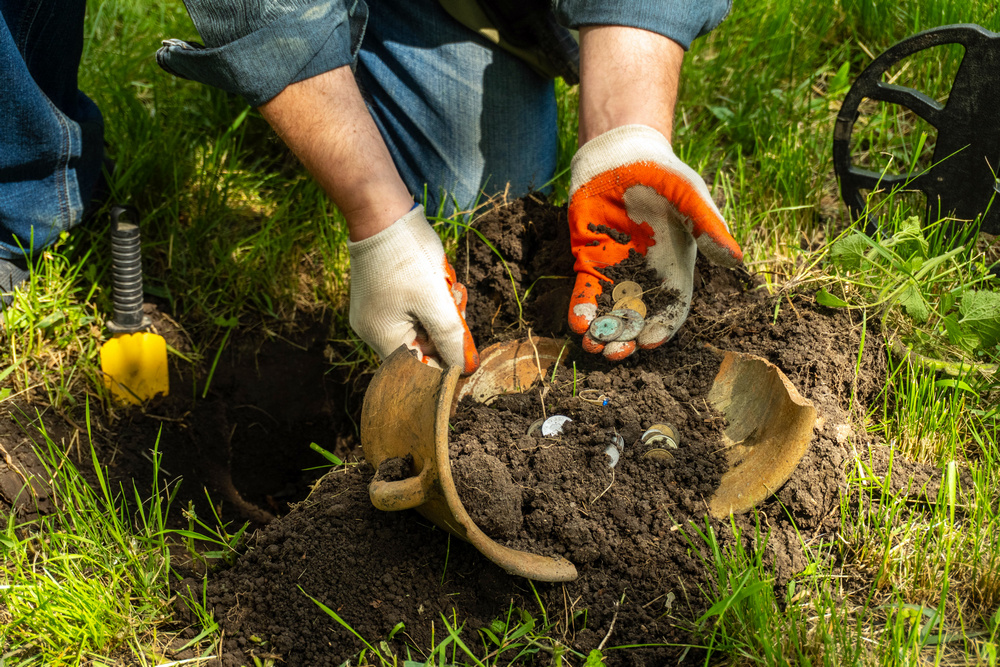 Detectorists declaring their discovery of ancient coins or artefacts are entitled to 50 percent of what the Treasury deems to be their value, the other 50 percent going to the owner of the land on which they were found. That value, however, is usually only a fraction of what collectors will pay on the black market. In this case the ‘official’ value of the coins in question was likely to be up to £12m. But the 50 percent of that amount the discoverers would have been eligible to receive was not enough for them and they chose to try to sell the coins themselves. It didn’t work, since, as the series told us, in the close-knit detectorist community secrets don’t stay secret for long, especially as, when some of the coins started appearing at a Mayfair auction house, rumours of an undeclared hoard begin to spread. The upshot was that the detectorists were exposed and went on the run, but finished up in the dock accused of theft and given prison sentences. However, hundreds of the coins remained unaccounted for, and still do.
The other series, ‘The Grave Robbers’, investigated a different kind of fraud, one where a ‘crime group’ uses forged wills to claim ownership of houses when people who lived in them on their own die without leaving a will. The ‘gang’ forges wills, as the programme put it, ‘to take the homes of the dead’, with the result that any genuine heirs that might exist are left with nothing. The series found that the group in question, based in Eastern Europe, was also involved in cannabis farms, money laundering and the sale of fake UK work visas. We hear from neighbours of a deceased man how the gang, using false but legally approved documents, had taken possession of his house, selling everything of value and using the property for whatever purpose they saw fit.
Both these stories illustrate the rampant hold that money or the prospect of it can have on human actions. And they are of course just the tip of the iceberg. We know that every day multiple attempts of all description are made to carry out what has come to be called ‘scam’ activity at the expense of both individuals and institutions, facilitated of course by the tools of electronic media.
Should we be surprised at this? Probably not, since the class-divided system we live in, where a tiny minority own most of the wealth and the vast majority own little but their ability to work for that majority in order to keep their heads above water, is by its nature a dog-eat-dog affair. Though vast wealth rarely brings meaningful satisfaction to the minority who have it, they do have praise and privilege heaped upon them, creating the temptation among others to look for ways of becoming part of that, to ‘get rich’, even at the expense of others who have little themselves. There is much talk of guarding against scams, but, within a system ruled by money, profit and wealth accumulation, such activities cannot be controlled. There may be attempts, via legislation or policing, to curb their extent, but, as with the other multiple problems the system throws up, it is unlikely to end up as anything more than tinkering at the edges.
Having said this, we must also observe that, though few people would mind having more money or being rich, the vast majority of us would not stoop to cheating or deceiving other individuals to achieve that purpose. At the same time, it cannot be denied that, while we are essentially cooperative creatures, we are also capable of a wide range of non-cooperative behaviours according to the situations we find ourselves in or are imposed on us. So, in some of us, the competitive nature of the society we live in can trigger anti-social forms of behaviour – the so-called ‘worst instincts’. Yet we all know from personal experience and on a day-today basis that most of those around us, far from seeking to make gain at the expense or disadvantage of others, are more likely to go out of their way to come to their assistance. It is, in fact, no exaggeration to say that even the very system we live in, competitive though it is at the core, depends on us cooperating with one another on a day-to-day basis in order for it to operate. The remarkable thing is that, though ‘money rules’ is the bane of most people’s existence, dictating actions and priorities and often causing hardship and suffering, this does not prevent so many of us from behaving generously towards others even if it means financial loss or inconvenience for ourselves. The recent World Happiness Report by Gallup, after carrying out exhaustive research, concludes that a key source of human happiness is being generous to others and engaging in volunteering activity. This writer can only reflect on how much more effectively human cooperation and generosity would flourish in the moneyless society based on voluntary work, democratic organisation and free access to all goods and services that we call socialism.
HOWARD MOSS