
Alternatives
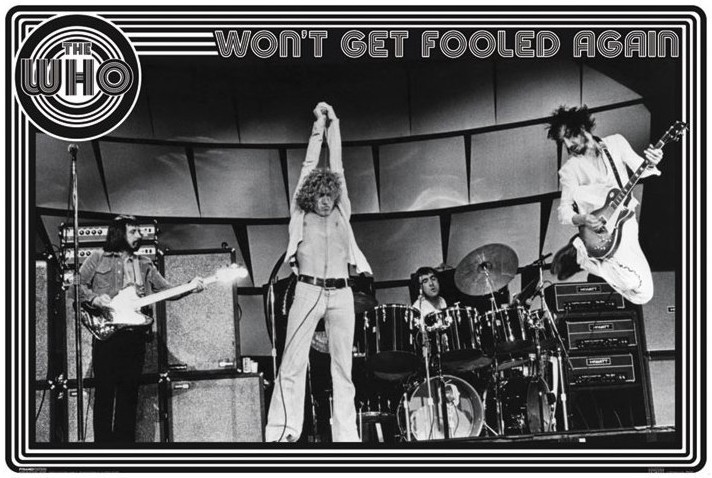
‘Meet the New Year, same as the Old Year’ to paraphrase Pete Townshend. Which begs the question, will we be fooled again?
Certainly January 2026 seemed to be serving up familiar news items. Putin continuing to pound Ukraine, Trump similarly enhancing his country’s democratic credentials through a military adventure in Venezuela to kidnap their president and his wife. Xi Jinping in Beijing must surely be casting covetous glances at Taiwan while feeling on-trend with his fellow presidents.
Israel continues air strikes on Gaza while, no doubt, Hamas quietly bide their time plotting another blow for liberation, perhaps by killing more kids at a pop festival. Meanwhile Iranian state forces have been slaughtering protesters who are sick of the repressive theocratic regime.
Meanwhile in good old Blighty, the Labour government continues to demonstrate that inequality cannot be taxed away. The Prime Minister, posturing on the international stage, pursues his partial morality by speaking out in condemnation of Russia’s assault on Ukraine while remaining silent over USA’s incursion into Venezuela.
Rather than New Year resolutions, what is required is New Year revolution, initially in people’s thinking. As long as nationalist concepts continue to be entertained to a greater or lesser extent around the world, nothing fundamentally can change.
Wars and armed conflicts will continue to kill, almost without discrimination, huge numbers of men, women and children. Each death utterly preventable. To continue to support, actively or passively, maintaining the present system is to support the killing.
New Year’s resolutions are largely wishful thinking, largely forgotten halfway through the month. However, to make a telling change in the world in favour of the vast majority does require resolution. A resolve that will be challenging and will be challenged. It’s either passive acceptance of the status quo or the active and conscious pursuit of an alternative society.
Early alternatives
Emerging capitalism spawned attempts to bring about political change and establish ideal, cooperative communities. The seventeenth century, during the upheavals of the English Civil War, saw the rise of two such movements.
The Levellers were concerned with political and legal changes via extended suffrage, annual parliaments, religious freedom and equal justice for all. Printed manifestos were the main campaigning device, allied to public debates such as those in Putney. Influential for a while within the New Model Army.
The Diggers focused on economic change through the abolition of private property, common ownership of land, communal farming and the ending of wage labour. Themes that continue to resonate with socialist thinking of the present day.
The difference between the two groups also continues to persist, agitators for political change on one hand, direct action communalists on the other. Little recognition at the time that the two elements are intimately connected.
The political establishment of the day, the Commonwealth under Cromwell, produced its own Agreement of the People marginalising the Levellers. Meanwhile the Diggers were subjected to legal action and violence for their occupation of land.
So the new governing force did what subsequent governments continue to do to the present day, that is defuse radical aspirations through short-term measures that really changed nothing significant in the political and economic relations as experienced by the vast majority. However, the way had been opened for the rising capitalist class to usurp the fading power of feudalism that eventually re-divided the people into two classes, capitalist and workers, a situation that still persists today.
Brutal conditions
The brutal conditions workers had to endure when industrial capitalism was enacting its steam-powered revolution produced an inevitable reaction. Combinations, early trade unions, met with an outright ban initially, while the Luddites faced deployments of soldiers and the hangman’s noose as governments did little to mask their sympathies.
There were capitalist employers who did take a more enlightened view, seeing no benefit in overworked employees living in squalor. Famously, Robert Owen ran the New Lanark manufacturing community on the banks of the Clyde. Reasonable living and working conditions, at least by the standards of the times, along with health and education services were undoubtedly an improvement. The fundamental aim of that community still remained the creation of profit.
Owen demonstrated that the profit motive could be well served, perhaps better served, through a more-or-less contented workforce. This was an early example of welfare capitalism, what would become social democracy on a national scale. As an alternative to the miserable slums in which so many urban workers then existed, New Lanark would have been acceptable. It was not, though, any sort of alternative to capitalism, but an indication of how it would develop as a functioning society.
Owen would go on to become involved with the New Harmony utopian community in Indiana. 20,000 acres along the banks of the river Wabash. He is often credited with being the founder of utopian socialism and the co-operative movement. Perhaps he was also an early syndicalist through his involvement with the Grand National Consolidated Trade Union, the attempt to have a national trade union for all workers. An aim of the GNCTU was to use the combined power of all workers to assume control over industry to be operated on their own behalf. A general strike was envisaged as a means to this end. New Harmony, the GNCTU and the co-operative movement patently failed to bring about an alternative society as the whole world continues to be capitalist.
Modern failures
There have, of course, been many subsequent political movements and parties expressing their intention of overthrowing capitalism in favour of socialism. One strand of this has been social democratic gradualist organisations proposing to reform away capitalism. Despite at times succeeding to enact reforms that have achieved significant – usually short-term – beneficial changes, these parties have failed to maintain those improvements and, instead, have largely become managers of society on behalf of capitalism.
A variety of Leninist parties continue to advocate their own revolutionary model. However, wherever their designs have been realised subsequent to the Russian Revolution of 1917, they have only produced state capitalism in one form or another. None have at any time been socialist societies.
A truly socialist society means common ownership of the means of wealth production meeting everyone’s self-defined needs, with people freely contributing their talents and abilities, a society without money, democratically achieved worldwide through the conscious action of the vast majority, the workers.
Capitalism for ever?
Absolutely a huge task, but one that must be undertaken if there is to be an alternative to economic hardship, rationing of resources by ability to pay, and an almost continuous waste of life and resources through war. Otherwise these features of capitalism will simply continue ad infinitum.
The task of motivating a vast majority of the world’s population of 8 billion or so to embrace the concept of socialism and act in concert to realise this concept precludes there being any ready formula concocted by a minority. Those who would be vanguards to act on behalf of that majority are bound to fail. Only by common consent and commitment can the majority identify what needs to be done and institute those organisations required to deal with the process, overcoming obstacles already known and those that will undoubtedly arise.
This requires individual resolution to bring such change about, acceptance of responsibility as there is not, and cannot be, a leader or party who can do it on people’s behalf. Looking beyond those from left, right and centre claiming they have the way forwards.
It is for socialists, however few in number at present, to maintain the broad principles of socialism in the public domain and advance where and when possible. There can be no short cuts whatever others might claim to the contrary. On hearing any such claim, recall the title of The Who song alluded to at the start: ‘Won’t Get Fooled Again’. Take it to heart.
D.A.