
Labour has failed: give socialism a chance
One thing the Chartists understood was the importance, to bring about social change, of first winning control of political power as the power to make and enforce laws. They campaigned for universal suffrage (at least for men) as they rightly saw the vote as the way to political control. Once the workers had the vote, they reasoned, they could use it to send delegates to parliament who would pass laws to improve their social and economic situation.
They weren’t wrong about the need to win political control to bring about social change or about the vote as the way to win such control, but the vote has its limitations. It can’t change the way the capitalist economic system works, based as it is on minority class ownership of the resources society needs to survive and on production for profit.
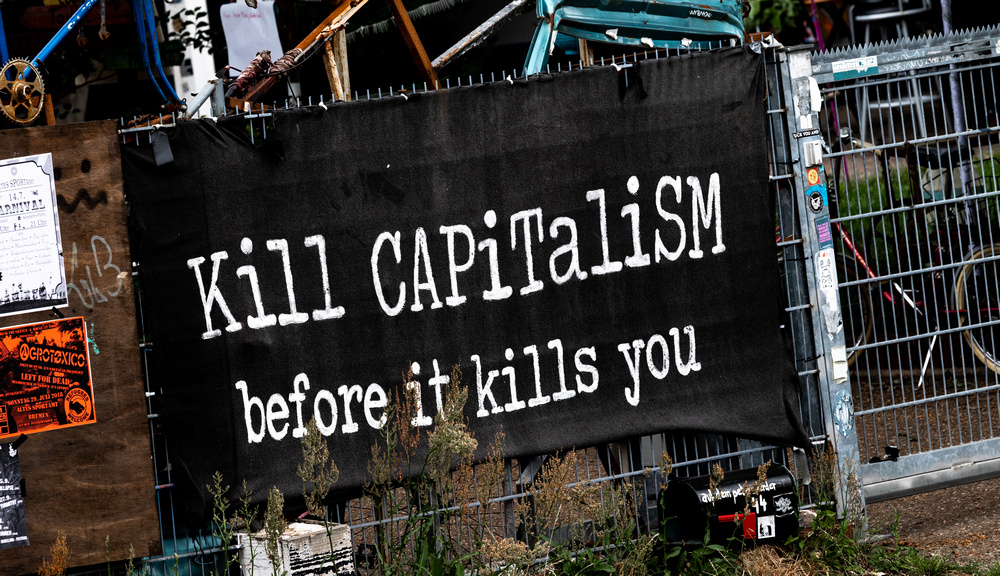 For over 150 years now, a majority of the electorate in Britain has been made up of workers: those who, excluded from ownership of the means to produce wealth, are forced by economic necessity to sell their mental and physical energies to some employer for a wage or salary in order to live. From time to time voters have elected Labour governments but, when in office, these have accepted capitalism, only trying to reform it to make things better for workers.
The theory was that a series of successive Labour governments would gradually transform capitalism into a more equal society by extending nationalisation and the welfare state to be paid for by redistributing wealth away from the rich. But what happened was that, instead of Labour gradually changing capitalism, capitalism gradually changed Labour, the final result being what we see today under Starmer: a party that proclaims itself the ‘party of business’ and which openly seeks to govern as such by putting profits (and military spending) before people’s needs and welfare.
As Starmer has put it: ‘Our job is to work with businesses to create the best environment that allows them to thrive’ (The Times, 29 January). Businesses ‘thrive’ of course on making profits. All Labour governments have been forced to do this but this is the first one to have openly proclaimed this from the start and to have acted on it so quickly.
Understandably, many who have supported Labour up to now no longer have any faith in it. There are calls to set up a new leftwing party, with Jeremy Corbyn as figurehead. That the Labour Party is a pro-capitalist party is now plain for everyone to see, but it is important to understand why the original Labour project of gradually replacing capitalism with a more equal society prioritising people’s needs failed — and was bound to fail. Otherwise, the same mistake will be made again.
The Green Party is already making this mistake of imagining that capitalism can be gradually transformed by a series of reform measures into something else, in their case into a more environment-friendly society. If they ever get the chance to form the government, they too would fail just as all Labour governments have. So would any new leftwing party if it adopts, as have previous breakaways from Labour, the same gradualist and reformist approach that the Labour Party once did. The plain fact is that capitalism just cannot be made to work in any other way than it does, ie, it puts profits first.
The Labour project didn’t fail because of the betrayal or incompetence or lack of determination of its leaders. It failed because it set itself the impossible task of making the capitalist leopard change its spots. Capitalism is an economic system which functions according to its own economic laws that impose themselves on those who run governments as well as on those who run businesses. Capitalism is driven by the quest for profits. It is a profit-making system that can only run in the interests of the profit-takers and never in the interests of workers whose labour is the source of profits. No government can overcome these laws and all governments have to apply them on pain of provoking an economic downturn.
What is needed is an understanding that capitalism cannot be reformed so as to work in the interest of majority. That understood, it follows that what is needed is a political party based on a different strategy from that pursued by Labour in the past, a party committed not to tinkering with capitalism’s effects but exclusively to abolishing it altogether and replacing it, in one go, by a society based on the common ownership and democratic control of resources with production directly to meet people’s needs and not for profit. In a word, socialism.
Once a majority want this they can use the vote to win political control with a view to carrying out this revolution in the basis of society. Given this, and that currently most people seem to see no alternative to capitalism, the urgent task of socialists is to convince more people that socialism is the way out.
ALB