
Book Reviews – Shiva, Saito, Stevenson-Yang
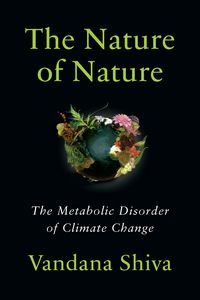
The Nature of Nature. The Metabolic Disorder of Climate Change. By Vandana Shiva. Chelsea Green Publishing. 2024. 162pp.
This is a wonderfully eloquent treatise on the human relationship with food and how that relationship is being disrupted by the despoiling of the earth and biosphere that is taking place and by the earth being treated as ‘raw material for industrial production’. In essence, it echoes the famous line from Rousseau: ‘You are undone if you once forget that the fruits of the earth belong to us all, and the earth itself to nobody’ It imparts with the utmost urgency messages such as ‘biodiversity erosion has now become an extinction emergency’ and ‘the climate crisis has become a climate emergency’, not simply stating them as unevidenced opinion but backing them up with research and evidence gathered over decades from the most well-informed scientific sources.
The author is particularly scathing about ‘agribusiness’ (also referred to as ‘the chemical and industrial food corporation’ and ‘the Poison Cartel’) and the alarming rate at which it is not only destroying biodiversity and the environment with its methods of cultivation and extraction but is now also, in response to criticism of its activities and consumer concern, pretending to ‘decarbonise’ its industrial food chain by what it falsely calls ‘regenerative agriculture’. Even its investment in meat (and dairy and egg) substitute products as a supposed replacement for intensively produced food is, she argues, a way of bamboozling consumers into thinking switching to such products (referred to here as ‘fake food’) somehow helps to lessen degradation of the biosphere and pressure on natural resources. Most of it, she claims, even when plant-based, is in fact just as ultra-processed, chemically and resource intensive and harmful to health as food produced and marketed through the conventional industrial food systems and just as, if not more, wasteful of the earth’s natural resources. The result, she states, is that it ‘ignores our relationship with nature’ and ‘reduces the bio-diverse, self-organised, living earth to raw material for the money machine’.
All of this of course means that the author is profoundly opposed to the so-called ‘deep green’ agenda of renewability, regarding it as no more than a sop to the growth mantra of industrialised production. She sees the complex infrastructure needed to set up, deal with and maintain ‘renewable’ activities and technologies as both continuing to rely on fossil fuels and involving at least as much savage exploitation of the earth‘s fragile resources, both biological and geological, as in ‘non-green’ methods of production. So she is intensely critical of apparent environmental champions such as George Monbiot, referring to him as one of ‘the messiahs of fake food’ for his claim that ‘lab-grown food will soon destroy farming – and save the planet’. Such a view she dismisses as ‘false at every level’, since ‘being energy, resource and capital intensive, the lab food and fake food economy is highly non-sustainable’. A ‘greenwashing operation’ pure and simple and a massive fraud is the way this book’s author sees all this – at best an exercise in rearranging the deckchairs. But, even worse, it is, she tells us ‘a fully fledged counterfeiting operation that aims to gain control over our diets by making food ever more dependent on the multinational companies that produce and patent it’.
All this constitutes a searing indictment of capitalist industrial production, even though the author does not once in this book use the word ‘capitalist’ or ‘capitalism’, preferring instead to use terms such as ‘maldevelopment’ or ‘the economy of greed’. This may be a deliberate choice on her part so as not to lay herself open to any accusation of political partisanship as opposed to following the evidence of facts and science. Nevertheless, it is still clear that she is describing what socialists call commodity production, i.e. the production of goods for sale on the market with a view to profit for the tiny minority class who own the means to produce them. And she does show that she knows of the existence of this class (she mentions ‘the 1%’ on several occasions), that they are ‘predatory’ and that their activity ‘places profits above nature and people’. Yet there is no evidence in her book to indicate that she is looking outside the framework of commodity production for a different way of doing things.
At the same time, she has ‘an alternative path’ to propose to the current system’s ‘chemically grown and highly processed’ methods of food production. This consists of methods of production that would be ‘ecological not industrial …conserving and regenerating the earth’s biodiversity’, and these would involve ‘following the ecological laws of the earth – the law of diversity and the law of return, shortening the distance between producers and consumers, deindustrialising and deglobalising food systems to reduce emissions and enhance health’, thus offering ‘solutions to the climate crisis, the extinction crisis and the hunger and health crises, because the health of the planet and our health are interconnected’. It must be said that this is nothing if not an admirable vision. The snag, however, is that the author seems to see it as achievable within the framework of the present system of buying and selling and production for profit – and this by means of social pressure and the goodwill and actions of governments. Unfortunately this ignores the reality that all governments of all kinds and stripes are servants of that system (i.e. the capitalist system) and their role is one of oversight and of attempting to make it run in the least worst way. They are not in the business of overthrowing it or regulating it for the common benefit – or indeed for anyone’s benefit other than that of the small minority who already monopolise the planet’s wealth.
The existing method of production and distribution, with its growth imperative and its commodification of everything, has, as this book so trenchantly informs us, seriously damaged and may well be on the way to completely destroying the natural environment. How can we prevent this going any further and reversing it? Not via tweaks to the way the current system works but by a democratic political movement expressing a majority will of the world’s people to cooperatively organise a leaderless, stateless society without governments, without markets, without buying and selling and with free access to all goods and services – a society which will recognise the necessity to produce and distribute sustainably while being sensitive not just to the needs of the human species but to the whole biosphere, the whole environment of which we are a part – the real ‘economy of care’ that Vandana Shiva so passionately advocates for but offers no realistic path to.
HKM
Slow Down: How Degrowth Communism Can Save the Earth. By Kohei Saito (translated by Brian Bergstrom). Weidenfeld & Nicolson £10.99.
It is well known that Karl Marx never completed his major work Capital. Just the first volume was published in his lifetime, and two further volumes, edited by Friedrich Engels, only appeared after his death. Kohei Saito argues here that Marx did not finish Capital because in his later years he became interested in scientific and what would now be called ecological issues. He did not publish much on these topics, but he left a lot of notes and excerpts from other writers, which are only now being put together as part of MEGA (Marx–Engels Complete Works). Saito’s book was discussed in the November 2024 Socialist Standard.
Saito further claims that Marx turned his back on productivism, the view that under capitalism productivity would continue to rise to bring about socialism (a well-known passage from the Communist Manifesto states that the capitalist class had massively expanded the productive forces). Marx argued, for instance, that capitalist agriculture led to depletion of the soil and disruption of the metabolic interaction between nature and humans, and he later praised communes in non-Western societies, such as Russia. This also involved a break with ‘Eurocentrism’, which supposedly involved projecting European history onto the rest of the world.
Saito criticises what he terms Accelerationism, the idea of completely sustainable economic growth. He associates this view with Aaron Bastani, author of Fully Automated Luxury Communism (on which see the June 2019 Socialist Standard). He claims that the improved productivity and replacement of fossil fuels envisaged in FALC would in fact lead to ‘increased plunder of the earth’. His solution is degrowth, which for one thing involves a greater spread of the commons and ‘collective management of productive activity’, thereby reducing the artificial scarcity of capitalism and increasing abundance, while at the same time cutting the hours of work needed. Degrowth is simply not possible under capitalism; rather, a steady-state economy based on sustainability is what is needed.
A chapter entitled ‘Degrowth Communism Will Save the World’ presents the author’s positive proposals, divided into five points. The first of these is the transition to an economy based on use value: fulfilling people’s basic needs would be given priority over increasing GDP. But here we meet the first real problem: it is just not clear whether Saito wishes to do away completely with exchange value and the whole idea of GDP. The second point, already mentioned above, is to reduce work hours, which need not imply increased use of automation. Thirdly, abolish the division of labour, as work will be more attractive if it involves a variety of tasks and activities. Further, the production process must be democratised, which includes the use of open technologies, those which ‘relate to communication and co-operative industry’. Lastly, priority must be given to essential work, labour-intensive activities that cannot be automated, such as care work, in contrast to the meaningless ‘bullshit jobs’ identified by David Graeber. A system built on these lines will be ‘equipped to satisfy people’s needs while also expanding the capacity for society to address environmental issues’.
The author summarises his position as follows: ‘the foundation of communism is the equal, communal management of the means of production as a form of commons – that is, as something distinct from private ownership or ownership by the state’. Socialists would agree with this, but unfortunately, he then goes on to accept the existence of the state as a means of getting things done, such as creating infrastructure. Perhaps he does not mean by this some kind of centralised organisation that enforces the rule and interests of a minority, but he could have been a lot clearer here. In fact, his description of future society is mostly fine as far as it goes, but he does not refer explicitly to three crucial aspects, the abolition of the wages system, the ending of production for sale and the abolition of class divisions. Without these, whatever exists will not be sSocialism/cCommunism, whether it implements degrowth or not.
PB
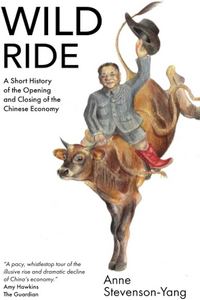
Wild Ride: A Short History of the Opening and Closing of the Chinese Economy. By Anne Stevenson-Yang. Bui Jones, 2024. xxii +149pp.
This book really is Chinese capitalism up close. Its American author, the mother of a Chinese family, spent over 25 years living in China between the 1980s and 2014, first as a journalist and then as an entrepreneur in publishing and software. This gave her experience of life in China both in its social dimension and, more relevantly to this book, in the economic twists and turns that followed the Mao era (late 1970s onwards) leading right up to the present day. She presents the knowledge gained from this experience in a fascinatingly detailed way and with a turn of phrase that makes it far more readable than any recent academic study of that country’s development.
Unlike many commentators who seek to differentiate China’s economic system from that of the West, she has no scruple about labelling it as capitalist, understanding that, even if the country is far more socially and politically coercive than Western liberal democracies, it still operates, as Western capitalism does, a system of production for profit which divides its population into two main classes, a small one of extremely wealthy people, whether private individuals or state bureaucrats, and a vast majority of others who are forced to survive by selling their energies to an employer (again whether state or private) for a wage or salary.
The ‘wild ride’ of the title refers to the various iterations Chinese capitalism has been through since the extremely backwards state-run capitalism of Mao’s reign (which by the way she calls ‘socialism’ – something we would not accept), and her analysis is detailed and compelling. She sees the ‘ride’, even if in many ways smoke and mirrors, as broadly progressive in the sense of bringing alleviation to poverty in China and, while the system remains politically authoritarian, of being less nakedly repressive than the previous era. However, she sees things as having gone backwards since Xi Jinping came to power in 2012, both in terms of autocratic state control over the population and of state capitalism reasserting its primacy over private ownership of capital. And she is pessimistic about the chances of this changing any time soon. It should of course be added that other commentators on China take a different view and think the pendulum is more likely to swing the other way, ie towards the freer, more open exchange of ideas which tends to characterise advanced capitalist development and provides a better terrain for the spread of socialist ideas. But this remains to be seen.
HKM
Next article: 50 Years Ago – The Common Market: in or out – does it matter? ➤