
Book reviews – Crabapple, Krantz, Labanyi
Anti-Zionists
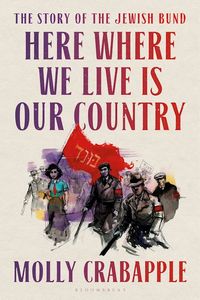 Here Where We Live is Our Country. The Story of the Jewish Bund. By Molly Crabapple. Bloomsbury Circus. 2026.
The Jewish Bund was a Jewish workers’ organisation founded in 1897 in Vilnius (called Vilna in this book), today the capital of Lithuania but then part of the Russian Empire. Its official name in Yiddish, the Germanic language spoken by most Jews in Russia, was the Algemeyner Yiddisher Arbeter Bund (General Jewish Labour Union). It was the largest constituent organisation represented at the later founding of the Russian Social Democratic Labour Party (RSDLP), the equivalent of the German Social Democratic Party,
They were known simply as the Bund, its members were Bundists and its doctrine Bundism. They claimed that only they should organise Jewish workers in Russia. Their immediate aim was the establishment of a democratic republic in Russia with cultural autonomy for Yiddish speakers, with socialism as the longer-term aim after Russia had passed through capitalism. Other Russian Social Democrats, including many of Jewish background such as Trotsky and Martov, argued that all workers in Russia, whatever their background or language, should be organised in a single all-Russia party.
When the issue came up at the RSDLP congress in 1903-4 and the Bundists’ claim was rejected, they walked out. This was a fateful decision as it meant that, in the more famous vote on how the party should be organised, Lenin and his supporters won and so got to be called ‘Bolsheviks’ (the majority) as opposed to those who lost the vote who came to be called ‘Mensheviks’ (the minority). The Bundists were opposed to Lenin’s organisational principles, and had they not walked out Lenin’s supporters might have ended up being called the Mensheviks.
The Bund’s policies and tactics were close to those of the Mensheviks and it would not be entirely unfair to describe them as Yiddish Mensheviks. Their mass basis was Jewish workers living within the ‘Pale of Settlement’, the part of the Russian Empire which covered most of Poland, Lithuania and Ukraine as well as the whole of what is now Belarus and Moldova and to which ordinary Jews were confined.
After the First World War, when Poland was reconstituted as an independent state and 3.3 million Jews made up about 10 percent of the population, the Bund was active in Polish politics. Its opponents amongst Jews were the religious parties and, above all, the Zionists. In fact they were bitter enemies, the Zionists proposing the establishment of a Jewish state in Palestine and the Bundists proposing full civil and social rights for Jews within Poland. Hence the Bundists’ slogan — and title of this book — ‘here where we live is our country’. They regarded themselves as Poles who happened to be Jews. Unfortunately for them, as Crabtree recounts, Polish ‘ethno-nationalists’ as they would be called today didn’t agree and by the late 1930s the Polish government was just as officially antisemitic as neighbouring Germany under the Nazis.
As for those who ended up in Russia, the Bolsheviks banned the Bund in 1921. Some Bundists joined the Bolshevik Party but most of them were executed in Stalin’s purges in the 1930s.
Crabapple’s book is not a scholarly study of the Bund but an account based on what happened over the years in various places and to various personalities, especially her great-grandfather who had been a Bundist in a small town before emigrating to the United States in 1904. Hence the subtitle of her book, the ‘story’ (rather than the history) of the Bund. It makes for an easy and fascinating read. Disturbing too, in that many Poles, Lithuanians and Ukrainians joined in the extermination of the Jews in the Second World War.
Crabapple doesn’t disguise her own, left-wing political views and her opposition to what the Israeli state, currently controlled by extremist Zionists, is doing in Gaza. She quotes from Bundist publications predicting what would happen if ever a Zionist state was established in Palestine: the Jews would become the oppressors and the previously established population the oppressed. Which is exactly as it has turned out.
She realises that, with the social basis of the Bund’s support exterminated, after 1945 the Bund had no future and was destined to die out, in fact has aged out with the last surviving militants. Even so, she says it left a legacy. It provides Western Jews with a secular, alternative Jewish tradition to the nasty ethno-nationalism of Zionism. In fact, half the Jews in the world have done what the Bundists advocated: they have regarded where they live as their country. We would justify not being Zionists in a different way: workers should unite with other workers living under the same state to win political control there to dispossess the capitalist class. Where you live is where you should wage the class struggle.
ALB
Anti-fascism
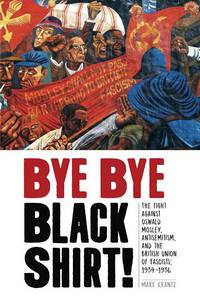 Bye Bye Blackshirt. By Mark Krantz. Bookmarks. 2026. 114pp
This book is a well-researched account of the opposition to Oswald Mosley’s British Union of Fascists (BUF) as that grouping rose to prominence in the 1930s on the back of similar movements in Italy and Germany. It offers a powerful evocation of the context and the atmosphere of the time it investigates, focusing in particular on the various ways in which, up and down the country and mainly in the years 1934-36, BUF activities were violently countered by left-wing groups and their supporters.
Taking their cue from Hitler’s Nazi party, Mosley and his BUF were virulently anti-semitic, portraying Jews as a malignant force in society – the enemy-in-chief. In a period of severe economic depression, they found a significant number of recruits among frustrated workers looking for ‘others’ to blame for their plight and sense of hopelessness. In London and up and down the country (for example Manchester, Newcastle, Glasgow, Gateshead, Leeds, Swansea, Plymouth, Gillingham), the BUF organised large-scale meetings, both indoors and outdoors, often with Mosley at the helm and sometimes bringing along several thousand supporters dressed in black shirts who paraded slogans like ‘Perish the Jews’ and were primed to deal violently with protestors. At one of their rallies in 1934, Mosley announced that ‘Jews more than any single factor are undermining the prosperity of the British people today’.
The anti-BUF protests that took place were organised mainly by the Communist Party and the Independent Labour Party who themselves encouraged violent means to prevent meetings taking place or speakers being heard. Their tactic was what the author calls ‘direct confrontation and disruption’. So at a meeting in Gillingham in 1934, when Mosley appeared outside the meeting hall, we are told that ‘he was spat upon and missiles were thrown, including bottles’, and likewise, in Liverpool, he was ‘knocked unconscious by stones thrown at his head’.
Police were present at these events in numbers with a brief to facilitate the marches and meetings on ‘free speech’ grounds and thereby effectively siding with the Fascists in trying to prevent or ward off protests. The result was that protestors themselves were often dealt with violently by the police and arrested and charged with public disorder, in some cases leading to prison sentences.
At the most well-known of these events, ‘The Battle of Cable Street’ in October 1936, Mosley and his followers set out on a provocative march through what was known as the Jewish quarter of the East End of London. But the thousands of police seeking to ensure the BUF’s passage found themselves outnumbered by larger numbers of political opponents and locals who had put up barricades, mainly consisting of furniture, to block the procession. They charged to clear the way but were met, the author tells us, ‘with milk bottles, stones and marbles’ and ‘a brick went clean through the window’ of Mosley’s car’. The police gave it up as a bad job and Mosley and his followers had to turn back. The book describes the Battle of Cable Street, perhaps a little over-excitedly, as ‘the apex of the mass anti-fascist protests that stopped the advance of fascism in Britain’. And it is certainly true that, following this, support for the BUF began to wane and, by the time war broke out three years later, it had gone down dramatically, especially as it was seen by the British state as a potential ally to the Nazi enemy.
The book’s key argument is that the reason why the threat of a fascist takeover in Britain was never realised was the vigorous physical opposition it faced from left-wing forces and those who joined them. And this must indeed have had an effect. But it must be open to question whether, even it had not happened, any attempt at a violent takeover of the state by Mosley and his deluded followers could have had the same kind of success as Mussolini’s forces had had in Italy in the previous decade. Though the BUF presented itself as a threatening force, those workers willing to follow Mosley constituted a very small percentage of the population and would probably not have been capable of overturning the well-established system of capitalist democracy that existed in Britain, nor of setting up a repressive right-wing dictatorship as in Italy and Germany.
The writer also draws comparisons between Mosley’s movement in the ’30s and the current right-wing populism in Britain stirred up by such loathsome individuals as Nigel Farage and Tommy Robinson. Will these be any more successful than Mosley in fomenting division and hatred among workers? It remains to be seen. But it has to be observed that the alarmism about this that Bye Bye Blackshirt evinces is typical of the longstanding Trotskyist belief in impending catastrophe and the hope that fear of this will cause workers to rally to the leadership of a vanguard party of the left to rescue them from the crisis and assert its own control. Such is the Trotskyist concept of ‘revolution from below’, which is entirely at odds with the need for a conscious spread of socialist understanding leading to democratic political action to establish a true socialist society of common ownership and free access – the real ‘revolution from below’.
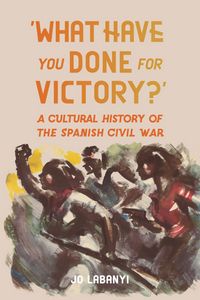 What Have You Done For Victory? A Cultural History of the Spanish Civil War. By Jo Labanyi. Reaktion books. October 2026. 490 pages.
This year is the 90th anniversary of the outbreak of the Spanish Civil War when a part of the armed forces under General Franco revolted against the Popular Front government elected earlier in the year. It ended three years later with 600,000 dead and victory for Franco and the rebels.
This anniversary has seen the publication of a number of books on the subject including this, a detailed blow-by-blow account of the culture wars that preceded, accompanied and followed the war. It has a useful introductory chapter setting out the events leading up to and the course and outcome of the war.
The Franco side rested largely on the big landowners and the Church, both of which saw their privileges threatened by the Popular Front government, one of whose declared intentions was to break the landowners’ stranglehold on the countryside. The rebellion was not supported by the capitalists; they also saw the landowners as their enemy. Openly capitalist parties, ‘radicals’, ‘republicans’ and ‘progressives’, were part of the Popular Front.
The government said it wanted a ‘parliamentary democracy’. The ‘Communist’ Party said that that was their aim too but, as supporters of the Stalin dictatorship in Russia, what they were really favouring was state-capitalist Russia’s foreign policy of trying to prevent Germany gaining a foothold in Spain.
The anarchists and the syndicalist trade unions were opposed both to ‘parliamentary democracy’ and to the Stalinists. Their aim was a revolution to destroy the state. Their attempts to organise production without capitalists or money confirmed that this could be done but were never going to last whichever side won.
There never was working-class unity for ‘parliamentary democracy’ and the course of the war brought the bitter antagonism of the rival factions to the surface with mutual charges of murder and betrayal.
In the end the working class lost everything they had before. Franco’s victory ushered in thirty-six years of savage repression of the working class, deprived of elementary political and trade-union rights.